On a normal weekend, it’s easy to obsess over what’s inside the house—appliances, indoor leaks, that weird bathroom fan noise—while the real slow-burn problems sit outside, quietly soaking the ground. Outdoor plumbing takes a beating from sun, soil movement, lawn tools, and winter freezes, and it doesn’t always “announce” trouble until you see a swampy patch near the patio or a spike in the water bill. The U.S. Environmental Protection Agency has long warned that household leaks can add up to roughly 10,000 gallons wasted per year—and a surprising chunk of that comes from overlooked outdoor fixtures and irrigation. That’s not just waste; it can invite foundation moisture, algae-slick walkways, and landscaping that looks thirsty in one corner and drowned in another.
To keep things real, we’ll follow a simple thread: a homeowner named Maya who wants a green yard without paying for it twice. She’s not trying to become a plumber—she just wants practical routines, smart checks, and a few upgrades that actually matter. Along the way, you’ll see how irrigation maintenance, smart scheduling, and basic leak detection protect your property and support water conservation. No drama, no doom—just the stuff that keeps outdoor systems working like they should.
- 💧 Catch small leaks early with quick checks on hose bibs, valves, and sprinkler zones to avoid expensive surprises.
- 🧰 Build a simple routine for irrigation maintenance: flush lines, clean filters, and confirm spray patterns.
- ⏱️ Use controller settings and sensors for smarter water conservation—less runoff, better plant health.
- ❄️ Don’t skip seasonal winterizing: drainage, shutoffs, and pipe insulation prevent freeze breaks.
- 🧪 Keep pressure in check with pressure regulation to protect sprinkler heads and drip emitters.
- 🍂 Practice clog prevention for yard drains and grates so heavy rain doesn’t turn into pooling water.
Outdoor Plumbing Maintenance Habits That Prevent Leaks and Water Damage
Maya started with the simplest truth: outdoor systems fail quietly. A tiny drip at a spigot can seem harmless, but over a long watering season it adds up to real money—plus it keeps the wall cavity or siding damp if the leak is behind the fixture. That’s why her first habit wasn’t “fix everything,” it was just looking with purpose: a quick weekly glance during peak watering months, and a deeper check at the start of spring.
Begin with hose bibs (outdoor spigots). Turn the handle on, then off, and watch the outlet for a few seconds. If it keeps dripping, you’re usually dealing with a worn washer or a tired valve stem—small parts, easy win. Also look where the spigot meets the house. Any moisture, green staining, or soft wood is a clue you’ve got a leak at the connection or inside the wall. That’s where basic leak detection becomes a property-saver.
Hose bib checks that take five minutes but save a season
Maya keeps a tiny kit in the garage: adjustable pliers, a screwdriver, plumber’s grease, and replacement washers. If a handle is stiff, she adds a dab of grease and works it gently instead of forcing it and snapping something. If the spigot is cracked from past cold snaps, she replaces the fixture before the first big spring watering day—because “waiting” usually means discovering it mid-use when water is blasting behind the siding.
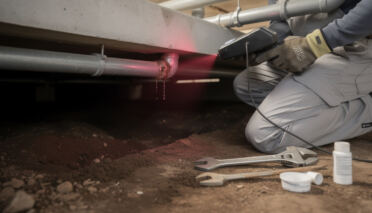
If you live where winters bite, consider upgrading to frost-free hose bibs. They place the shutoff deeper inside the wall so water drains away from the exposed portion. Pair that with pipe insulation on nearby exposed piping in basements or crawlspaces, and you dramatically cut freeze risk. A simple insight Maya learned the hard way: insulating is great, but insulation over an active leak turns into a soggy mess—so inspect first, wrap second.
Outdoor faucet “workflows” for real life
Outdoor faucets do more than feed a hose. People fill kiddie pools, power-wash patios, rinse muddy bikes, and connect pressure washers. Those high-flow moments expose weaknesses fast. Before a big weekend project, Maya runs the faucet for 30 seconds and watches for wobble at the stem, pulsing flow (a sign of a partial obstruction), or water seeping from the handle. Catching that early prevents the classic scenario: starting a pressure washer and suddenly hearing water spraying behind the wall.
These habits sound basic because they are—but that’s the point. Outdoor plumbing maintenance is mostly small, boring checks that prevent very un-boring repair bills. Next up: the irrigation system, where “invisible” problems hide underground.
Irrigation Maintenance for Sprinkler Systems: Zone Tests, Flushing, and Smart Settings
Maya’s yard has a standard sprinkler system with multiple zones. Her biggest surprise wasn’t a broken head—it was how much water can vanish underground without obvious drama. One month, her bill jumped and the lawn looked oddly lush in one strip near the driveway. A plumber later confirmed a small line leak. That experience turned her into a believer in routine zone tests.
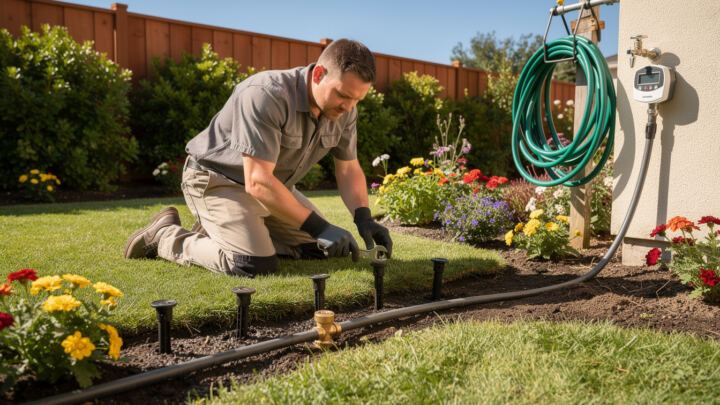
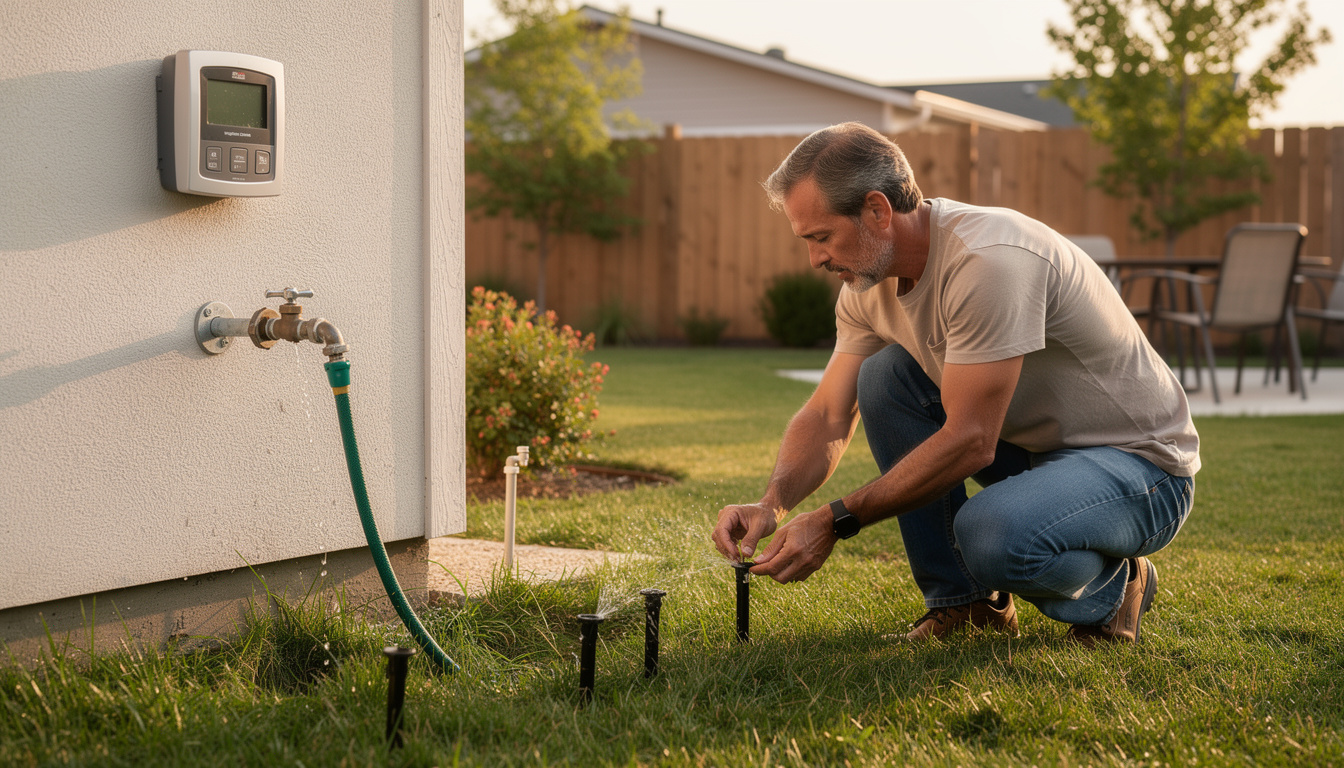
Start by running one zone at a time. Walk it while it’s on. You’re looking for geysers (broken heads), misting (pressure too high), overspray onto pavement, and puddles that form even when the soil isn’t saturated. Puddles can mean a cracked lateral line or a head that’s not seated properly. Dry patches, meanwhile, often point to clogged nozzles, misalignment, or a head blocked by grass growth. This is practical leak detection without fancy gadgets.
Flushing lines and cleaning filters: the underrated efficiency move
Sediment builds up over time—especially if you’re on well water or you’ve had recent municipal line work. Once a year, flush the system to push debris out before it clogs nozzles and valves. For drip zones, filters are everything. A clogged filter doesn’t always stop watering; it just makes it uneven, which is worse because you won’t notice until plants stress.
Maya sets a calendar reminder: early spring flush and clean, midsummer nozzle check, early fall review. It’s not obsessive—it’s just enough to keep performance consistent. And when the system runs consistently, water conservation becomes easier because you’re not compensating for bad coverage by “watering more.”
Controller strategy: water less, grow better
A controller is only as smart as its schedule. Seasonal changes matter: what worked in May can be too much in September. Maya adjusts runtimes based on heat, rainfall, and soil type, and she checks that the rain sensor actually pauses watering when storms roll through. If you’ve got a smart controller, keep firmware updated and review the app’s seasonal recommendations—good models adapt to local weather patterns and can cut waste without sacrificing the lawn.
One key detail that’s easy to miss: if your schedule is aggressive, you’ll see runoff on slopes or compacted soil. That’s money sliding into the storm drain. A better approach is cycle-and-soak: shorter runs with breaks so water absorbs. The insight here is simple: the best-looking landscapes often come from less water applied more intelligently.
Next, let’s get nerdy in a useful way: pressure and valves—the behind-the-scenes parts that decide whether your system is smooth or chaotic.
Want a quick visual walkthrough on troubleshooting spray patterns and broken heads? This kind of demo helps you recognize issues in minutes.
Valve Inspection and Pressure Regulation: The “Hidden” Keys to Outdoor System Reliability
Maya used to think of her irrigation as “sprinklers plus timer.” Then she met the parts that actually control the whole show: valves, backflow protection, and pressure management. When these are off, you get weird symptoms—zones that won’t shut off, heads that sputter, or drip emitters that blow apart. The fix is often not expensive, but it requires paying attention to the right signals.
Valve inspection: what to look for before it becomes a mess
At least once a season, do a basic valve inspection. If you have a valve box, open it carefully and clear out dirt and roots. Standing water in the box can mean a slow leak at a fitting or a valve that isn’t sealing. You might also notice buzzing or chattering when a zone runs—sometimes that’s debris in the valve or an electrical issue with the solenoid.
Maya learned a neat trick from a tech: after a zone shuts off, listen. If you still hear water moving, something is leaking past the valve. That can keep a zone slightly pressurized and cause “mystery wet spots.” Fixing it early prevents soil erosion and keeps plant roots from staying constantly damp (which invites fungus).
Pressure regulation: stop misting, stop breakage
Pressure regulation is the difference between clean arcs and wasteful mist. Too much pressure makes sprinkler heads produce fine spray that drifts in the wind. It also stresses fittings and can shorten the life of heads and drip emitters. Too little pressure gives you weak coverage and sad brown patches that tempt you to increase runtime (and waste even more).
A simple pressure gauge can tell you a lot. If pressure is high, a pressure regulator (or pressure-regulating heads) can stabilize it. For drip zones, regulators are especially important because drip components usually want lower, steady pressure. Maya added a regulator on her drip manifold and immediately saw more consistent watering and fewer popped connections.
A practical component table you can actually use
| Component 🔧 | Where you’ll see it 🌿 | What to check ✅ | Common fix 🛠️ |
|---|---|---|---|
| Sprinkler heads 🚿 | Lawns, wide coverage zones | Clogs, tilt, overspray, cracked body | Clean nozzle, re-level, replace damaged head |
| Zone valves 🧲 | Valve box / manifold | Won’t close fully, leaks in box, buzzing | Clean diaphragm, replace solenoid, rebuild valve |
| Backflow preventer 🔙 | Near main irrigation feed | Annual test status, leaks at fittings | Schedule certified test, repair seals/parts |
| Filters 🧼 | Drip zones | Debris load, reduced flow, uneven output | Rinse/replace screen or disc element |
| Pressure regulator ⚖️ | Drip manifolds, some sprinkler mains | Misting, broken emitters, inconsistent arcs | Adjust or replace regulator to match design |
The big takeaway Maya wrote on her garage whiteboard: “If coverage looks weird, check pressure and valves before you blame the timer.” Next up: the part everyone ignores until it floods—drainage and clogs.
If you want a hands-on look at diagnosing valve problems and zone issues, a quick video search can be surprisingly clarifying.
Clog Prevention for Yard Drains and Outdoor Lines: Keep Water Moving Away From the House
Outdoor systems aren’t just about bringing water in; they’re also about getting water out. Yard drains, channel drains, downspout extensions, and grading all work together to keep water from hanging around the foundation. When they clog, the symptoms look like “bad luck”: puddles that never dry, mulch that floats away, or a basement that smells damp after storms.
Maya’s “aha” moment came after a heavy rain. Water pooled near a patio corner and seeped into a low spot by the house. The drain grate looked fine on top—until she lifted it and found a compacted layer of leaves and soil. That’s why clog prevention is less about one big cleaning and more about small, repeatable habits.
Simple drain care that prevents flooding
Start with the obvious stuff: clear leaves, grass clippings, and mulch away from grates. In fall, do it more often. Then flush the drain with a garden hose for a minute and see if it moves water quickly. Slow flow suggests buildup deeper in the run. Also check that grates are secure and unbroken—wide gaps invite larger debris, and loose grates are a trip hazard.
If flushing doesn’t help and water still ponds, that’s when pros earn their keep. Specialized drain equipment can clear deep blockages without guessing. The cost of a proper clearing is usually a lot less than repairing water damage, regrading washed-out beds, or dealing with foundation moisture. The insight: drainage problems don’t stay “outside problems” for long.
Don’t forget the outdoor plumbing tie-ins
Outdoor plumbing lines can contribute to soggy zones too. A slow leak from an underground fitting can mimic a drainage issue. Maya learned to differentiate by timing: if the wet area grows when irrigation runs, suspect irrigation lines or a valve leak. If it appears after rain, suspect drainage or grading. That little logic test saves hours.
And here’s the unglamorous truth: a lot of yard flooding happens because downspouts dump water too close to the house. Extending them, keeping splash blocks aligned, and making sure the discharge isn’t blocked by landscaping can change everything. Think of it as protecting the home’s edges—the same way gutters protect the roofline.
With water moving where it should, the final piece is timing and cold-weather prep—because winter doesn’t forgive forgetfulness.
Seasonal Winterizing and Pipe Insulation: A Year-Round Plan for Outdoor Plumbing and Irrigation
Maya treats seasonal winterizing like changing smoke detector batteries: not exciting, but you never regret doing it. Freezing weather can crack hose bibs, split pipes, and ruin backflow assemblies. Even in milder climates, one hard freeze can catch you off guard—especially if a warm fall tricks you into keeping the hose connected.
Winterizing steps that actually matter
First: disconnect hoses. A hose left attached can trap water in the spigot and increase freeze risk. Next: shut off the exterior water supply if you have an interior shutoff, then open the outdoor faucet to drain. Add an insulated cover over the faucet for extra protection. This is where pipe insulation isn’t just a nice-to-have—it’s a cheap layer of insurance.
For irrigation, the goal is to get water out of the lines. In many regions, that means a blowout with compressed air performed by someone who knows what they’re doing, so you don’t over-pressurize components. If you’ve got a manual drain system, open the drain valves and let gravity do its job, but don’t assume it drained fully without checking low points.
Spring start-up without breaking things
In spring, turning everything on at once is how people discover weak points the loud way. Maya opens the supply slowly, lets pressure build gently, and checks for leaks at connections and backflow hardware. Then she runs zones one at a time, watching for broken heads or sunken sprinkler bodies (often caused by freeze-thaw soil movement). Slow and steady beats “panic and flood.”
Common mistakes Maya stopped making (so you can skip them)
- ⚠️ Leaving the system on while adjusting heads—she now turns zones off before touching anything for safety.
- 🔩 Over-tightening fittings—she learned snug is good; cracked plastic is not.
- 🧽 Skipping cleaning steps—filters and nozzles get attention before she tweaks schedules.
- 🔁 Forgetting to recheck after adjustments—she always reruns the zone for 60 seconds.
- 🚿 Not flushing after repairs—she flushes to prevent debris from clogging downstream parts.
The final insight: when you build a seasonal rhythm—spring start-up, summer tuning, fall prep, winter protection—your outdoor setup stops feeling fragile and starts feeling dependable.
How often should I do irrigation maintenance on a typical home sprinkler system?
Aim for a quick walk-through once per season (spring, summer, fall, winter prep). In practice, that means running each zone, checking spray patterns, and looking for puddles or dry patches. Add one deeper annual session for flushing lines, cleaning filters, and confirming controller and rain-sensor settings.
What are the easiest signs of an outdoor plumbing leak to catch early?
Look for dripping at hose bibs after shutoff, wet spots at the wall where the faucet connects, unexplained soggy areas that expand when irrigation runs, and sudden jumps in your water bill. These are simple leak detection clues that often appear before you see major damage.
Do I really need pressure regulation, or is it optional?
If you see misting sprinkler heads, frequent broken parts, or inconsistent coverage, pressure regulation is worth it. Stable pressure improves watering performance and supports water conservation by reducing drift and runoff. Drip zones especially benefit from a regulator matched to the system’s design.
What’s the most important seasonal winterizing step if I only do one thing?
Disconnect hoses and drain the outdoor faucets after shutting off the exterior supply (if you have an interior shutoff). Then add pipe insulation or an insulated faucet cover. That single routine prevents a huge percentage of freeze-related hose bib failures.