In brief
- 💧 Target the biggest “silent” costs first: leak detection and toilet fixes can drop a stubborn water bill fast.
- 🚿 Swap in low-flow fixtures (showerheads, faucets, toilets) without making your showers feel weak.
- 🍽️ Upgrade to water-efficient appliances and actually use the eco cycles the way they were designed.
- 📟 Add smart water meters or monitors to catch abnormal use before it becomes a surprise bill.
- 🌿 Outdoors matters: drip irrigation + smart controllers cut waste where most homes lose the most water.
- 🔥 Reduce “wait-for-hot-water” waste with recirculation options and smart placement choices.
- 🧰 Don’t ignore comfort upgrades that also save water: pipe insulation helps hot water arrive sooner and stay hotter.
- ✅ Combine hardware + habits: simple water-saving tips make your upgrades pay off sooner.
Utility prices have been climbing for years, and by now most homeowners can feel it—especially when a single season of heavier use turns into a “wait, what?” moment when the bill shows up. The tricky part is that water waste is usually quiet. A toilet that runs only sometimes, a faucet that “barely” drips, a sprinkler head that sprays the sidewalk at 5 a.m.—none of it feels dramatic, yet it adds up month after month. The good news is that you don’t need a full remodel to get serious savings. A handful of practical plumbing upgrades can cut consumption, improve day-to-day comfort, and reduce the risk of a surprise leak turning into a repair emergency.
This is really about being strategic: fix the hidden losses first, then upgrade the fixtures you touch every day, then tighten up hot-water delivery, and finally tackle outdoor use (often the biggest swing factor). Along the way, a bit of tech—like smart water meters and sensors—helps you keep the gains you worked for. If you approach it like a checklist instead of a vague “we should use less,” your home can run smoother and your water bill can finally calm down.
Leak Detection and Fast Repairs: The Cheapest Way to Shrink Your Water Bill
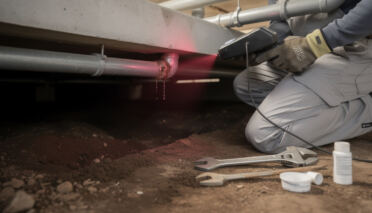
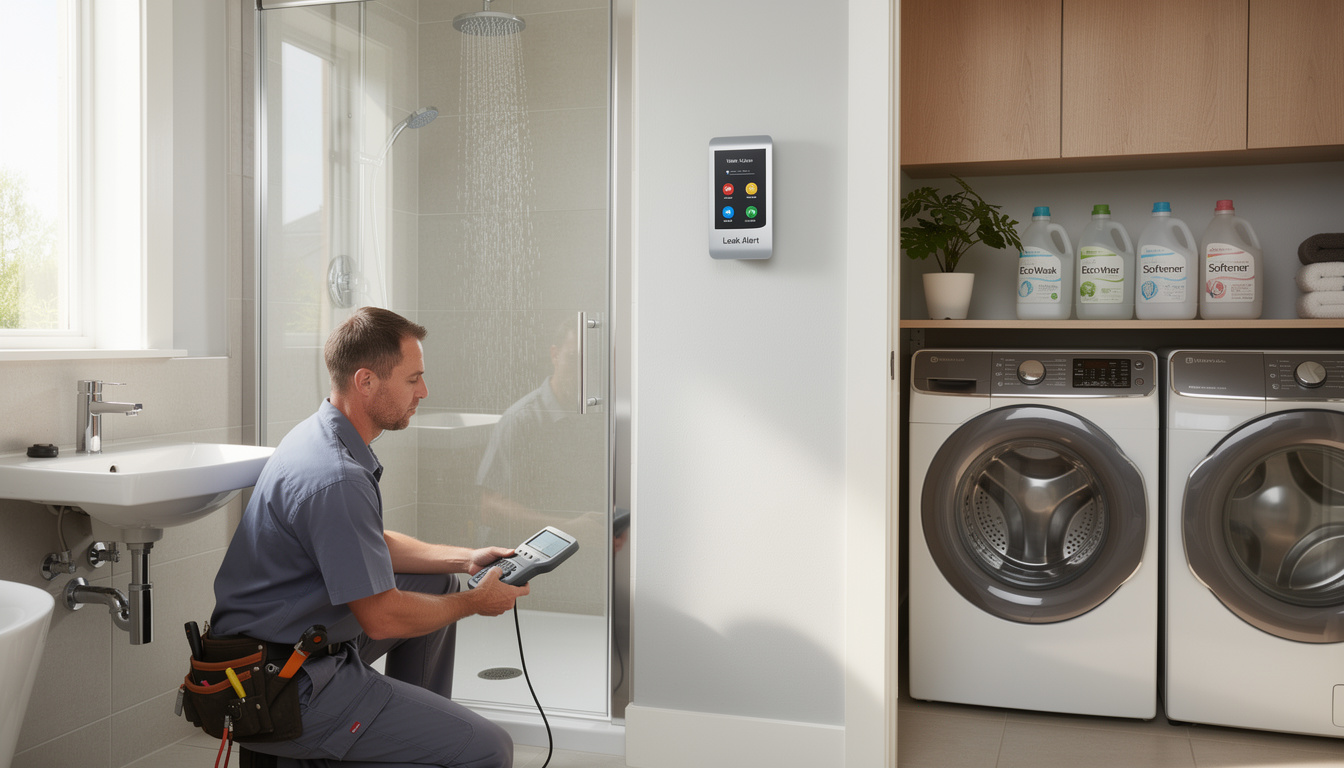
If you want the quickest win, start with leak detection. Leaks are the classic budget killer because they don’t ask permission. They run at night, while you’re at work, and while you’re on vacation. And the worst ones don’t leave puddles—think toilet flappers that don’t seal perfectly or a slow pinhole leak under a vanity that evaporates before you ever see it.
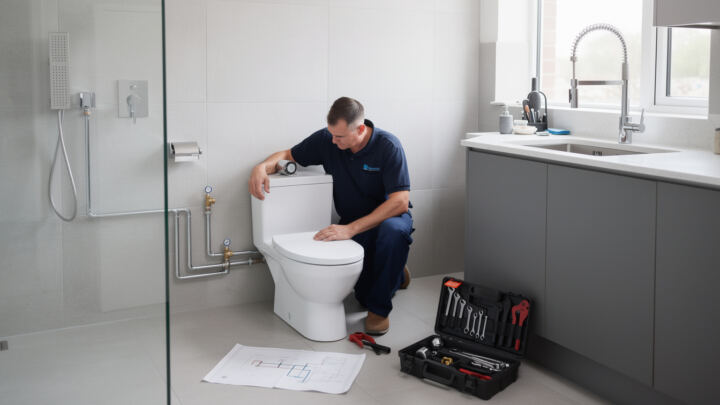
A simple example: that “one drip every few seconds” faucet can waste thousands of gallons across a year. Even when you’re not paying attention, your meter is. Toilets are even sneakier: a running toilet may sound obvious, but many only cycle intermittently, so the household just gets used to the noise. Fixing a flapper, fill valve, or adjusting the float is often inexpensive, yet it can change your monthly statement immediately.
Where leaks hide (and how to hunt them down)
Start with your water meter. Turn off all taps and water-using appliances, then check whether the meter still moves. If it does, something is drawing water. That’s your clue to investigate. Dye tablets in the toilet tank are another low-effort test: if color appears in the bowl without flushing, you’ve got a slow leak.
For harder-to-find issues, modern tools help a lot. Acoustic listening devices, thermal cameras, and pressure tests can locate problems behind drywall or under slabs without guessing. If you’ve ever had a “mysterious high bill” month, a professional diagnostic visit can pay for itself quickly by catching a hidden leak before it becomes water damage.
Small repairs that prevent big disasters
Leaks don’t just inflate a water bill. They can rot cabinets, warp flooring, and create mold issues. A basic repair—tightening a compression fitting, replacing a worn supply line, resealing a toilet base—often costs far less than restoration work later.
To make this feel real, imagine a household in San Ramon that keeps seeing spikes every other month. They assume it’s seasonal use. A quick meter test reveals movement at midnight with everything off. The culprit ends up being an aging toilet valve that “sticks” after a flush. The fix takes under an hour, and the following bill drops noticeably. The insight here is simple: you can’t conserve what you can’t measure, and leaks are the first measurement problem to solve.
Low-Flow Fixtures That Still Feel Good: Showers, Faucets, and Toilets
Once leaks are under control, the next step is upgrading what you use every day: low-flow fixtures. A lot of people worry that “low-flow” means “low comfort,” like sad showers and slow rinses. That reputation mostly comes from early models. Current fixtures (the kind you’ll see commonly sold in the mid-2020s) are much better at maintaining a satisfying feel by shaping the spray and mixing air into the stream.
Toilets are the biggest headline item. Older toilets can use several gallons per flush, while modern high-efficiency models are often around 1.28 gallons per flush or less. Multiply that by a family’s daily use, and the math gets persuasive quickly. Dual-flush toilets go further by letting you choose a lighter flush for liquid waste, which saves water without asking you to think too hard about it.
Showerheads and the “I still want pressure” problem
Many low-flow showerheads are designed to save water per minute while keeping the spray strong through nozzle design. If you’ve got a household with different preferences—one person loves a rain shower, another wants a focused massage spray—look for models with adjustable patterns. It’s not just about comfort; it’s about compliance. If your upgrade annoys everyone, they’ll find workarounds (longer showers, higher settings), and the savings vanish.
Here’s a practical approach: install one quality low-flow showerhead in the most-used bathroom first. Compare your usage for a couple billing cycles. If nobody complains and your bill drops, roll it out to the rest of the house. The insight: pilot your upgrades like you’d test-drive a car.
Faucet aerators: tiny part, surprisingly big impact
Faucet aerators are one of the cheapest plumbing upgrades you can do. They screw onto the end of the faucet and mix air with water so the stream feels strong while using less. In many homes, they can reduce faucet consumption by a meaningful margin—without changing how washing hands or rinsing dishes feels.
Pair aerators with a quick habit shift: don’t let the tap run while you scrub. That combo is one of those “why didn’t I do this earlier?” moves. Next up, it’s time to talk about the machines that quietly use a lot of water: laundry and dishwashing.
Videos can help if you’re the kind of person who prefers seeing installs and comparisons before buying.
Water-Efficient Appliances and Daily Habits That Make Them Pay Off
Upgrading fixtures is great, but the real long-game savings often come from water-efficient appliances—especially washing machines and dishwashers. Older machines can be water-hungry, and they often rely on “brute force” volume instead of targeted spray patterns and sensors. Newer models clean well using less by adjusting fill levels, cycling smarter, and maintaining temperature more precisely.
When you shop, look for clear efficiency certifications and published water-per-cycle numbers. A common mistake is buying a high-efficiency unit and then running it inefficiently—small loads, heavy cycles by default, pre-rinsing everything under running water. The appliance is only half the equation; your routines control the rest.
A realistic “before and after” household scenario
Picture a family of four that runs five to seven laundry loads weekly and uses the dishwasher most nights. Their old top-loader fills nearly to the top even for medium loads. They swap to a modern front-loader with load sensing, and they start washing full loads on cold for most clothing. They also stop pre-rinsing dishes and instead scrape solids into the trash or compost. The result isn’t just lower usage—it’s more consistent usage, so the water bill becomes predictable again.
Hot water wait time: saving water by saving time
Appliances aren’t the only “routine” issue. Waiting for hot water is a hidden waste: you turn on the tap, you wait, and perfectly clean water goes down the drain. Two upgrades help here: a tankless heater (which heats on demand) and recirculation solutions (which keep hot water closer to where you need it). Even if your main goal is water savings, you’ll feel the comfort upgrade every morning.
Table: quick upgrade vs. typical impact
| Upgrade 🧰 | What it helps with 💧 | Why homeowners notice it ✅ |
|---|---|---|
| High-efficiency toilet 🚽 | Lower gallons per flush | Instant savings with no behavior change |
| Low-flow showerhead 🚿 | Less water per minute | Same routine, easier monthly control |
| Faucet aerators 🫧 | Reduced sink flow | Cheap, fast, feels the same |
| Water-efficient washer 🧺 | Less water per load | Big impact for families with lots of laundry |
| Smart water meters 📟 | Find spikes and leaks early | Fewer “surprise bill” months |
Once you’ve optimized the “inside the house” routines, the next big savings usually live outside—and that’s where efficiency can be dramatic.
Outdoor Water Conservation: Drip Irrigation, Smart Controllers, and Sprinkler Fixes
Outdoor use is where many households accidentally torch their budget. A lawn doesn’t care if water is cheap or expensive; it will take whatever you give it. That’s why outdoor-focused water conservation is often the difference between “pretty good” and “wow, we really cut it.” The best part: you can usually improve landscaping efficiency without sacrificing a nice yard.
The core upgrade is drip irrigation. Instead of spraying water into the air (where wind and evaporation can steal it), drip lines deliver water near the plant roots. That means less waste and healthier plants, especially in hotter months. If you’ve got garden beds, shrubs, or trees, drip is a straight upgrade in both performance and efficiency.
Smart irrigation controllers: watering that listens to weather
Smart controllers adjust schedules based on weather, soil moisture, and plant needs. That’s huge because many people water on autopilot: Monday/Wednesday/Friday no matter what. If it rained yesterday, you still water today. A smart controller breaks that habit automatically. And if your city has watering restrictions, it’s also easier to stay compliant without constantly checking rules.
Sprinkler head problems that waste water fast
Traditional sprinklers can still be efficient if they’re maintained. The issue is that they often aren’t. A single misaligned head that hits the driveway is basically you paying to wash concrete. Cracked heads can also leak underground and create mushy patches that look like “bad drainage” but are really pressurized loss.
A seasonal inspection helps: check coverage, replace broken nozzles, and adjust arcs so you’re watering plants—not the street. If you want a quick DIY test, place a few flat containers (like tuna cans) around the yard during a watering cycle and compare how evenly they fill. Uneven fill means uneven coverage, which often triggers “let’s water longer,” which increases waste. The insight: even coverage beats longer runtime.
A simple outdoor checklist that actually gets done
- 🌦️ Set the controller to seasonal adjustments (or switch to a smart controller).
- 🧪 Check for soggy spots that could signal underground leaks.
- 🎯 Aim sprinkler heads away from sidewalks and fences.
- 🌱 Convert beds to drip irrigation where possible.
- 🕒 Water early morning to cut evaporation and wind drift.
After outdoor efficiency, there’s one more category that ties everything together: the plumbing “infrastructure” upgrades that reduce waste without you thinking about it.
If you want to see real-world yard conversions and controller setups, this kind of walkthrough is handy.
Smart Plumbing Upgrades for Hot Water Delivery: Recirculation, Tankless, and Pipe Insulation
Hot water is where comfort and conservation overlap. Every second you wait for hot water is usually water going down the drain. Two homes can have the same fixtures and appliances, yet very different usage because one has long pipe runs and slow delivery. This is where targeted plumbing upgrades make the home feel better while also reducing waste.
Recirculation pumps: stop wasting water while waiting
A hot water recirculation pump moves water through the lines so hot water is available faster at the tap. In practical terms, it means you don’t run the shower for a minute (or three) just to get the temperature right. That’s convenience you notice daily.
There are different strategies here. Some systems run on a timer, so they’re active during morning and evening routines. Others use on-demand activation. The “best” choice depends on your schedule and how far the bathrooms are from the heater. The point is to reduce the “dead time” where you’re paying for water you didn’t even use.
Tankless water heaters: efficiency plus lifestyle benefits
Tankless units heat water as needed rather than storing it. People often choose them for energy reasons and endless hot showers, but they can support water savings too—especially when paired with a recirculation strategy or when they shorten the time-to-hot at key fixtures. Upfront cost is higher, yet many homeowners see it as a long-term investment because utilities aren’t getting cheaper.
Pipe insulation: underrated, cheap, and surprisingly helpful
Pipe insulation doesn’t sound exciting, but it can reduce heat loss in hot water lines, helping water arrive warmer and stay warm longer. That can cut down the “keep running it until it’s hot” behavior in kitchens and bathrooms. Insulation also helps protect pipes in cooler areas of the home, reducing the risk of cold-weather issues.
Smart water meters and monitors: make savings stick
Smart water meters and whole-home monitors track usage in near real time and can alert you to unusual patterns—like a toilet that starts running at 2 a.m. or a sudden spike while you’re away. This kind of visibility is how you prevent a small issue from becoming a massive water bill surprise.
Think of it like a fitness tracker, but for your house. Without it, you guess. With it, you adjust. And once you have data, your water-saving tips become specific: “our showers are the biggest chunk” or “the irrigation cycle is the main culprit,” not just vague good intentions.
Final insight for this section: the best hot-water upgrades don’t just save resources—they remove friction from daily life, so efficiency becomes the default.
Which plumbing upgrade usually lowers a water bill the fastest?
Fixing leaks is typically the fastest win. Start with leak detection (meter test, toilet dye test), then repair running toilets and dripping faucets. It’s common to see a noticeable drop in the very next billing cycle when a hidden leak is stopped.
Do low-flow fixtures feel weak compared to older fixtures?
Modern low-flow fixtures are much better than early versions. Many low-flow showerheads maintain a strong feel through spray design and air mixing, and faucet aerators keep pressure while reducing flow. Choosing quality models matters more than people expect.
Are smart water meters worth it if I’m already careful?
Yes, because they catch problems you can’t “be careful” about—like a toilet that starts running while you sleep or a small underground irrigation leak. Alerts and usage graphs help you act fast, which protects both your water bill and your home from damage.
What’s the best outdoor upgrade for water conservation?
Drip irrigation is often the biggest improvement for plant beds, shrubs, and trees because it delivers water to roots with less evaporation and overspray. Pair it with a smart irrigation controller and regular sprinkler-head checks to avoid watering pavement.
Does pipe insulation really save water, or just energy?
It’s mainly an energy saver, but it can also reduce water waste indirectly by helping hot water arrive warmer and stay warm longer. That often shortens the time people leave taps running while waiting for hot water, especially in kitchens and upstairs bathrooms.