In brief
- 🧰 Plan your DIY faucet swap like a tiny plumbing project: clear space, protect the cabinet, and line up the right tools.
- 🚰 Shut down the water supply properly (hot and cold), then “prove it” by opening the faucet until it runs dry.
- 🔧 Remove the old hardware with the right wrench strategy (often a basin wrench), then clean the sink deck so the new base sits flat.
- 🧼 Use the correct sealant (putty, silicone, or the included gasket) based on your faucet and countertop material.
- 🧵 Connect lines carefully, use thread tape where appropriate, and tighten “snug + a little,” not “gorilla tight.”
- 🕵️ Leak-check in stages: first at the valves, then at the supply connections, then around the faucet base while running water.
- 🎥 Watch a quick visual walk-through before you start, especially if your sink is cramped or your old nuts are corroded.
That steady drip isn’t just annoying—it’s your house quietly asking for a refresh. A new faucet can make a kitchen or bathroom feel cleaner, newer, and weirdly more “put together,” even if you don’t renovate anything else. And the good news is that a faucet replacement is one of those DIY jobs that looks intimidating until you realize it’s mostly a sequence of small, manageable moves: shut off the water supply, disconnect, remove, clean, set the new fixture, reconnect, and test. The trick is doing each move with intention, because one skipped detail—like leaving old putty on the sink deck or cross-threading a fitting—can turn a simple Saturday project into a slow leak you discover at 2 a.m.
To keep it real, we’ll follow a simple storyline: Sam, a renter-turned-new-homeowner, is swapping a tired kitchen faucet for a modern pull-down model. The cabinet is tight, the shutoff valves are a little stiff, and the old mounting nuts are basically fossilized. Sound familiar? Perfect. This step-by-step guide is built for that exact scenario—practical, a little gritty, and focused on getting a clean result without calling in backup unless you truly need it.
How to Install a New Faucet Step-by-Step: Prep, Planning, and Picking the Right Tools
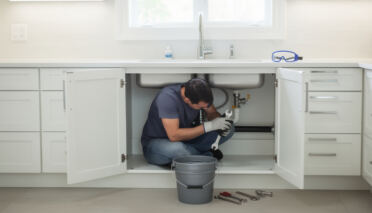
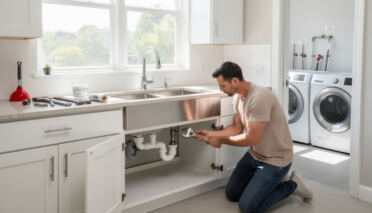
Before you install anything, treat this like a mini plumbing job, not a “swap this shiny thing and hope for the best” moment. Sam starts by clearing everything out from under the sink, because working around cleaning bottles is how you end up bumping a valve mid-project. Lay down an old towel or a shallow tray to catch drips, and keep a flashlight handy—under-sink lighting is always worse than you remember.
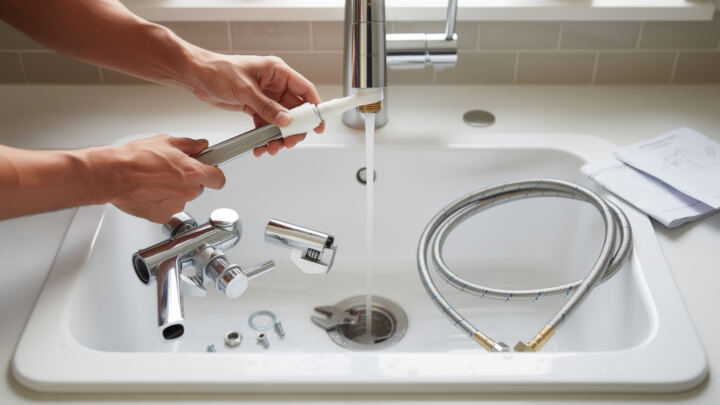
Next comes the compatibility reality check. Is your sink one-hole, three-hole, or something in between? Many modern faucets are designed for a single mounting hole but can cover extra holes with a deck plate (sometimes called an escutcheon). If your new faucet includes a plate, it’s not just cosmetic; it helps stabilize the base and makes the install look intentional rather than “patched together.”
Essential DIY tools and materials (and what they’re actually for)
You can absolutely do this with basic gear, but having the right tools saves your patience. Sam learned the hard way that an adjustable wrench alone isn’t always enough when the mounting nuts sit behind a deep bowl. That’s where a basin wrench earns its keep.
- 🔧 Basin wrench for hard-to-reach mounting nuts behind the sink
- 🧰 Adjustable wrench for supply line nuts and valve connections
- 🪛 Flathead screwdriver for certain shutoff valves and prying trim carefully
- 🧻 Rags + paper towels for drying, wiping, and spotting tiny leaks fast
- 🔦 Flashlight/headlamp for visibility under the sink
- 🧵 Thread tape (PTFE) for specific threaded connections (more on where it belongs later)
- 🧼 Sealant: plumber’s putty or silicone (only if your faucet or sink setup calls for it)
One more pro move: take a photo of the current setup before you touch anything. It’s a quick reference for hose routing and valve orientation, and it can save you from second-guessing later. The goal here isn’t perfection—it’s control. A calm setup makes every step after this easier.
Quick decision table: gasket vs. putty vs. silicone
People love arguing about sealant, but the “right” answer depends on the faucet base design and your sink material. Many newer faucets include a foam or rubber gasket meant to seal without extra goop. If a manufacturer includes a gasket, use it unless the instructions say otherwise.
| Option | Best for | Watch-outs |
|---|---|---|
| 🟦 Rubber/Foam Gasket | Most modern faucet bases on stainless or composite sinks | Don’t add extra putty unless the manual recommends it; it can cause wobble |
| 🟨 Plumber’s Putty | Metal sinks and some faucet deck plates | Can stain porous stone; avoid on marble/granite unless labeled safe |
| 🟥 Silicone Caulk | Stone countertops, damp-prone areas, or when the maker specifies it | Messy to remove later; use a thin bead, not a frosting layer |
With the plan locked in, you’re ready to shut things down safely—which is where most “oops” moments happen if you rush. The next section is all about controlling the water, not fighting it.
Turn Off Water Supply and Verify It’s Safe Before You Remove the Old Faucet
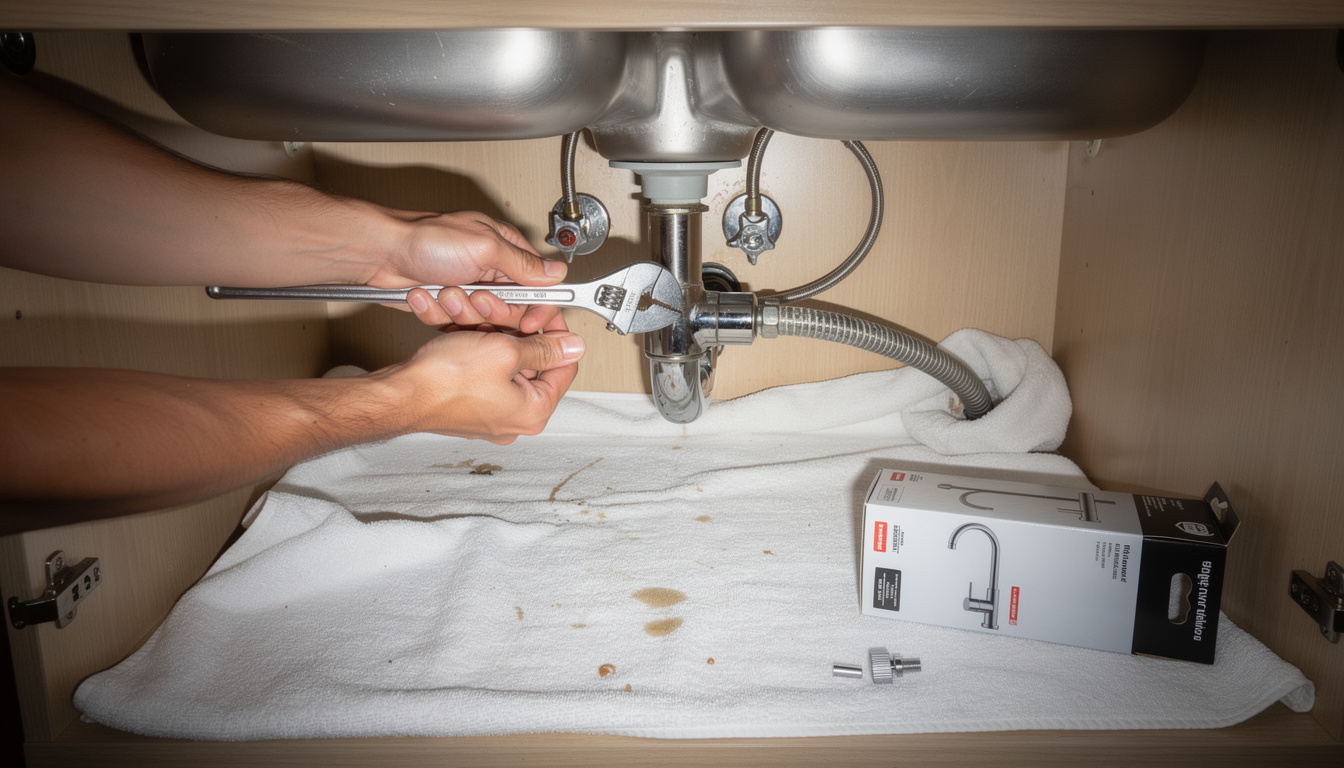
This is the part that separates smooth installs from chaotic cabinet floods. Start by locating the shutoff valves under the sink. You should see two: one for hot, one for cold. Turn them clockwise until they stop. Some valves turn by hand; others may need a flathead screwdriver. If one feels stuck, don’t force it like you’re opening a jar—steady pressure is fine, but if it feels like it’ll snap, you may be looking at a valve replacement or a call to a plumber.
Now “prove” the water is off. Open the faucet you’re replacing and let it run until it sputters and stops. If there’s a sprayer, trigger it too. You’re draining pressure from the lines, which makes disconnecting less dramatic. Sam skipped this once and got a surprise shower from residual pressure—funny later, not fun in the moment.
What if the shutoff valves don’t fully stop the water?
If water keeps flowing steadily, your shutoff valves aren’t doing their job. At that point, the safest move is to close the home’s main water shutoff, then repeat the “prove it” test. In many homes, the main shutoff is near where the water line enters the house, in a utility area, basement, or an exterior access box.
There’s also a middle scenario: the flow slows but doesn’t stop completely. You can sometimes proceed if it’s truly minimal, but be honest about your tolerance for risk. A slow trickle still becomes a mess when you disconnect hoses. If you’re unsure, fix the valves first—because good valves make every future plumbing project easier.
Protecting the cabinet and setting up for clean disassembly
Once the water is confirmed off, place a small bowl under the shutoffs and keep towels nearby. Even with everything closed, supply lines hold some water. Think of this as setting up your “landing zone.” If you have particleboard cabinets (common even in newer builds), water damage happens fast and looks awful.
With everything dry and controlled, you’re ready for the gritty part: getting the old faucet out, especially if it’s been there for years. That’s where technique matters more than brute strength.
Some people like a visual refresher right here, especially for valve shutdown and draining. A quick video can help you recognize parts under your sink before you start loosening anything.
Remove the Old Faucet Without Breaking Anything: Nuts, Lines, and Stubborn Hardware
Old faucets rarely “unscrew politely.” Corrosion, mineral buildup, and cramped spaces turn a simple task into a knuckle-busting puzzle. Start by disconnecting the supply lines where they meet the shutoff valves. Use an adjustable wrench and back up the valve body if needed so you’re not twisting the pipe in the wall. Turn the nut counterclockwise and expect a little water to spill—your bowl is there for a reason.
Next, disconnect the supply lines from the faucet inlets if your setup requires it. Some faucets have integrated lines you’ll remove as part of the whole assembly; others use separate flexible hoses. Either way, go slow and keep track of what came from where.
Getting to the mounting nuts (aka the part everyone complains about)
Under the sink, the faucet is usually held by one or two mounting nuts on threaded posts. This is where the basin wrench shines. Its pivoting jaw grabs the nut while the long handle gives you leverage in tight quarters. If the nut won’t budge, apply steady force rather than jerky movements. For really stubborn parts, a penetrating lubricant can help—just keep it off surfaces you don’t want stained.
If there’s a deck plate or trim ring on top, it might be stuck to old caulk or putty. Carefully cut around it with a plastic scraper or a cautious blade pass (don’t gouge your countertop). Once loosened, lift the faucet assembly straight up and out.
Cleaning the sink deck so the new faucet seats properly
This part is underrated. Old putty, silicone, and grime prevent the new base from sitting flat, which can lead to wobble or micro-gaps that let water seep under the faucet. Scrape residue gently, wipe the area clean, and dry it fully. Sam found a ring of hardened gunk that was basically acting like a spacer—no wonder the old faucet rocked back and forth.
Here’s the simple rule: clean and flat equals stable and leak-resistant. Once the surface is prepped, you’re set up for a smoother install instead of fighting alignment later.
If you want a quick visual of the “basin wrench under the sink” technique, it helps to watch someone do it once. It’s one of those moves that clicks immediately when you see the angles.
Install the New Faucet Step-by-Step: Dry Fit, Sealant Choices, and Mounting for a Straight Finish
Now the fun part: putting in the new faucet. Before you commit, do a dry fit. Drop the faucet into the mounting hole(s) without tightening anything. Check that the spout orientation makes sense and that the handle won’t hit a backsplash or wall. If you’re using a deck plate, confirm it covers unused holes neatly and sits evenly.
Most modern faucets come with either an O-ring/gasket or instructions to apply sealant. Follow the manufacturer’s order of operations, because some designs want the gasket on the underside, while others want it between the deck plate and the sink. If you’re using plumber’s putty, roll it into a thin rope and place it where the plate meets the sink, then press gently. The goal is a consistent seal, not a thick layer squeezing everywhere.
Mounting from below: keep it straight while you tighten
This is where an extra set of hands helps, but you can do it solo with a little strategy. Center the faucet above, then snug the mounting hardware from below. Don’t fully tighten until you’ve checked alignment from above. Stand back and make sure the spout is straight relative to the sink and backsplash.
Once it looks right, tighten the mounting nuts gradually. Alternate between sides if there are two points, so the base pulls down evenly. “Snug” is the vibe here. Over-tightening can crack certain sink materials or distort gaskets, which is the opposite of what you want.
Real-life alignment trick Sam used
Sam placed a strip of painter’s tape on the backsplash as a visual centerline, then aligned the spout to it before final tightening. It sounds silly, but it worked. When you’re leaning under a sink twisting hardware, it’s easy to nudge the faucet off-center without noticing. A simple reference mark keeps it honest.
With the faucet mounted, the job shifts from mechanical to watertight: connecting supply lines cleanly and checking for leaks like you actually care about your cabinet floor.
Connect Water Supply Lines, Seal Threads Correctly, and Test for Leaks Like a Pro
With the faucet secured, it’s time to reconnect the water supply. If your faucet uses flexible hoses, connect them to the shutoff valves first—or follow the order in your manual if it specifies otherwise. Hand-tighten the nuts to avoid cross-threading, then finish with an adjustable wrench. A good rule is “hand tight, then a quarter to half turn more.” If you crank hard, you can crush a washer or damage threads.
Where thread tape helps (and where it doesn’t)
Thread tape is useful on certain threaded connections, but it’s not magic dust you sprinkle everywhere. Many supply line connections seal with a rubber washer, meaning the washer does the sealing—not the threads—so tape is unnecessary and sometimes counterproductive. Use tape only where the instructions call for it, or where you’re dealing with tapered pipe threads (common in some adapters). If you do use it, wrap it clockwise so it tightens as you screw on the fitting, typically covering about three to four threads.
Leak testing in stages (the stress-free way)
Don’t just blast both valves open and hope. Turn on the cold valve slowly and watch the connections under the sink. Then do the same for hot. Use a dry paper towel and touch each joint—paper instantly reveals tiny moisture you might not see.
Next, run the faucet in the sink. Check under the base for seepage and feel around the supply nuts again. If it’s a pull-down faucet, extend and retract the hose to confirm it moves freely and doesn’t snag on stored items. Sam had to reroute a cleaning bottle because it interfered with the hose weight—small fix, huge improvement in day-to-day use.
Common problems and quick fixes
- 💧 Tiny drip at a supply nut: tighten slightly, then re-check with a dry towel
- 🧵 Cross-threaded feel: stop, back off, and re-thread by hand until it spins smoothly
- 🚿 Low flow after install: remove and rinse the aerator (debris often breaks loose during plumbing work)
- 🧼 Water under the base: confirm gasket/putty contact, and ensure the deck is clean and flat
The payoff is immediate: smoother handle action, better flow, no drip soundtrack. And once you’ve done one faucet, the next “step-by-step” project feels way less mysterious.
Do I need a basin wrench to install a new faucet?
Not always, but it’s the easiest way to reach and turn mounting nuts in tight spaces under a sink. If your faucet has easy-access hardware you might manage with an adjustable wrench, but for most kitchen installs a basin wrench saves time (and scraped knuckles).
Should I use plumber’s putty or silicone sealant under the faucet base?
Use what your faucet instructions recommend. Many modern faucets include a rubber/foam gasket and need no extra sealant. Plumber’s putty is common on stainless sinks, while silicone is often safer for stone countertops. The main goal is an even seal on a clean, flat surface.
Why is my new faucet leaking at the supply line connection?
Most leaks come from a connection that isn’t seated correctly or is slightly under-tightened. Turn off the water supply, dry everything, then re-tighten the nut a small amount. Also check whether the connection uses a rubber washer (which must be present and aligned) rather than relying on thread tape.
My shutoff valves won’t fully stop the water—can I still do the DIY install?
If the valves don’t shut off completely, it’s safer to close the home’s main water supply and address the faulty shutoffs first. Proceeding with only a partial shutoff risks a cabinet flood when you disconnect lines.
How long should I wait before I’m sure the install is leak-free?
Do an immediate check during and after turning the water back on, then re-check 30–60 minutes later after normal use. A final quick look the next day is smart too, because slow weeps can show up after temperature changes and pressure cycles.