Plumbing used to be the “invisible” home system you only thought about when something went wrong. Now it’s getting the same glow-up as lighting, security, and entertainment—because smart plumbing finally caught up with the connected-home era. The big shift isn’t just shiny gadgets, either. It’s a practical wave of tech that helps you stop floods before they start, track water like you track electricity, and upgrade daily routines with fixtures that feel quietly luxurious. If you’ve ever come home to a mystery puddle under the water heater, or watched your bill jump with no clear reason, you already get why this matters.
What’s driving it in 2026 is a mix of risk and opportunity: extreme weather that makes water damage more common, insurance carriers rewarding homes that reduce claims, and homeowners who want efficiency without giving up comfort. That’s where automated shut-off valves, better leak detection systems, modern filtration, tankless water heaters, and water-smart fixtures come in. The best part? These upgrades don’t live in a futuristic showroom—they fit into real houses with real schedules, and they’re designed to prevent the annoying stuff (surprises, callbacks, repairs) that drains time and money.
En bref
- 🚰 Remote monitoring is turning water into a trackable utility, with alerts, usage insights, and faster maintenance decisions.
- 🛑 Automated shut-off valves can stop a burst line in seconds, cutting down the kind of damage that spirals into five-figure repairs.
- 🔎 Modern leak detection systems combine acoustic sensing, moisture measurement, and thermal imaging to locate hidden issues without tearing up floors.
- 💧 Water-efficient fixtures (especially certified toilets and smart faucets) reduce waste without making your home feel “low-flow sad.”
- 🔥 Tankless water heaters deliver on-demand hot water and can be significantly more energy-efficient than storage tanks when sized and maintained correctly.
- ♻️ Water recycling is going mainstream via greywater systems that reuse shower/sink water for toilets or irrigation.
- 🧊 Pipe insulation and energy-efficient pumps are the quiet upgrades that boost comfort, protect infrastructure, and lower operating costs.
Smart plumbing and remote monitoring: turning water into a measurable home utility
Let’s follow a simple storyline: Mia and Jordan live in a 1990s home with a busy household—two kids, a dog, and a calendar that’s basically a competitive sport. They don’t have time to “listen for leaks” or guess why the water bill spiked. This is where remote monitoring flips the script, because it treats your plumbing like a data-rich system instead of a mystery box behind drywall.
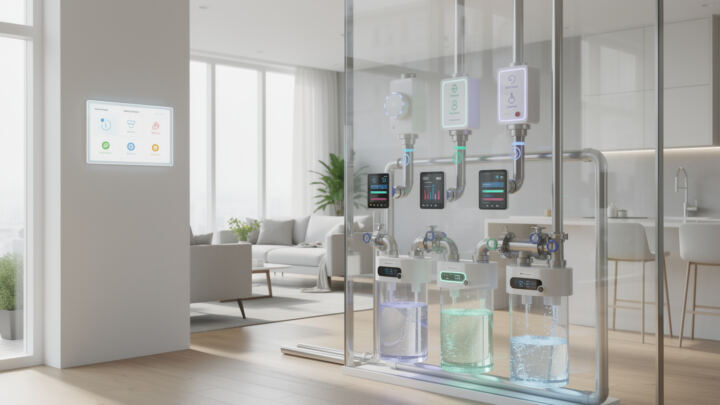
A modern smart-water monitor installed on the main line watches patterns in flow rate and pressure. Normal use looks like a recognizable rhythm: morning showers, dishwasher cycles, laundry on weekends. When something deviates—say, a toilet flapper running nonstop or a pinhole leak behind a wall—smart analytics can flag it early. The practical win isn’t just an alert; it’s speed. You stop wasting water today, not after the next billing cycle.
Many setups also give you fixture-level insights through “event detection.” The system learns what a faucet session looks like versus a shower or irrigation. If the app tells Mia, “Unusual continuous flow detected for 47 minutes,” she doesn’t have to play detective. She can check the obvious culprits first, then decide whether to call a pro, all without guessing.
Where smart monitoring really pays off (beyond cool graphs)
One underrated benefit is how monitoring changes maintenance behavior. People don’t schedule plumbing checkups because it feels abstract—until a sensor shows micro-leak activity at 2:13 a.m. Then it’s suddenly very real. That shift can prevent the classic scenario: a slow leak that quietly damages cabinets, subfloors, or a slab edge over months.
And yes, insurance is part of the conversation now. Carriers increasingly like homeowners who can demonstrate risk reduction. In the field, water-damage claims commonly land in the $35,000–$50,000 range for repairs once mitigation, demolition, drying, and rebuild are involved. Extreme cases can be far higher when multiple rooms, electrical, or structural elements are affected. When a smart system cuts the incident short, it doesn’t just save money—it saves your life from becoming a renovation project.
Smart plumbing is basically a seatbelt: you don’t install it because you plan to crash, you install it because you don’t control every variable in the road ahead. Next up, the tech that doesn’t just alert you—it takes action.
Automated shut-off valves and smarter pressure control: preventing floods before they happen
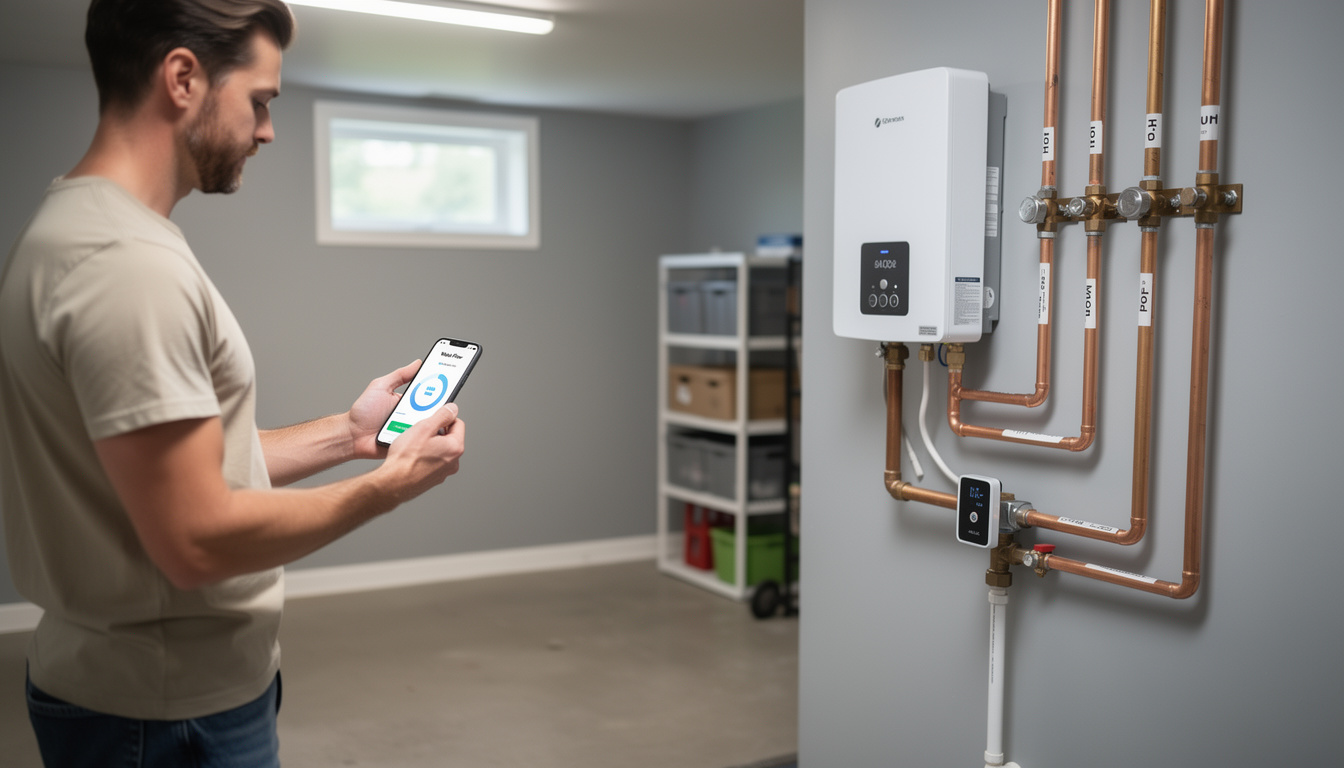
If you only buy one “serious” upgrade, make it automated shut-off valves. These devices sit on the main water line and make a fast decision when water behavior looks wrong. That matters because most catastrophic water events aren’t dramatic at first. They start as a weird pressure change, a cracked supply line, or a failed appliance connection that keeps feeding water until someone notices.
Here’s the basic mechanism: sensors track incoming flow and pressure. A burst pipe or major leak changes the signature—suddenly water is moving like someone turned on a firehose, or it’s flowing continuously when nobody’s home. When the system’s threshold triggers, it closes the valve and stops incoming water. If you’re out of town, the app still tells you what happened, and you’re not begging a neighbor to find your shutoff in the dark.
Whole-home shutoff vs. point-of-use protection
Whole-home devices cover the entire system. Point-of-use shutoff valves focus on a specific risk zone, most commonly the water heater. That’s a big deal because water heaters often live in places you don’t watch—garages, basements, utility closets. A tank can leak for hours before anyone notices, and by then the drywall and flooring are already having a bad day.
Point-of-use shutoffs typically monitor the appliance’s feed line and close when they detect flow patterns consistent with a leak. Many also include alarms. If you’re shopping, look for robust valve designs (ball valves are widely considered more dependable for full shutoff than older gate-style approaches).
Pressure reducing valves: the unsung hero for older homes
Now for the upgrade nobody brags about at parties: a pressure reducing valve (PRV). Municipal systems often run higher pressure to reliably serve neighborhoods and multi-story areas. That’s fine until it isn’t—especially if your house has aging pipes, older fittings, or recurring leak history.
A PRV uses a spring-loaded diaphragm to maintain stable downstream pressure. You still get satisfying showers, but you avoid stressing pipes and valves inside walls and under floors. In some cities, rebates have even been offered in recent years to encourage PRV installation because it reduces strain on both homes and local infrastructure. The vibe here is simple: stable pressure equals fewer surprises.
Quick comparison table: “what does what”
| Technology | What it prevents | Best placement | Bonus perk |
|---|---|---|---|
| 🛑 Automated shut-off valves | Major leaks, burst lines, runaway fixtures | Main water line | 📱 App alerts + remote monitoring |
| 🚿 Point-of-use shutoff | Appliance leaks (esp. water heater) | Water heater feed, select appliances | 🔔 Local alarm for fast awareness |
| ⚖️ PRV (pressure reducing valve) | Stress-related failures from high pressure | After main shutoff, before branches | 🧱 Better protection for older piping |
| 🧊 Pipe insulation | Freezing risk, heat loss, condensation | Exposed hot/cold lines | 🔥 Faster hot water at fixtures |
The flood-prevention layer is about control: control water when something breaks, control pressure before it breaks something else. Next, let’s talk about finding the sneaky leaks that don’t announce themselves.
Want a visual walkthrough of smart shutoff setups and common install locations? This kind of demo helps you understand what you’re paying for.
Leak detection systems that don’t trash your house: acoustic sensing, moisture meters, and thermal imaging
The old-school way of leak hunting often involved a lot of “let’s cut here and see.” Modern leak detection systems are the opposite: they aim to confirm location first, then open only what’s necessary. That’s a huge shift for homes with slab foundations, tiled floors, or finished basements where exploratory demolition gets expensive fast.
High-end electronic leak detection typically blends three tools. First, acoustic sensing: water moving through a pipe has a normal sound profile. When it escapes through a crack, the frequency changes. Sensitive microphones and transducers amplify those differences so a technician can pinpoint the area with surprising accuracy. Second, moisture meters help confirm whether an area is holding abnormal water content—useful when the leak is underground or in a wall cavity. Third, thermal imaging shows temperature anomalies: cold spots for cold-water leaks, hot signatures for hot-water lines bleeding heat into nearby materials.
A real-world scenario: slab leak panic, minus the panic
Mia notices warm spots on the living room floor and hears a faint hiss at night. The fear is immediate: “Are we about to jackhammer the slab?” With electronic detection, a pro can map likely routes, confirm the leak zone, and recommend the least invasive fix—sometimes a targeted repair, sometimes a reroute depending on pipe condition and risk tolerance.
This is where tech saves your home in two ways. It reduces the chance you repair the wrong spot, and it limits collateral damage. Nobody wants to replace flooring because the investigation got messy.
How to make leak tech actually work for you
Hardware is only half the story. Calibration, experience, and neighborhood-specific knowledge matter a lot—soil movement, pipe materials, and local pressure can change the “sound” a leak makes. If you’re hiring, ask what modalities they use. If it’s only one tool, you’re missing the benefit of cross-verification.
And here’s the quiet truth: the best leak is the one you never have. Pair detection with the prevention layer from the previous section and you end up with a system that’s both watchful and decisive. Next, let’s look at the tech that improves what comes out of the tap—and what it does to your pipes and appliances over time.
If you want to see how acoustic and infrared tools are used in the field, this search pulls up solid demonstrations.
Water quality tech, water recycling, and greywater systems: cleaner water in, less waste out
Water quality is one of those topics that sounds optional until you deal with scale buildup, itchy skin, cloudy ice, or fixtures that look tired way too early. Modern systems are getting more “two-in-one”: softening plus filtration, better certifications, and designs that fit tighter mechanical spaces.
Whole-home softening with built-in filtration
Softening is usually based on ion exchange. Minerals like calcium and magnesium swap places with sodium ions on resin beads, reducing hardness so it doesn’t crust up inside pipes and appliances. The plumbing benefit is real: less scale means valves and heating elements last longer, and flow stays more consistent over time.
The newer twist is bundling that with filtration media aimed at contaminants people actually worry about now—heavy metals, certain industrial compounds, agricultural chemicals. Look for systems with legitimate third-party testing and lab-backed performance claims rather than vague “removes toxins” language.
Reverse osmosis at the sink: targeted drinking-water upgrades
Reverse osmosis (RO) uses pressure to push water through a semi-permeable membrane that traps dissolved solids and many contaminants. Good setups use a pre-filter, the RO membrane, and a carbon post-filter for taste and odor. The result is water that often tastes noticeably cleaner—especially if your supply has chlorine flavor or mineral heaviness.
One practical tip: prioritize NSF/ANSI-certified components and plan for filter changes. RO isn’t “set it and forget it,” but it’s very manageable.
Water recycling and greywater systems: the next frontier for everyday homes
Water recycling used to sound like something only eco-experiment houses did. Now, greywater systems are increasingly realistic for homeowners who want to cut outdoor and non-potable demand. Greywater is lightly used water from showers, bathroom sinks, and laundry (depending on local code). It can be redirected for toilet flushing or irrigation after appropriate filtering and safeguards.
In drought-prone regions, the payoff is obvious: you lower your dependence on treated potable water for tasks that don’t need it. The design details matter, though. You want backflow prevention, correct labeling, and code-compliant separation so there’s no cross-connection risk.
Practical checklist for water-smart upgrades
- 🧪 Choose filtration/softening based on a real water test, not vibes.
- 📜 Prefer independently certified systems for performance and safety claims.
- ♻️ If you’re considering greywater systems, confirm local rules before buying equipment.
- 🔧 Budget for maintenance: filters, resin regeneration salt, and periodic inspections.
Cleaner water protects your body, but it also protects your infrastructure. Next, we’ll get into the fixtures and heating tech that make daily routines feel smoother while shrinking waste.
Water-efficient fixtures, tankless water heaters, pipe insulation, and energy-efficient pumps: comfort without the waste
Efficiency upgrades used to feel like a compromise: weaker showers, slower hot water, and “saving money” that didn’t feel tangible. The newer generation of water-efficient fixtures and heating systems is more about optimization—using less while keeping performance high.
Smart toilets and high-efficiency flushing that doesn’t disappoint
Smart toilets are no longer just about heated seats and bidet attachments (although, honestly, those are life upgrades). The serious angle is efficiency and hygiene. Many models are designed to meet strict water performance standards while using less per flush than older toilets. In practical terms, that can translate to thousands of gallons saved per year for a typical household, without the dreaded “double flush” routine.
Some advanced units also explore health-oriented sensing, like flagging anomalies in urine or stool trends. Think of it less as a diagnosis machine and more as a “heads-up” dashboard—useful if you like data and you’re consistent about privacy settings.
Touchless and smart faucets: small upgrade, huge daily impact
A touchless kitchen faucet is one of those things you miss immediately when you don’t have it. Infrared sensing triggers a solenoid valve, so you can start/stop water with a wave. That reduces cross-contamination during cooking and makes cleanup faster. Some premium models add voice commands for measured pours—handy when you’re filling a pot and don’t want to eyeball amounts.
Tankless water heaters: on-demand hot water with real efficiency upside
Tankless water heaters remove the storage tank and heat water only when you call for it. Flow sensors trigger ignition (gas) or electric elements, and a heat exchanger does the work fast. When correctly sized and installed, tankless systems can be substantially more efficient than conventional storage heaters, and they avoid the “giant tank leak” risk that makes insurers nervous.
Maintenance still matters. Hard water can scale heat exchangers, so annual descaling is a smart habit. Some newer gas models also integrate scale-reduction strategies to keep performance stable longer.
Pipe insulation and energy-efficient pumps: the quiet upgrades with outsized results
Pipe insulation is glamorous in exactly zero ways, but it helps in three practical areas: reducing heat loss on hot lines, limiting condensation on cold lines, and improving freeze resilience in vulnerable spaces. It can also shorten the time it takes to get hot water at the tap because less heat is bleeding out along the route.
Then there are energy-efficient pumps, particularly for hot-water recirculation. Instead of waiting while water runs cold, a controlled pump can keep hot water closer to fixtures. The “modern” part is smarter control: timers, demand-based activation, and integration with sensors so you’re not burning electricity all day. Done right, comfort goes up and waste goes down.
The throughline here is simple: when efficiency tech respects comfort, people actually use it—and that’s when the savings become real.
Do automated shut-off valves really stop major water damage?
Yes—when installed on the main line and configured properly, automated shut-off valves can stop incoming flow within seconds of detecting abnormal pressure/flow. They won’t prevent every possible scenario (like water already inside a closed loop), but they dramatically reduce the duration and severity of most leaks.
What’s the difference between leak detection systems and remote monitoring?
Leak detection systems are usually diagnostic tools or dedicated sensors used to locate or confirm leaks (often with acoustic, moisture, and thermal methods). Remote monitoring is ongoing, app-based tracking of water behavior (flow/pressure patterns) that alerts you in real time and helps you spot anomalies early.
Are tankless water heaters worth it for most homes?
They’re a great fit when your home has consistent hot-water demand, especially with natural gas available, and when you want to reduce the risk of a tank failure. Proper sizing, venting, and annual descaling are key to getting the comfort and efficiency benefits.
How do greywater systems work in a typical house?
Greywater systems capture lightly used water from sources like showers and bathroom sinks (and sometimes laundry), filter it, and route it to non-potable uses such as toilet flushing or irrigation. Design must follow local code, include backflow protection, and keep greywater lines clearly separated from drinking-water plumbing.
Which upgrade is the best starting point if I want quick results?
For most homeowners, start with remote monitoring plus automated shut-off valves to cut risk fast, then add water-efficient fixtures and pipe insulation for ongoing savings and comfort. If you have hard water, water treatment can also deliver noticeable day-to-day improvements.