En bref
- 🚿 Hot water turning lukewarm or swinging from hot to cold usually points to scale, thermostat trouble, or worn heating parts.
- 🔊 Noise like popping or rumbling often means sediment has baked onto the bottom of the tank.
- 🟤 Rust-tinted or discolored hot water can be your tank corroding inside as the anode rod gives up.
- 💧 Any leak or moisture around the base is urgent—small drips can become big water damage fast.
- 👃 A sulfur smell (rotten-egg vibe) is usually bacteria reacting in the tank—common with well water.
- 🔥 For gas units, pilot light problems aren’t just annoying; they can be a safety issue and a sign of failing components.
- 💸 Dropping efficiency can show up as higher bills, slower recovery time, and a heater that seems to run nonstop.
Your water heater is basically the backstage crew of your home: nobody claps for it, but the second it misses a cue, everyone notices. And the “missed cue” is usually a cold slap of water mid-shower, a weird metallic taste at the kitchen sink, or a puddle you swear wasn’t there yesterday. The annoying part is that failures rarely happen out of nowhere. Most systems give you a handful of clues—subtle at first, then impossible to ignore—before they quit completely.
There’s also a money angle that’s easy to overlook. The U.S. Department of Energy pegs water heating at roughly 18% of home energy use, which means even a small hit to efficiency can quietly inflate monthly bills. If you spot warning signs early and get proper servicing, you’re not just protecting comfort—you’re protecting floors, drywall, and your budget. Let’s break down what those signs look like in real life, and what “normal” should sound, smell, and feel like when your hot water setup is behaving.
Signs Your Water Heater Needs Servicing: Temperature Swings and Shrinking Hot Water
If your shower starts hot, then turns lukewarm, then randomly spikes again, that’s not “the pipes being moody.” It’s usually your water heater telling you something is off with temperature control or heat transfer. In a tank-style unit, mineral buildup can coat the heating element (electric) or settle as scale that blocks heat from moving into the water (gas). The heater keeps working, but it’s like trying to boil a pot while wearing oven mitts—slower, messier, and way less efficient.
A classic scenario: your household hasn’t changed, but you’re running out of hot water faster. That often happens when sediment reduces the effective volume of the tank, or when internal parts like the dip tube aren’t doing their job. The dip tube’s whole mission is to send incoming cold water to the bottom so it can be heated properly. If it cracks or breaks, cold water mixes near the top and your “hot” supply feels weak and inconsistent.
What “inconsistent temperature” looks like day-to-day
It’s not always dramatic. Sometimes it’s just a longer wait at the sink, or a bath that won’t stay warm. If you’re noticing any of these patterns more than once, it’s worth booking servicing instead of hoping it fixes itself.
- 🌡️ Water goes hot-to-cold during a single shower
- 🚿 Hot water runs out noticeably faster than it used to
- ⏳ The system takes longer to reheat after laundry or dishes
- 🔁 You find yourself adjusting the faucet constantly to “chase” the right temperature
A quick real-world example (and why waiting backfires)
Picture Mia, a homeowner who started turning the thermostat up because her showers felt weak. It worked… for a week. Then her bill jumped, and the water still didn’t stay hot. What happened? The heater was already struggling due to sediment. Cranking temperature just forced longer run times, which hammered efficiency and put extra stress on components. A simple flush and thermostat check would’ve been cheaper and a lot less irritating.
The key insight here: temperature problems are often a symptom, not the root cause—and early servicing can stop the domino effect before it hits your wallet.
Water Heater Servicing Red Flags: Noise, Sediment, and That “Kettle” Sound
A healthy water heater is boring. You might hear a gentle burner whoosh or a soft click, but that’s about it. When you start hearing noise—popping, rumbling, banging, or crackling—you’re often dealing with sediment that’s hardened into a crust at the bottom of the tank. As water heats under (or around) that layer, steam bubbles burst through it, creating the popping sound people often describe like popcorn or a coffee percolator.
Here’s why that matters beyond the annoyance: sediment acts like insulation. Heat transfer gets worse, the burner or element works longer, and efficiency drops. Over time, that extra heat stress can warp components, accelerate corrosion, and raise the odds of a leak.
Different noises can mean different problems
Not every sound is identical, and that’s useful. When you describe the sound clearly to a plumber, it speeds up troubleshooting.
| Sound / Symptom | Likely Cause | Why It Matters | Smart Next Step |
|---|---|---|---|
| 🔊 Popping / rumbling | Sediment buildup on tank bottom | ⚠️ Lower efficiency, overheating risk | Book a drain-and-flush servicing |
| 💥 Banging / knocking | Pressure shifts, loose pipes, expansion issues | ⚠️ Stress on fittings, valve wear | Check pressure and secure piping |
| 🔥 Crackling (gas units) | Condensation dripping on burner | ℹ️ Often normal early on, but watch frequency | Inspect if persistent or worsening |
| 🔁 Constant running sound | Thermostat/element trouble or heavy scale | 💸 Bill increases, shortens lifespan | Test components + flush tank |
Why annual flushing is a bigger deal than it sounds
In many areas, hard water is still a daily reality in 2026, and the minerals don’t care that you bought a “nice” appliance. A yearly flush is basically taking the grit out of the system before it turns into a cement layer. It’s simple preventative maintenance that protects efficiency and helps your unit heat faster with less effort.
Section takeaway: if your water heater is suddenly loud, it’s not “getting older gracefully.” It’s asking for servicing while the fix is still straightforward.
Once you’ve listened to what the tank is saying, the next clues are visual—and they can be even more urgent.
Leak, Rust, and Corrosion: Visual Signs Your Water Heater Needs Maintenance Fast
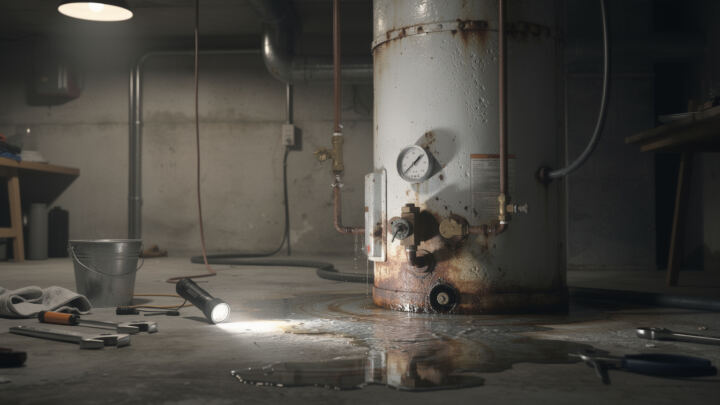
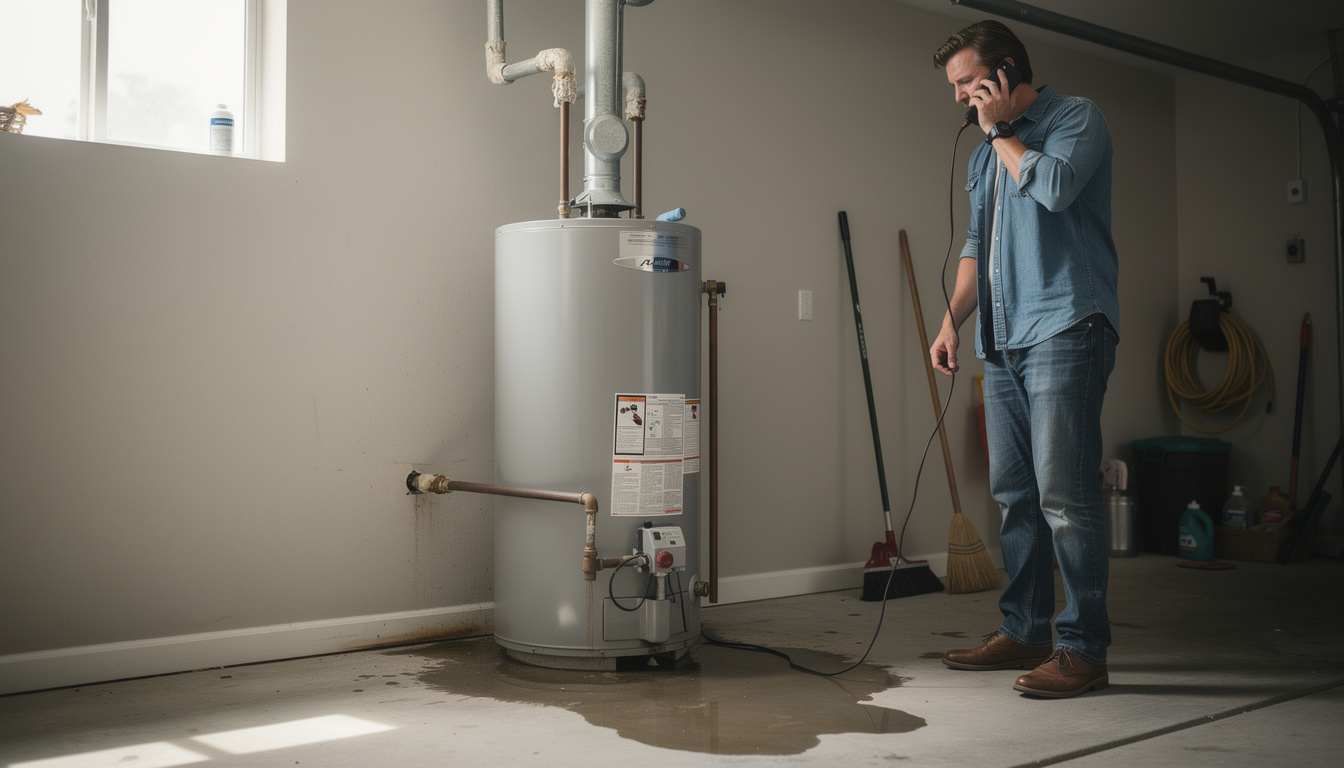
Let’s talk about the stuff you can see without being a plumber. Any leak or moisture around the base of the tank is a big deal. Even a “tiny” puddle can rot flooring, invite mold, and create surprises behind drywall. Sometimes it’s a loose fitting or a tired valve. Other times it’s internal tank corrosion, which is basically the point where you stop debating and start planning repair vs. replacement.
Discolored hot water is another loud signal. If you run hot water and it comes out brownish, reddish, or just looks off, that’s often rust from inside the tank—or from a failing anode rod. The anode rod is sacrificial; it corrodes so the tank doesn’t. When it’s depleted, the tank starts taking the hit.
Quick checks homeowners can do (without getting reckless)
You don’t need to take anything apart to get useful information. A couple of basic observations can narrow the cause.
- 💧 Look for pooling water, damp drywall, or musty odor near the unit
- 🧻 Wipe fittings and pipe joints with a paper towel to spot slow seepage
- 🟤 Compare hot vs. cold water color at the same faucet (hot-only discoloration points to the heater)
- 🔩 Scan for flaking metal or greenish-blue buildup on copper connections (corrosion signs)
Repair vs. replace: the practical rule people actually use
If the tank itself is leaking, replacement is commonly the smarter move because tank repairs aren’t really “repairs” in the durable sense. If the leak is from a valve or connection, maintenance can often solve it quickly. A lot also depends on age: most tank units land in the 8–12 year lifespan range, and once you’re past 10 years, the probability of cascading failures climbs.
Think of it like this: one repair on an older unit might be fine. Multiple repairs in the same year is usually your sign to stop feeding the problem.
Section insight: rust and leaks don’t stay polite—they escalate, and they do it on your flooring’s timeline, not yours.
Visual clues are strong, but your nose can be just as useful. And yes, it can get gross.
Smell, Pilot Light, and Safety Clues That Your Water Heater Needs Servicing
If your hot water has a rotten-egg smell, you’re usually dealing with hydrogen sulfide gas created by bacteria reacting inside the tank—especially common with well water. It’s unpleasant, and it’s also a sign your system needs cleaning and disinfecting. Sometimes swapping the anode rod type (for example, to an aluminum-zinc option) helps reduce the recurring odor, but the correct fix depends on your water chemistry.
Odor isn’t just a comfort issue. In some situations, it can signal stagnant conditions that accelerate corrosion. In other words, the stink can be the first clue that your tank’s internal protection plan is failing.
Gas water heaters: when the pilot light becomes the headline
If you have a gas unit, the pilot light should stay on reliably. When it keeps going out, flickers, or won’t stay lit after relighting, it can point to a bad thermocouple, airflow issues, a dirty pilot assembly, or gas supply problems. This is one of those areas where “DIY confidence” can turn into a safety headache fast.
Also, if a heater is overheating, short-cycling, or building excess pressure, components like the temperature and pressure relief valve (T&P valve) may start dripping. That valve is there to prevent dangerous pressure buildup. If it’s leaking regularly, don’t ignore it—servicing should include checking system pressure and whether you need an expansion tank in a closed plumbing system.
When “it still works” isn’t the same as “it’s safe”
A water heater can technically produce hot water and still be operating in a sketchy way: overheating, running constantly, or failing to regulate temperature. That’s how scalding risks happen, and it’s how energy bills creep up without obvious changes in your routines.
Section closer: if you’re dealing with persistent odor, pilot light issues, or a dripping safety valve, treat it as a servicing-now situation—not a “maybe next month” task.
All these symptoms roll up into one big theme: performance. If your heater is wasting energy, it’ll show up in your budget long before it fully quits.
Efficiency, Bills, and Scheduling Maintenance Before Breakdowns Hit
When a water heater loses efficiency, it doesn’t always announce itself with a dramatic failure. It can be subtle: longer recovery time, a heater that seems to run forever, or an energy bill that climbs even though nobody changed their shower habits. Because water heating is such a big chunk of home energy use (again, roughly 18%), small declines add up fast.
One of the sneakiest patterns is the “constant run” complaint: you hear the unit working, but the water never gets truly hot. That can be a failing element, thermostat trouble, or heavy sediment insulating the heat source. Either way, the system is working harder to deliver less—basically the definition of inefficiency.
What routine servicing typically covers
Good maintenance isn’t just “flush it and leave.” It’s a set of checks that keep the heater stable, safe, and predictable.
- 🧼 Tank drain and flush to reduce sediment buildup
- 🌡️ Thermostat calibration and temperature verification
- 🧯 T&P valve inspection/testing to confirm it’s not stuck or leaking
- 🔩 Visual inspection of fittings, venting (for gas), and corrosion points
- 🛡️ Anode rod check (especially if you’ve seen rust-tinged water)
A simple way to decide when to call a licensed plumber
If you’re seeing one symptom once, you can monitor. If you’re seeing two or more symptoms—say noise plus temperature swings, or smell plus pilot light problems—it’s time to schedule servicing. And if there’s a leak, it’s immediate.
People sometimes delay because they don’t want a surprise expense. Ironically, postponing maintenance is how you end up with the expensive surprise: emergency calls, water damage cleanup, or replacing the unit earlier than expected.
A quick cost logic that keeps you out of trouble
A common rule homeowners use is: if repairs are stacking up and approach 50% of the cost of a new unit, replacement becomes the more rational choice—especially if the heater is already in that 8–12-year window. Newer models can also bring tangible savings through better efficiency, which matters when utility prices fluctuate.
Final insight for this section: maintenance is cheaper when it’s boring—schedule it before the heater forces you to care.
How do I know if a puddle is just condensation or a real leak?
If moisture shows up only during heavy hot-water use and dries quickly, it can be condensation. If you see steady pooling, dripping from fittings, rust trails, or dampness when the unit hasn’t been running, treat it as a leak and book servicing—water damage can escalate fast.
Is popping noise always sediment, or could it be something else?
Popping and rumbling are most commonly sediment buildup, especially in hard-water areas. Banging can also come from pressure changes or loose pipes. A licensed plumber can confirm the cause and flush the tank, then check pressure and valves so the noise doesn’t come back.
Why does my hot water smell like sulfur even though cold water smells fine?
A rotten-egg smell in hot water usually points to bacteria activity inside the water heater, often interacting with the anode rod. Servicing typically involves disinfecting and flushing the tank; sometimes replacing the anode rod type helps prevent the smell from returning.
My gas water heater pilot light keeps going out—can I just relight it whenever it happens?
Relighting occasionally is fine if the manufacturer instructions are followed, but repeated pilot light failures usually indicate a component problem (like a thermocouple or dirty pilot assembly) or airflow/gas supply issues. Because there are safety risks, repeated outages should be handled by a professional.
How often should water heater maintenance be scheduled if everything seems normal?
A common best practice is annual servicing: flushing sediment, checking the thermostat and safety valve, and inspecting for corrosion. If you have hard water, well water, or an older unit, you may benefit from more frequent checks to protect efficiency and avoid surprise breakdowns.