In brief
- 🚰 Plumbing myths spread fast because they sound “common sense,” but they often ignore how modern systems actually work.
- 🧪 Many drain cleaning myths rely on harsh chemicals or “fizzy” reactions that look effective while quietly damaging pipes.
- 🔥 Popular water heater myths can lead to higher bills, shorter equipment life, or even safety risks if you skip basic maintenance.
- 🧰 DIY plumbing myths aren’t about banning DIY—they’re about knowing where quick fixes turn into expensive callbacks.
- 🛠️ A lot of pipe repair myths come from mixing old-house advice with new materials like PEX and modern fittings.
- 📌 The best plumbing advice is practical: understand the “why,” test safely, and call a pro when the risk curve spikes.
Every neighborhood has a legend about plumbing: pour boiling water down the sink every week, toss lemons in the disposer to “clean” it, or blast a clog with whatever chemical smells strongest. These stories get repeated because they feel satisfying—like you’ve unlocked a secret shortcut. But most common plumbing myths are really just half-remembered tips from another era, when pipes were different, codes were looser, and nobody had to think about rubber gaskets, plastic trap arms, or water-saving fixtures. The result is a weird mix of superstition and “my cousin’s friend did it once” confidence.
To make this real, we’ll follow a fictional homeowner, Maya, who bought a 1990s house that’s been “maintained” by a long line of enthusiastic DIYers. She’s not clueless—she’s handy and careful—but she’s drowning in contradictory tips. One plumber tells her to stop using chemical cleaners immediately; a neighbor insists it’s the only way; a video online recommends ice cubes and lemon peels for everything. So let’s do some mythbusting plumbing: what’s true, what’s risky, and what the actual plumbing facts say when you look under the sink (and sometimes inside the wall).
Common plumbing myths debunked: “If it goes down, it’s fine” (drains, disposers, and daily habits)
The most stubborn plumbing misconceptions start with the idea that a drain is basically a magic portal. If water disappears, the system must be happy—right? Maya learned otherwise after a “minor” slow kitchen sink turned into a Friday-night backup. The trap was packed with grease, and the branch line had a thick coating that looked like candle wax. It hadn’t clogged overnight; it had been building for months.
Drain cleaning myths: boiling water, lemon peels, and “natural” miracles
One classic: “Pour boiling water to melt grease.” The plumbing facts are less comforting. Boiling water can soften grease temporarily, but it often just moves it farther down the line where it cools and re-solidifies. If you’ve got PVC, repeated near-boiling dumps can also stress joints over time, especially if the piping already has minor alignment issues.
Lemon peels in the garbage disposer are another fan favorite. Yes, they smell nice. No, they don’t “clean” the disposer in any meaningful way. Disposers don’t need to be sterilized; they need to avoid buildup and jam-prone debris. Citrus oils can coat parts, and fibrous peels can wrap around impellers. Maya’s disposer started humming because a wad of peel fiber wedged itself just right—smelled great, worked terribly.
What actually works for healthier drains (without drama)
Instead of chasing viral hacks, focus on simple habits. Use a sink strainer, scrape plates, and keep grease out—cool it, collect it, toss it. For bathroom drains, hair is the real villain, not “mystery gunk.” A basic hair catcher prevents the majority of slow-drain misery.
When you do need a cleanout approach, mechanical first is usually smarter: a small hand auger for a bathroom sink, or a zip-style hair remover for a tub. These tools remove the blockage instead of betting on chemistry.
- 🧽 Kitchen sink: wipe greasy pans with a paper towel before washing.
- 🪤 Shower/tub: use a hair catcher and clean it weekly.
- 🌀 Slow drain: try a hand auger before any chemical product.
- 🚫 Disposer: avoid fibrous foods (celery, corn husks, onion skins) that tangle.
- ✅ Routine: run plenty of cold water while using the disposer, then for 10–15 seconds after.
The punchline is simple: drains don’t need magic; they need respect for what they’re designed to carry. Next up, we’ll look at the “quick fix” culture that turns tiny leaks into full-blown repairs.
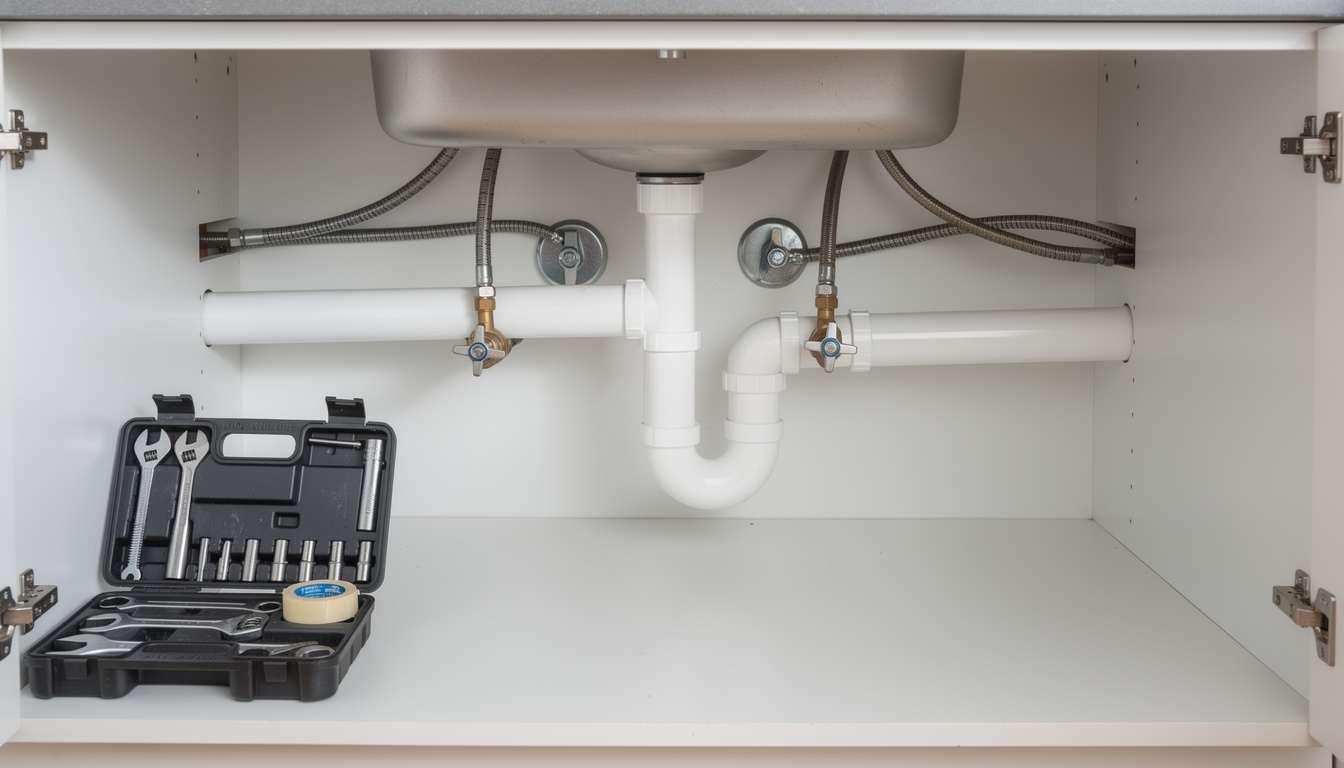
Common plumbing myths debunked: DIY pipe repair myths that quietly make things worse
Maya’s laundry room had a slow drip at a shutoff valve—nothing dramatic. A previous owner had “fixed” it with layers of tape and a glob of mystery putty. That’s the dark side of DIY plumbing myths: they don’t fail immediately, so they feel validated. Then they fail at 2 a.m., and the repair bill includes water damage.
Pipe repair myths: “More tape = better seal” and other greatest hits
Teflon tape (thread seal tape) is useful, but it’s not a bandage for the wrong problem. Tape is for threaded connections, and only when the threads are designed to seal that way. It won’t fix a cracked valve body, a corroded compression ring, or a worn washer. Wrapping more tape around a bad fit can actually prevent proper tightening, creating a leak path you can’t see.
Another myth: “Just crank it tighter.” Over-tightening compression fittings can deform the ferrule, damage threads, or crack plastic components. The leak might stop briefly, then return worse. Maya’s shutoff valve had been over-torqued, so the next person had to replace the whole valve instead of doing a simple service.
“Universal” fixes vs. material reality (copper, PEX, PVC)
Modern homes mix materials. Advice that worked for copper in 1975 doesn’t always translate to PEX in a 2005 remodel. For instance, using the wrong adhesive or primer on plastic can lead to joints that look fine but fail later. And pushing “one-size-fits-all” repair clamps onto lines without addressing corrosion or movement is a gamble.
Here’s a practical way to think about it: if the repair depends on pressure, vibration, or heat staying “just right,” it’s probably not a repair—it’s a delay.
| Myth 🧯 | Reality 🔍 | Safer move ✅ |
|---|---|---|
| “Tape fixes any leak” 🧻 | Tape only helps certain threaded joints; it won’t heal cracks | Identify the leak source and replace the failed part |
| “Tighter is better” 🔧 | Over-tightening damages fittings and makes leaks harder to solve | Snug + small turns; stop when resistance changes |
| “All pipes handle boiling water” ♨️ | Heat cycling can stress PVC joints and traps | Use hot tap water, not kettles, and address grease properly |
| “A clamp is a permanent repair” 🩹 | Clamps can buy time, but they don’t remove corrosion or cracks spreading | Plan a real section replacement as soon as possible |
The best plumbing advice Maya got was this: “DIY is awesome when the failure mode is small.” If the worst-case outcome is a wet towel, go for it. If the worst-case outcome is a flooded ceiling, that’s pro territory. With leaks and repairs covered, it’s time to talk about the appliance that inspires the most confident wrong opinions: the water heater.
If you want a visual walkthrough of basic leak diagnosis and safe shutoff habits, this kind of video search is a solid starting point:
Common plumbing myths debunked: water heater myths that inflate bills (and risks)
Water heaters are like the backstage crew of a house: you only notice them when something goes wrong. That’s why water heater myths spread so easily—most people don’t watch one operate day-to-day. Maya’s unit “worked,” but her energy bills were climbing, and the hot water sometimes smelled slightly metallic. A neighbor told her to crank the temperature “for better performance.” That advice can backfire fast.
“Turn it up and you’ll get more hot water” (not exactly)
Raising the thermostat can make showers feel hotter, but it doesn’t magically increase tank capacity. It can also increase scald risk, especially for kids or older adults. If you’re running out of hot water, the fix might be a higher-capacity tank, a mixing valve, a tankless system sized correctly, or simply repairing a dip tube or addressing sediment.
Sediment is where myth meets reality. Minerals settle at the bottom of many tanks, reducing efficiency and sometimes creating popping noises as water flashes to steam under the sediment layer. Ignoring it can shorten the heater’s life. Some people think flushing is “pointless.” In practice, periodic flushing can help, especially in hard-water regions, but doing it the wrong way on an old neglected tank can stir up debris and clog valves. The smart move is controlled maintenance, not a panic flush after eight years of neglect.
“Tankless means endless and maintenance-free” (also not exactly)
Tankless heaters can be great, but “endless” is limited by flow rate. Run a shower, dishwasher, and laundry at once and you might hit the unit’s capacity. And they still need descaling in many areas. Maya’s friend installed tankless and skipped descaling for years; performance dropped, then the unit started throwing error codes. It wasn’t a betrayal by technology—it was a maintenance myth.
Practical settings and checkups that actually pay off
A common target temperature is around 120°F (about 49°C) for many households, balancing comfort and safety. Local code, household needs, and appliance requirements matter, so treat that as a baseline, not a universal commandment. If you need higher storage temps for hygiene reasons, a mixing valve can reduce scald risk at fixtures.
Also check the temperature and pressure relief valve (T&P) and make sure the discharge pipe is properly installed. That little valve is not optional; it’s a safety device. The insight here is simple: the cheapest hot water is the hot water you don’t waste—and the safest heater is the one you don’t ignore.
For a deeper explainer on sediment, flushing, and safe temperature settings, this search query usually surfaces good step-by-step breakdowns:
Common plumbing myths debunked: drain cleaning myths and the chemical vs. mechanical showdown
When a drain slows down, the temptation is to reach for the strongest bottle under the sink. Labels promise “hair gone in minutes” and “grease dissolved instantly.” This is where drain cleaning myths get expensive, because the immediate reaction (heat, bubbling, movement) feels like proof. Maya tried a popular cleaner in a bathroom sink and the clog eased… until it came back worse a week later. When the plumber opened the trap, there was a hardened plug that looked like a science experiment.
Why harsh cleaners can backfire
Caustic and acidic cleaners can generate heat, and in certain scenarios they can soften organic material. But they can also damage older piping, accelerate corrosion in some metals, and harm rubber seals. Even when they don’t “eat” the pipe, they can create a partially dissolved sludge that re-solidifies farther down, especially if the line has a belly or poor slope.
There’s also the safety angle nobody likes to talk about: once you’ve poured chemicals into a drain, anyone snaking it later may face splash hazards. That includes you. A basic clog becomes a chemical-handling job.
Mechanical clearing: less glamorous, more reliable
Mechanical methods are boring—and that’s a compliment. A plunger, hand auger, or properly used drain snake removes the obstruction. It doesn’t just rearrange it. For kitchen lines, grease and food buildup may require a more serious auger and sometimes professional jetting, which uses high-pressure water to scour the line. Jetting isn’t a weekly DIY hobby, but it’s a real tool when buildup is the root cause.
So what should you do first?
Start with the least risky step that can actually work. If it’s a bathroom sink, check the pop-up stopper for hair and gunk. If it’s a tub, pull hair from the strainer area before assuming the clog is deep. If multiple fixtures are backing up, stop experimenting—your main line might be involved, and that’s a different game.
Maya’s “aha” moment was realizing that a slow drain is a symptom, not a personality flaw in her house. Once she treated it like a diagnosis problem—where is the restriction, what is it made of, how long has it been building—she stopped gambling on miracle liquids. Next, we’ll tackle the myth that plumbing systems are static, when in reality pressure, air, and venting change everything.
Common plumbing myths debunked: pressure, venting, and the hidden physics behind “weird” symptoms
Some common plumbing myths exist because people don’t see the system as a system. They see a faucet, a toilet, a shower. But plumbing is a network with pressure, airflow, and gravity all negotiating behind the walls. Maya noticed a “glug-glug” sound after draining her bathtub, and sometimes the bathroom sink smelled odd. Her neighbor’s diagnosis was immediate: “Pour more bleach.” That’s not a diagnosis; that’s a ritual.
Plumbing misconceptions about venting: smells aren’t always “dirty drains”
That gurgling can be a sign of venting issues. Vents let air into the drainage system so water can flow smoothly without siphoning traps dry. If a trap loses its water seal, sewer gas can enter the room. The fix is not perfume or disinfectant; it’s restoring proper venting and trap seals.
Sometimes the cause is simple: a rarely used floor drain dries out. Pouring a bit of water into it can restore the seal. Other times it’s more involved: a blocked vent stack (leaves, nests) or an incorrect remodel connection. That’s when calling a pro stops being optional.
“High pressure is good pressure” (until it isn’t)
Another myth: more pressure equals better everything. Excessive water pressure can stress fixtures, wear out fill valves, and contribute to leaks at weak points. If you hear banging (water hammer) or see frequent fixture failures, pressure might be part of the story. A pressure-reducing valve (PRV) and hammer arrestors can make a home calmer and reduce wear.
Mythbusting plumbing with a simple homeowner mindset
When something seems “random”—a toilet that refills on its own, a faucet that sputters, a smell that appears only on windy days—assume there’s a system reason. Ask: does it happen when another fixture runs? Does it vary by time of day? Does it follow storms? That’s how you turn folklore into troubleshooting.
The key insight: once you respect the physics—air needs a path, water needs slope, pressure needs control—half the scary symptoms become predictable and fixable, and the other half become clear signals to bring in expert help.
Are chemical drain cleaners ever okay to use?
Occasionally, but they’re rarely the best first move. Many drain cleaning myths make chemicals sound harmless, yet they can damage seals, worsen buildup, and create safety hazards for snaking later. Start with mechanical methods (hair removal, plunger, hand auger) and use chemicals only when you understand your pipe materials and the clog type.
Is it true that flushing an old water heater can ruin it?
It can, but not because flushing is inherently bad. The risk comes when a heavily neglected tank has thick sediment; aggressive flushing can dislodge debris and clog valves. Water heater myths often turn this into “never flush.” Better plumbing facts: do regular maintenance early in the heater’s life, and if it’s very old and noisy, consider a pro evaluation before attempting a full flush.
Does using a garbage disposer mean I can put food scraps down the sink?
Not really. A disposer is for small residual scraps, not as a trash can. DIY plumbing myths suggest it can handle anything, but fibrous foods and grease are frequent causes of clogs and jams. Scrape food into the bin, use cold water during operation, and avoid dumping oils and fats.
What’s the fastest way to tell if a leak is serious?
Shut off the fixture supply (or the home’s main if needed) and see if the leak stops. If water is near electrical outlets, if a ceiling is bulging, or if you can’t locate the source quickly, treat it as serious and call a plumber. A lot of pipe repair myths downplay small drips, but steady leaks can cause major damage over time.