Basement water has a talent for showing up at the worst possible time: during a night-long downpour, right when you’re out of town, or the moment you finally finish that “bonus room” renovation. The frustrating part is that a lot of homes don’t have a dramatic, movie-style flood—just steady seepage, damp air, and that musty smell that makes you side-eye your carpet. A well-planned sump pump installation is one of the most practical upgrades for flood prevention because it doesn’t argue with the weather; it simply moves water out, automatically, before it turns into damage. That said, it’s not magic. If the yard is sloped toward your foundation or downspouts dump water right next to the house, you still need to fix that. Think of a sump pump as your basement’s “last line of defense,” buying you time and protecting your stuff while you improve the bigger basement waterproofing picture.
To keep this real, we’ll follow a fictional homeowner, Maya, who lives in a rain-happy neighborhood and is tired of toweling up puddles near the furnace. She wants a DIY-friendly system that’s safe, code-aware, and doesn’t fail during a storm. Along the way, you’ll see how the pump pit is built, why a check valve matters more than people think, how to route the discharge pipe so it doesn’t boomerang water back toward the house, and what to do about the all-important electrical connection. If you like the idea of sleeping through storms instead of listening for dripping… keep reading.
In brief
- ✅🌧️ A sump pump is automated water removal that helps stop basement flooding before it starts.
- 📍🧭 Location matters: install the pump pit at the lowest point where water naturally collects.
- 🧰🔩 The “hidden heroes” are the check valve and properly sloped discharge pipe—they keep water moving one way: out.
- ⚡🔌 Use a safe electrical connection (ideally a dedicated, GFCI-protected circuit) and avoid extension cords.
- 🧪🚿 Testing isn’t optional: fill the pit with water and watch a full on/off cycle to confirm reliability.
- 🧊❄️ Cold-climate routing prevents frozen discharge lines (a common “it worked… until it didn’t” problem).
Stop Basement Flooding Fast: Picking the Right Sump Pump Setup for Flood Prevention
Maya’s first mistake (like a lot of people) was thinking every sump pump is basically the same. She grabbed a random model online, then discovered her neighbor’s system was quieter, pumped faster, and didn’t “thunk” water back into the pit every time it shut off. For solid flood prevention, you want a setup that matches your basement conditions, not just a good price.
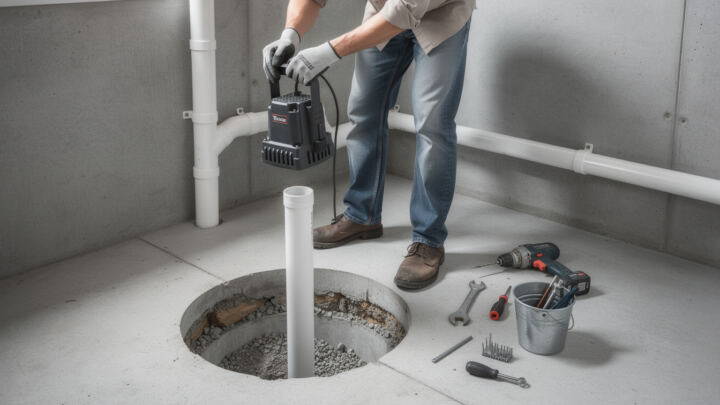
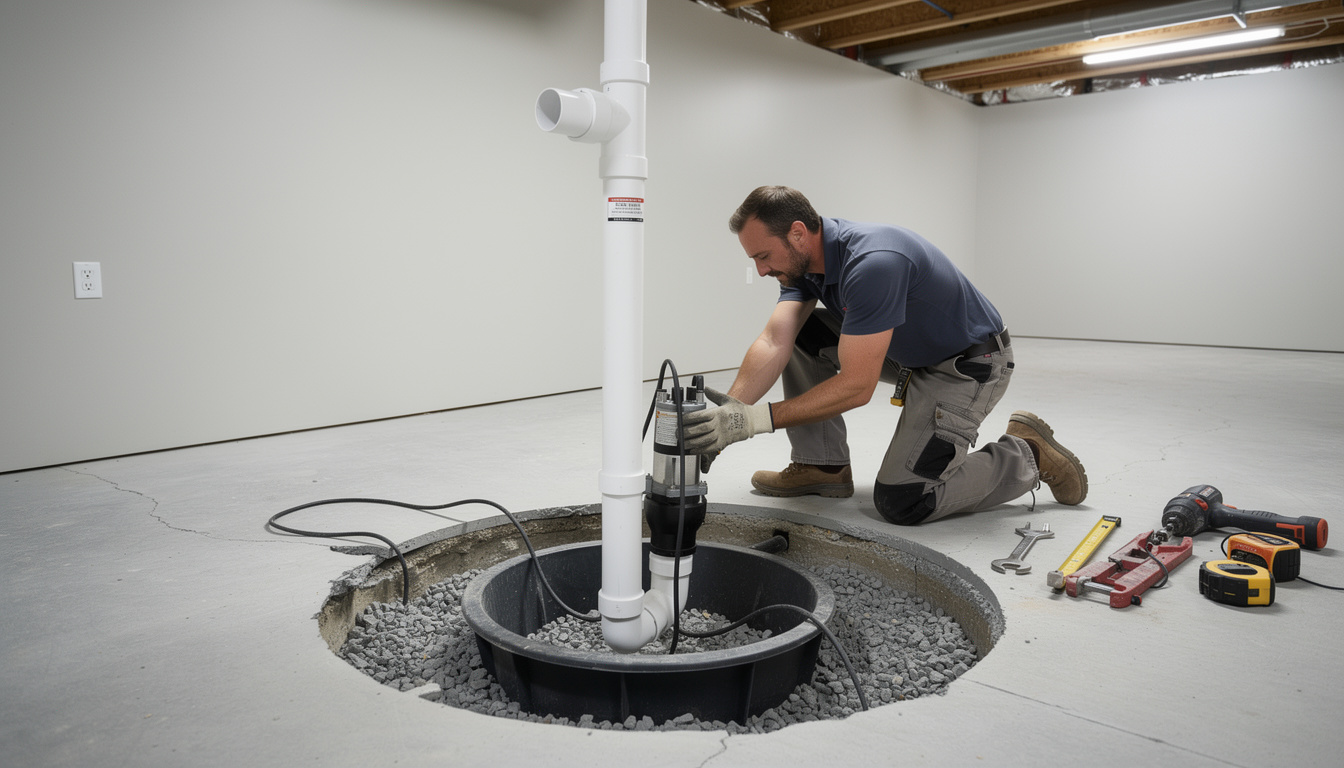
A sump pump works by sitting in a pump pit (a basin installed below floor level). When groundwater rises, it enters the basin through perforations and triggers a float or sensor. The pump kicks on and pushes water out through a discharge pipe to a safe outdoor spot. Simple idea, big impact—because preventing water buildup also helps reduce mold risk and that sticky basement humidity that can aggravate allergies.
Submersible vs. pedestal: what you’re really choosing
Submersible pumps combine motor and pump in one sealed unit that sits down in the basin. They’re typically quieter and less likely to snag debris because everything is compact. Maya chose submersible because she has a semi-finished basement and doesn’t want a loud motor dominating movie night.
Pedestal pumps keep the motor above the basin on a column. They’re easier to service and often last longer because the motor isn’t constantly underwater. The tradeoff is noise and a more awkward footprint—fine for unfinished utility spaces, less fun in finished areas.
Backup power and local rules (yes, this matters)
If your area gets storms that knock out power, a basic plug-in pump can fail exactly when you need it. Many homeowners add a battery backup system so water removal still happens during outages. There are also water-powered backup pumps, but some municipalities restrict them because they can use a lot of domestic water pressure—so it’s worth checking local guidance before buying.
A quick comparison table to keep your choice sane
| Option | Best for | Upsides | Watch-outs |
|---|---|---|---|
| Submersible 🟦 | Finished/semi-finished basements | Quieter 🔇, tidy install, good performance | Harder to access for service 🔧 |
| Pedestal 🟨 | Unfinished utility spaces | Easier maintenance 🧼, motor stays dry | Noisier 📢, takes more room |
| Battery backup 🔋 | Storm outages, high-risk flood zones | Runs when power is out ⚡➡️❌ | Battery testing/replacement needed ⏱️ |
One more reality check: a sump pump helps a lot, but if your gutters dump water next to the foundation, you’re basically refilling your own problem. Treat the pump as part of a larger drainage system strategy, and you’ll get dramatically better results. Next up: where to put the pit so the whole setup actually works.
Where to Install a Sump Pump: Pump Pit Placement and Basement Waterproofing Logic
Maya walked around her basement with a flashlight after a heavy rain and noticed something consistent: the dampness always started near the same corner, right where the slab meets the wall. That’s usually your clue. A sump pump doesn’t “hunt” for water; it waits for water to collect in the pump pit. So placement is everything.
For most homes, the best location is the lowest point of the basement floor—often where moisture first shows up. In some basements it’s near an existing floor drain, but don’t assume you can just tie things together. Many cities prohibit discharging sump water into sanitary sewers, and that’s not just bureaucracy: sending stormwater into sanitary lines can overload systems and cause backups.
Think like water: how groundwater reaches your pit
Water pressure builds outside the foundation and seeps underneath or through tiny cracks. If your pit is in the right spot, water finds the basin because it’s the easiest place to collect. If your pit is in a random high spot, the water will still pool elsewhere—and your pump will sit there like a lifeguard at an empty pool.
Maya also learned that basement waterproofing is a layered deal. A sump pump is interior control. Exterior fixes (grading, downspouts, window well drains) reduce how much water ever reaches the foundation. The smarter the outside management, the less often the pump runs, which typically means a longer pump life.
Plan the discharge route before you touch concrete
The discharge pipe has to run from the pump up, out through the rim joist or foundation wall, and then away from the house. Before digging, map that path. You need enough pipe length to reach a spot outside that slopes away from the foundation—ideally 10 feet or more when the yard layout allows. If you dump water right at the foundation, you’ll create a loop where the pump keeps cycling the same water.
Also check for obstacles: finished walls, shelving, ductwork, and—big one—access to power. A sump pump should plug into a nearby outlet, and best practice is a dedicated circuit so the breaker doesn’t trip when something else (like a space heater) kicks on.
Safety and structural “don’t mess around” zones
Cutting a pit into a slab is not delicate work. If you’re close to load-bearing elements, or you suspect there may be plumbing, radon piping, or drain lines under the slab, stop and confirm before you start hammering. Maya found old utility routing notes in her home inspection report—worth checking, because surprises under concrete are never the good kind.
Get the location and route right now, and the physical installation becomes a lot more straightforward. Next, we’ll get into the messy part: breaking concrete, setting the basin, and building a pit that won’t clog with sludge.
If you want to watch a visual walkthrough before you start, it helps to see how pros lay out the basin and piping.
DIY Sump Pump Installation Steps: Digging the Pump Pit, Setting the Basin, and Building a Reliable Drainage System
This is the part where Maya put on hearing protection and realized why people either love DIY or swear it off forever. Installing a new pit in a concrete basement floor is doable, but it’s loud, heavy, and dusty. Plan for a full day of work (sometimes two) depending on your slab thickness and how cooperative the soil is underneath.
Tools and materials that actually matter
You’ll typically need a jackhammer or rotary hammer, a shop vac, buckets for debris, a level, gravel, the basin with lid, PVC, fittings, primer/cement, and sealant. The two items people underestimate are gravel (it stabilizes the basin and improves water entry) and filter fabric (it helps reduce silt buildup that can shorten pump life).
Step-by-step: from concrete to basin
- 🧭 Mark the cut: trace the basin on the floor and add a few extra inches so you have room for gravel around it.
- 🪓 Break and remove concrete: use a jackhammer or drilled relief holes plus sledge/chisel. Move debris in small buckets so you don’t wreck your back.
- ⛏️ Dig the hole: go deep enough for the basin plus 2–3 inches of gravel under it. Remove rocks and loose junk.
- 🪨 Build the base: add gravel, level it, and place a paver/fieldstone if you want a super-stable platform.
- 🧺 Prep the basin: if it lacks side perforations, drill weep holes. Wrap the exterior with filter fabric to reduce silt intrusion.
- 🧱 Set and backfill: lower the basin in, check level, and backfill around it (often with excavated material or gravel depending on your plan).
When Maya did a “wiggle test,” the basin didn’t wobble, which is exactly what you want. A shifting basin can stress pipe joints and create annoying leaks later.
Don’t forget the float test before you pipe anything
Before connecting plumbing, drop the pump in the basin and manually lift/lower the float or trigger the sensor. It must move freely without bumping the basin wall or tangling with cords. It’s a small check that prevents a big failure—because if the float sticks, the pump might never turn on, and your flood prevention plan becomes a decoration.
Patch the slab so it looks (and behaves) finished
Once everything is in place and tested, patch around the basin with fresh concrete, keeping the lid accessible and flush with the floor. Mix it to a thick consistency so it doesn’t slump into the gap. The goal is a smooth floor transition so you don’t create a trip hazard or a dirt-collecting moat around the pit.
At this point Maya had a basin in the ground and a pump that could turn on—but it still couldn’t send water anywhere useful. Next comes the part that separates “it pumps” from “it protects”: the discharge line, the check valve, and a route that won’t freeze or leak.
Discharge Pipe, Check Valve, and Wall Exit: The Details That Make Water Removal Actually Work
A sump pump can be brand new and still fail your basement if the plumbing is sloppy. Maya learned this when she watched a friend’s system short-cycle all night because water kept draining back into the pit after every shutoff. The fix was simple: a correctly oriented check valve and better discharge design.
Why the check valve is non-negotiable
When the pump shuts off, water inside the vertical pipe wants to fall back down. A check valve is a one-way gate that prevents that backflow. Without it, you’ll hear the “dump” and the pump will run more frequently, wearing out faster and making the system louder.
Install the valve on the vertical section above the pump, with the arrow pointing up (toward the exit). Keep it accessible so you can service it later without dismantling half the system.
Routing the discharge pipe like a pro (without overcomplicating it)
Most systems use 1½-inch or 2-inch PVC, depending on the pump outlet. Dry-fit everything first. Use as few sharp turns as possible; every elbow adds resistance. Support the piping with straps so it doesn’t rattle or stress glued joints.
For the wall exit, many homeowners drill through the rim joist just above grade. Slope the hole slightly downward to the outside so any condensation or drips don’t run back indoors. Once the pipe passes through, seal around it with a quality silicone or polyurethane sealant to stop air leaks and pests.
Where the water goes outside (and where it should never go)
Outside, extend the line so it discharges onto a spot that drains away from the home—think a swale, a rain garden area, a dry well, or an approved stormwater connection. If you can manage it, run the outlet well away from the foundation to avoid recycling water back into the soil next to the basement wall.
Never route sump discharge into a septic system or sanitary sewer unless your locality explicitly allows it. Beyond legal issues, it can contribute to backups and expensive messes.
Cold climate note: avoid the “frozen discharge” trap
If winter temps hit hard where you live, design the outdoor portion so it drains completely after each cycle. Long horizontal runs can hold water and freeze solid. Some people add a freeze-guard fitting or a relief feature so if the end freezes, water can still escape without forcing the pump to deadhead. Maya’s neighbor had an outlet freeze during a January thaw-refreeze cycle and the pump burned out trying to push against ice. Not fun, and totally avoidable with smarter routing.
Once your plumbing route is solid, you’re left with the part people either respect or regret: the electrical connection and real-world testing. That’s where we’re headed next.
Want a second visual reference focused on discharge routing and check valves? This helps you spot common mistakes fast.
Electrical Connection, Testing, and Maintenance: Keep Your Sump Pump Ready for the Next Storm
Maya’s rule was simple: if this system fails, it’ll fail during a storm. So she treated power, testing, and upkeep as part of the installation—not optional extras.
Safe power: the electrical connection that won’t betray you
Plug the pump into a grounded, GFCI-protected outlet. Ideally, that outlet is on a dedicated circuit so you don’t trip a breaker when other loads turn on. Avoid using extension cords as a permanent solution; they’re more likely to get wet, get damaged, or simply get unplugged when you least expect it.
If you’re adding a battery backup system, plan for two outlets: one for the primary pump and one for the charger/controller. If the outlet situation is sketchy, this is the moment to call an electrician—because mixing water and questionable wiring is how bad days begin.
Testing: simulate the storm on your schedule
Never run a sump pump dry. To test it, fill the basin with water using a hose or buckets until the float triggers. Watch the full cycle: the pump should start, move water fast, then shut off cleanly once the level drops.
Check every joint for leaks, especially around the check valve couplings and any threaded adapters. Then go outside and confirm the discharge point is flowing where you want it, not carving a trench back toward the foundation.
Simple maintenance that prevents “mysterious failures”
- 🧪 Test twice a year: pour water in and confirm the on/off cycle behaves normally.
- 🧼 Clean the pump pit: silt and debris can clog intakes and jam floats.
- 🔍 Inspect the check valve: if you hear a huge backflow dump, it may be reversed or failing.
- 🍂 Clear the outdoor outlet: leaves, mud, and ice are common blockers.
- 🔋 Check backup health: test the battery system according to the manufacturer’s schedule.
When DIY stops being smart
If you need a new circuit, if you’re unsure about drilling through a foundation wall, or if you suspect structural concerns in the slab area, bring in a licensed pro. In 2026 pricing ranges still vary widely by region, but it’s common for professional installation to cost more than DIY because labor, concrete work, and electrical upgrades add up fast. Maya kept DIY because she already had a good outlet and felt comfortable with tools—but she still had an electrician label the breaker and verify the outlet was properly protected.
Get the power right, test like you don’t trust anything, and keep up with basic cleaning—your system will feel boring in the best way. And boring is exactly what you want when the rain starts pounding.
Do I really need a sump pump if my basement only gets damp, not flooded?
Often, yes. A sump pump can reduce chronic moisture by improving water removal, which can help with musty odors and mold risk. It’s especially helpful if dampness spikes after heavy rain or snowmelt, or if you’re finishing the basement and want extra flood prevention.
Where should the discharge pipe end outside?
Send water to an area that naturally drains away from the house—ideally 10 feet or more from the foundation when possible. Use extensions or solid piping to avoid dumping water next to the wall, which can undermine your basement waterproofing efforts.
Why is a check valve necessary on a sump pump system?
A check valve prevents pumped water in the discharge pipe from flowing back into the pump pit after shutdown. Without it, the pump cycles more often, wears out faster, and can sound louder due to water dropping back down the pipe.
Can I plug the pump into any outlet with an extension cord?
Avoid that. Use a proper electrical connection: a grounded, GFCI-protected outlet (ideally on a dedicated circuit). Extension cords can overheat, get unplugged, or become a shock hazard in a damp basement.
How do I know my sump pump installation is working correctly?
Fill the pit with water and watch a full cycle: float rises, pump turns on, water exits strongly outside, then the pump shuts off at the correct level. Check for leaks at joints, confirm the discharge location is draining properly, and listen for excessive backflow that could indicate a check valve issue.