In brief
- 🔥 Water heating is a major slice of household energy use, so your plumbing choices show up on your bill.
- 💧 Small leaks quietly drain money and resources, undermining home energy efficiency and water conservation.
- 🧰 Regular checkups keep pressure, temperatures, and flow where they should be—less strain, more energy savings.
- 🚿 Efficient fixtures cut hot-water demand without making showers feel weak or annoying.
- 🧊 Pipe insulation reduces thermal loss, which means less waiting for hot water and less reheating.
- ⚡ Upgrading to energy-efficient appliances (and the right water heater) often beats “big” upgrades people obsess over.
- ♻️ Sustainable plumbing tech like greywater reuse and leak sensors is getting easier to adopt in real homes.
If you’re trying to cut utility bills, you’ve probably looked at windows, attic insulation, and maybe a smarter thermostat. Fair. But the funny thing is, a lot of homes keep bleeding energy through a totally different network: plumbing. Every time hot water travels from your heater to a shower, it’s basically on an energy road trip—losing heat along the way, getting slowed down by old piping layouts, and sometimes detouring into leaks you don’t even know exist. That’s why home energy efficiency isn’t just about HVAC and LEDs; it’s also about what’s happening behind walls and under sinks.
And this isn’t a niche issue. In typical households, water heating is one of the biggest energy line items—often around a fifth of overall usage—so small improvements add up fast. Picture a family (let’s call them the Parkers) in a 1990s home: one aging tank heater, a long pipe run to the upstairs bathroom, and a “minor” toilet that occasionally runs. Nothing dramatic—yet the monthly bill says otherwise. Once you start treating plumbing as an energy system, the waste becomes obvious, and the fixes get surprisingly practical.
Plumbing and Home Energy Efficiency: Where Energy Quietly Disappears
Most energy loss tied to plumbing doesn’t look like a dramatic failure. It’s more like background noise—small inefficiencies stacking up every day. The first big culprit is hot water distribution. When hot water leaves the heater, it immediately starts cooling. That drop in temperature is thermal loss, and it’s basically guaranteed unless you shorten the run, insulate the line, or improve circulation design.
Think about the Parkers again: their primary shower is far from the water heater. Each morning they run the tap for 45–90 seconds waiting for hot water, sending lukewarm water down the drain. That’s wasted water, sure, but it’s also wasted energy because the heater has to keep reheating new water. Multiply that by a few showers, hand-washing, and dish rinses, and you’re paying to heat water you never even used.
Leaks: the “invisible appliance” running 24/7 💧
Leaks are like a device you didn’t buy but still power. Even a slow drip increases water use, and when it’s on the hot side, it increases energy use too. Real-world estimates often put a single leaky faucet at thousands of gallons wasted annually, and a silently running toilet can be far worse—hundreds of gallons per day in some cases if a flapper or fill valve is failing.
What makes leaks especially brutal for home energy efficiency is how they hide. A toilet can run intermittently. A pinhole leak can evaporate into a wall cavity. You don’t “feel” it the way you feel a cold draft, but you still pay for it.
Pressure and flow problems that trigger more hot water use
When pressure is inconsistent, people compensate. They take longer showers because the spray feels weak, or they open the hot tap further to get the sensation of warmth. Sediment buildup in aerators and showerheads can cause this, as can partially closed valves or old galvanized piping with narrowed interiors.
Here’s the kicker: plumbing inefficiencies often create behavior changes. You’re not just fixing pipes—you’re removing the reasons people waste water and energy in the first place. The next step is figuring out what your house is actually doing day to day.
How to Assess Your Plumbing System for Energy Savings (Without Guessing)
An “energy audit” sounds like a big production, but you can learn a lot with a structured walkthrough. The goal is to spot the handful of issues that drive most of the waste. For the Parkers, it started with a weekend checklist, then a pro visit for the stuff that needed tools and experience.
Quick home checks that reveal real problems
Start with the obvious: any dripping faucet, any cabinet that smells musty, any stain on ceilings, walls, or baseboards. Then check the not-so-obvious: read your water meter, don’t use water for 2 hours, and check again. If it moved, you’ve got a leak somewhere.
Also pay attention to hot-water “lag time.” If you routinely wait ages for hot water at certain fixtures, that’s a distribution inefficiency—meaning higher energy use and lower comfort. You’re paying twice: once for heating and again for the waste while you wait.
Water heater performance: age, settings, and maintenance
Water heating can be a large part of household energy use, so the heater’s condition matters. Check the approximate age (often on a label). Older tanks commonly suffer from sediment buildup, worn anode rods, and heat loss through thin insulation. If you hear popping or rumbling, that can be sediment heating and cracking—less efficient and harder on the unit.
Temperature settings matter too. Many homes run hotter than necessary, then mix with cold at the tap. That can increase standby losses and scaling. A sane setpoint (often around 120°F in many households, adjusted for health and local guidance) can reduce unnecessary heating while still delivering comfort.
Pipe layout and materials: the “map” of your losses
Long pipe runs increase thermal loss. Uninsulated copper in a cold crawlspace bleeds heat quickly. Newer materials like PEX tend to reduce heat loss compared to metal lines and can simplify routing—fewer fittings, fewer places for pressure drop, fewer opportunities for tiny leaks. You don’t have to repipe a whole house to benefit, but knowing your layout helps you target the worst stretches.
If you want a simple rule: fix the “always” problems first (leaks, standby losses), then the “everyday” problems (long waits, low flow), then the “future” upgrades (greywater, recirculation, repiping). Now let’s talk about the upgrade that usually moves the needle fastest.
When you’re ready to go beyond diagnosis, the water heater is often the most impactful place to invest—especially if yours is aging or oversized.
High-Efficiency Water Heating Options That Change the Whole Math
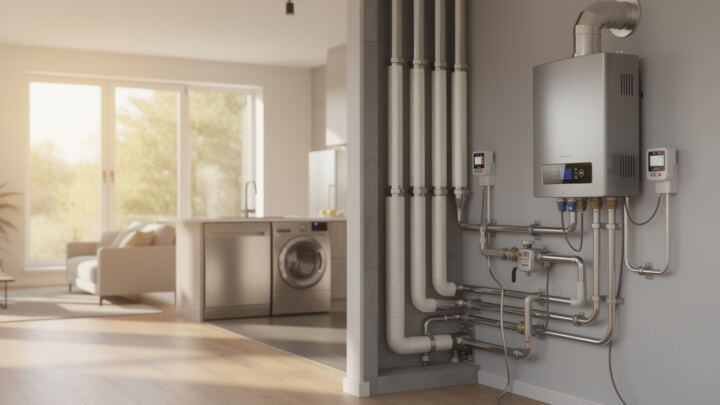
If your house is a system, your water heater is one of its main engines. Upgrading it isn’t just about a newer box in the garage; it can reshape energy use patterns across showers, laundry, and dishwashing. That’s why water heating is the centerpiece of many energy-focused plumbing plans.
Tankless: hot water on demand (and fewer standby losses)
Tankless units avoid keeping a big tank hot 24/7. In many homes, that cuts standby energy waste significantly. Under the right conditions—especially for homes with lower to moderate daily hot water use—tankless can be notably more efficient than traditional storage heaters.
But sizing matters. If the Parkers put in a tankless unit without considering simultaneous use (shower + laundry + dishwasher), they’d get temperature swings and frustration. A good installer calculates flow rate needs, incoming groundwater temperature, and gas/electrical capacity so performance stays consistent.
Heat pump water heaters: high efficiency by moving heat instead of making it
Heat pump water heaters are the “this feels like cheating” option: they use electricity to move heat from surrounding air into the water, rather than generating heat directly. In many homes, that can cut water-heating costs dramatically compared with conventional electric resistance tanks. They also dehumidify spaces, which can be a bonus in damp basements—though in cold garages, placement matters.
For the Parkers, a heat pump unit made sense because their utility rates favored efficient electric loads, and they had a basement that stayed relatively mild year-round. The insight: the best system depends on your house, not just the brochure.
Solar water heating: great when your roof and climate cooperate
Solar thermal systems can cover a meaningful portion of hot water demand when installed correctly. They’re not magic—cloudy stretches and winter angles reduce output—but paired with a backup heater, they can shave a lot of annual energy use. If you’re already planning roof work, that’s often the easiest time to consider it.
A practical comparison table (what to expect)
| Option | Best for | Energy impact | Watch-outs |
|---|---|---|---|
| 🔥 Tankless | Homes wanting endless hot water with lower standby loss | Often strong energy savings vs. older tanks | Needs correct sizing; may require gas line/vent upgrades |
| ⚡ Heat pump water heater | Basements/utility rooms with moderate temps | Can cut heating costs substantially; very efficient | Needs airflow; performance drops in cold spaces |
| ☀️ Solar thermal | Good solar exposure + long-term homeowners | Reduces purchased energy for water heating | Higher upfront cost; roof/maintenance considerations |
| 🧱 High-efficiency tank | Simple replacement without big retrofit | Improves over aging units; steady performance | Still has standby losses without added insulation |
The heater upgrade is powerful, but it won’t reach its full potential if you’re still pushing hot water through uninsulated lines and inefficient endpoints. That’s where fixtures and distribution upgrades come in.
Efficient Fixtures, Pipe Insulation, and Distribution: The Comfort-First Upgrades
People hear “efficient fixtures” and imagine sad showers and weak faucets. That stereotype is outdated. Modern efficient fixtures are designed to feel good while using less water, which also reduces the energy needed for water heating. If you lower hot water demand, your heater cycles less, your standby losses drop, and your costs follow.
Low-flow doesn’t mean low-comfort 🚿
WaterSense-labeled showerheads and aerated faucets mix air in ways that preserve perceived pressure. In many homes, switching these out reduces water use noticeably—often around the 20–30% range depending on what you’re replacing—without changing daily routines much.
The Parkers swapped two showerheads and three faucet aerators first because it was cheap and fast. The immediate change wasn’t “less comfort,” it was “why didn’t we do this earlier?” Their hot water lasted longer, and morning rush hour got smoother.
Pipe insulation: small job, big payoff 🧊
Pipe insulation is one of those rare upgrades that’s both simple and legitimately effective. Wrapping accessible hot water lines (basement, crawlspace, under sinks where appropriate) reduces thermal loss, keeping water hotter on its way to the tap. That means less waiting and less reheating.
It also helps stabilize temperature in recirculation loops, if you have them. Without insulation, you’re basically heating your crawlspace. With insulation, you’re keeping the heat in the water where you actually want it.
Distribution fixes that stop “run-and-wait” waste
If you’ve got long waits for hot water, you can attack the problem in a few ways: shorten runs during remodels, add structured plumbing manifolds, or install demand-controlled recirculation. Demand systems are key—recirculation that runs nonstop can waste energy, but systems triggered by a button, motion sensor, or smart schedule can reduce the waste without creating a new one.
A practical list of upgrades that usually pay back
- 🔧 Replace old showerheads/faucet aerators with efficient fixtures that maintain comfort
- 🚽 Upgrade to a high-efficiency toilet to support water conservation (and stop stealth running)
- 🧊 Add pipe insulation on hot lines in unconditioned spaces to cut thermal loss
- 🧼 Flush the water heater periodically to reduce sediment and improve heat transfer
- 🧠 Add a smart leak sensor near the heater, under sinks, and behind toilets
- ⚡ Choose energy-efficient appliances (dishwasher/washer) that reduce hot water demand
Once endpoints and pipes are improved, maintenance becomes the “keep it that way” strategy. And honestly, it’s where many homes either lock in savings—or slowly drift back into waste.
Sustainable Plumbing Through Maintenance and New Tech (Greywater, Sensors, Smarter Materials)
Here’s the not-glamorous truth: the best upgrades in the world don’t help if your system slowly degrades. Regular maintenance is what keeps sustainable plumbing from being a one-time project. It also prevents those expensive “how did it get this bad?” repairs that show up at the worst possible moment.
Maintenance as an efficiency tool (not just a repair plan)
Well-maintained plumbing tends to conserve more water over time because it avoids the slow creep of leaks, mineral buildup, and poor flow. Some research and field observations suggest that properly maintained homes can reduce water waste meaningfully—sometimes approaching around a fifth compared with neglected systems—because the small losses never get a chance to become permanent habits.
For the Parkers, the big win was catching a toilet flapper that was intermittently leaking. It wasn’t a dramatic “running toilet” sound; it was subtle. But once fixed, their meter stopped “mysteriously” ticking at night. That’s the kind of problem that kills water conservation and energy savings quietly.
Insulating older tanks and tuning standby losses
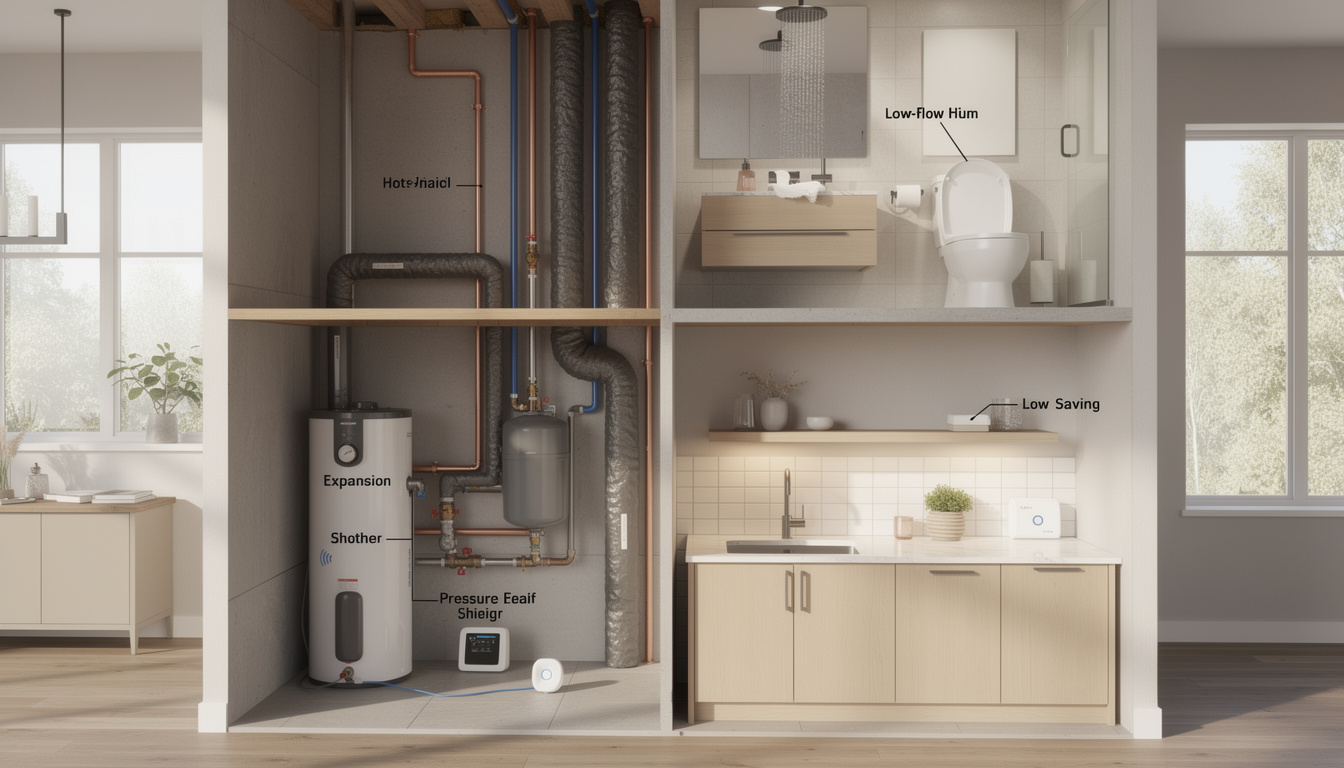
If you’re not replacing a tank water heater yet, improving it can still matter. Adding an insulation blanket where appropriate (and safe for your model), insulating the first several feet of hot and cold lines, and keeping the unit in a less frigid space can reduce standby heat loss significantly. Less standby loss means less reheating and less cycling, which can extend equipment life.
Greywater recycling: using “once-used” water twice ♻️
Greywater systems capture water from showers, bathroom sinks, and laundry (depending on local rules) and reuse it for non-potable needs like irrigation or toilet flushing. That directly supports water conservation, and indirectly supports energy goals by reducing the total volume of water your household processes and heats.
This is where “sustainable” becomes real: you’re designing the home so resources do more work before leaving your property. It’s not for every home, but in drought-prone areas or places with rising water rates, it’s increasingly attractive.
Leak detection and moisture sensors: the fastest “payback” tech
Smart leak detectors are basically smoke alarms for water. Put them near the water heater, under the kitchen sink, by toilets, and anywhere a hidden leak would wreck flooring or drywall. Some systems even shut off the main line automatically when they detect unusual flow patterns.
That matters for energy too: stopping leaks means you stop heating water you never benefit from. It also prevents damp insulation and mold issues that can harm HVAC performance—a sneaky link between plumbing and whole-house efficiency.
DIY vs. professional help (so you don’t create new problems)
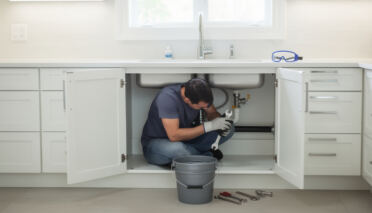
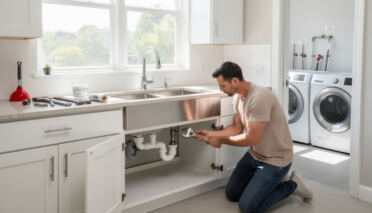
Some tasks are totally DIY-friendly: swapping showerheads, insulating exposed pipes, replacing aerators, checking toilet flappers. But water heater replacements, recirculation redesigns, and greywater installs are usually “call a pro” territory. The Parkers did the easy swaps themselves, then hired a plumber for the heat pump water heater and a demand recirculation setup—because a bad install can erase the savings and create headaches.
The bigger insight is simple: treat plumbing like a living system. When it’s tuned and maintained, it stops wasting energy in the background and starts actively supporting comfort and efficiency.
How much does plumbing really affect home energy efficiency?
Quite a lot. Because water heating is a major household energy load, anything that reduces hot-water demand (efficient fixtures, fewer leaks, shorter waits for hot water) typically produces noticeable energy savings. Add pipe insulation to reduce thermal loss, and the impact grows.
Is pipe insulation worth it if I already have a decent water heater?
Yes. Even a high-efficiency unit can’t stop heat from escaping through uninsulated hot water lines. Pipe insulation reduces thermal loss on the way to the tap, meaning less waiting, less wasted water, and less reheating—especially in basements, crawlspaces, and garages.
Should I choose tankless or a heat pump water heater?
It depends on your home and habits. Tankless is great for on-demand hot water and reduced standby losses, but it needs correct sizing and sometimes gas/vent upgrades. Heat pump water heaters can be extremely efficient and cut water-heating costs a lot, but they work best in spaces with moderate temperatures and good airflow.
How often should plumbing maintenance be done for energy savings?
Plan for an annual professional inspection if possible, plus seasonal checks (spring/fall) for leaks, toilet performance, and visible pipe issues. Regular tasks like cleaning aerators, checking for drips, and flushing the water heater (when appropriate) help keep your system efficient and extend equipment life.
Are energy-efficient appliances part of plumbing efficiency or just electrical efficiency?
They’re both. Dishwashers and washing machines affect plumbing because they use water—often hot water. Energy-efficient appliances typically use less water and optimize heating cycles, which reduces water heating demand and supports water conservation at the same time.