En bref
- 🚿 Treat bathroom plumbing like the backbone of the remodel—design choices should follow what water and waste can realistically do.
- 📏 Smart layout planning (keeping fixtures near existing lines) is one of the best renovation tips to avoid budget blow-ups.
- 🧰 Use the renovation window to handle pipe installation, fixture upgrades, and hidden damage—stuff you can’t access later without tearing walls again.
- 💧 Prioritize water efficiency with modern toilets, faucets, and showerheads that feel good while using less.
- 🛑 Build in leak prevention, proper drainage system sizing, and correct ventilation to reduce mold, odors, and callbacks.
- 📜 Don’t wing it with plumbing codes and waterproofing—passing inspection is great, but long-term safety is the real win.
The funny thing about a bathroom renovation is that everyone gets excited about tile, lighting, and those sleek matte-black fixtures—until the first shower turns into a slow-draining swamp. That’s why bathroom plumbing isn’t a side quest; it’s the plot. In real homes, the plumbing decisions you make early decide whether the renovation feels effortless for the next decade or becomes a “why is the ceiling downstairs bubbling?” story. A solid plan means thinking through how water arrives, how it leaves, and how the whole system breathes through ventilation and vent stacks. It also means matching your dream layout with the reality of joists, stacks, and what’s hiding behind the drywall.
To keep this grounded, let’s follow a fictional (but very realistic) homeowner, Sam, renovating a 1990s main bath in a typical suburban house. Sam wants a walk-in shower, a floating vanity, and a quieter toilet. The design looks amazing on paper, but the real test is whether the drainage system can keep up, whether the new lines can maintain pressure, and whether the work meets plumbing codes without awkward compromises. Nail those, and the bathroom becomes one of the most satisfying upgrades in the house—mess them up, and you’ll be reopening walls you just paid to close.
Bathroom Plumbing Renovation Planning: Layout, Flow, and Daily Use
Layout is where bathroom renovations either stay sane or go off the rails. Before anyone buys a vanity, start with the existing supply and drain locations and ask a blunt question: “What moves are worth the money?” Keeping fixtures close to existing plumbing lines is one of those unglamorous renovation tips that saves serious cash, because moving a toilet even a couple of feet can trigger structural drilling, new vent routing, and a domino chain of rework.
Sam learned this fast. The first plan put the toilet across the room for “better symmetry.” The plumber pointed out that the main stack was on the original wall, and relocating would require major changes under the floor plus a new vent path. Sam kept the toilet near the stack and spent the saved money on better finishes and a heated floor. Sometimes the best design decision is the one your pipes can support without drama.
Fixture placement rules that keep things comfortable (and buildable)
Spacing isn’t just a design preference—it’s a usability and maintenance issue. A tight toilet-to-vanity gap looks fine in a rendering but feels cramped at 6 a.m., and it can make shutoff valves impossible to reach. Think about real routines: brushing teeth while someone showers, kids splashing at the sink, towels within reach. Good placement also reduces “plumbing gymnastics,” like overly long trap arms or awkward offsets that slow drainage.
Here’s a practical checklist Sam used to pressure-test the layout before committing:
- 📍 Keep major fixtures near existing stacks when possible to reduce invasive pipe installation.
- 🚪 Leave comfortable clearances for doors, drawers, and knees—especially at the vanity.
- 🧼 Put shutoff valves and cleanouts where you can actually access them without removing cabinetry.
- ♿ Plan for long-term accessibility (curbless shower potential, wider paths) even if you don’t need it today.
- 🛁 Make sure the shower and tub zones don’t force weird drain runs that compromise the drainage system.
Each bullet sounds obvious, but they’re the difference between a bathroom that feels easy and one that feels like a compromise every day. The layout is also the best moment to coordinate with your designer so the plumbing and the visuals don’t fight each other.
Coordination: plumbing lines and design plans should be best friends
A common renovation failure is treating the plumbing as something you “fit in later.” In reality, the rough-in (where pipes go before walls close) sets the boundaries for everything else: vanity height, mirror placement, niche locations, even where you can safely drill for grab bars. When the plumbing plan is integrated early, you avoid last-minute chaos like shifting a shower valve because it lands on a stud or realizing the drain slope doesn’t work with the new shower footprint.
Sam’s contractor used a simple workflow: confirm fixture specs first (exact model numbers), then verify rough-in dimensions, then map pipe paths. That meant the shower valve ended up at the right height for everyone in the household and aligned with tile lines—clean look, correct function. The key insight: plumbing planning is design planning, just with water and gravity as the “clients.”
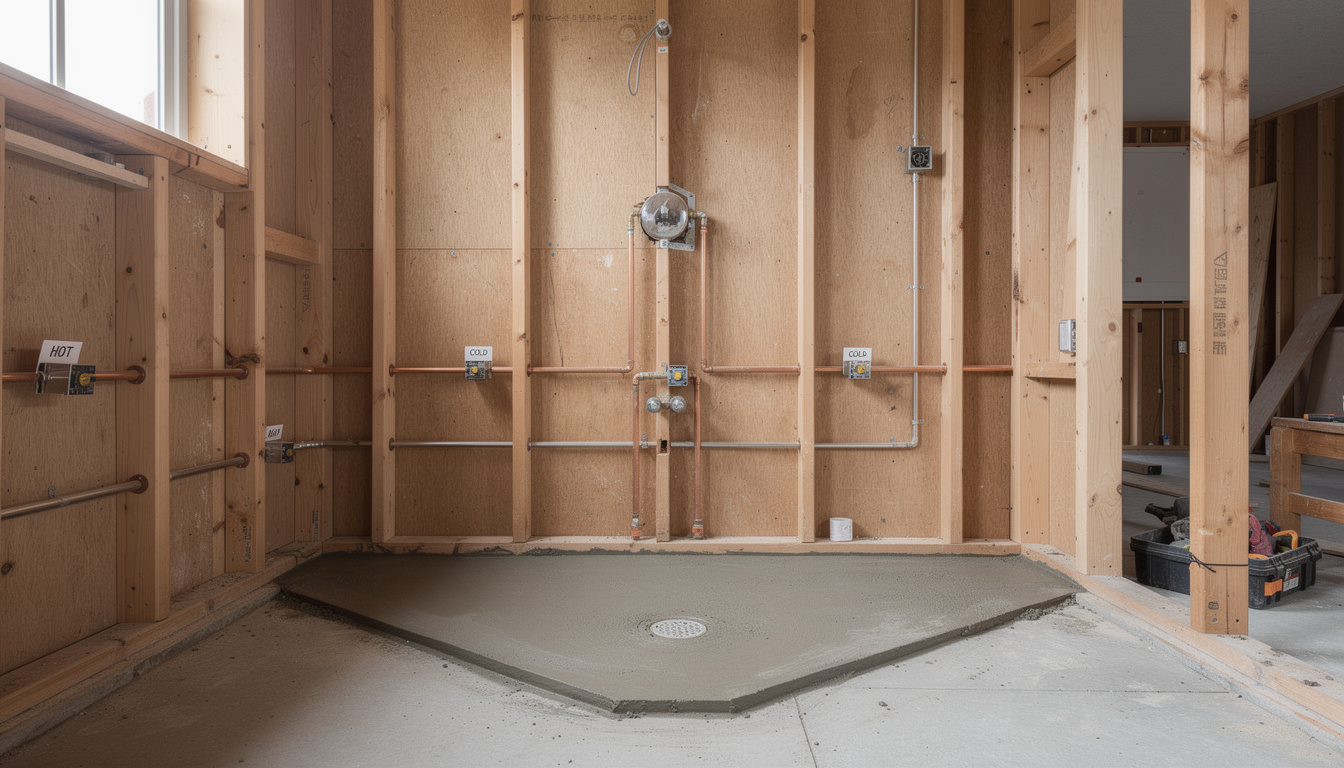
Pipe Installation and Fixture Upgrades: Building Reliability Into the Remodel
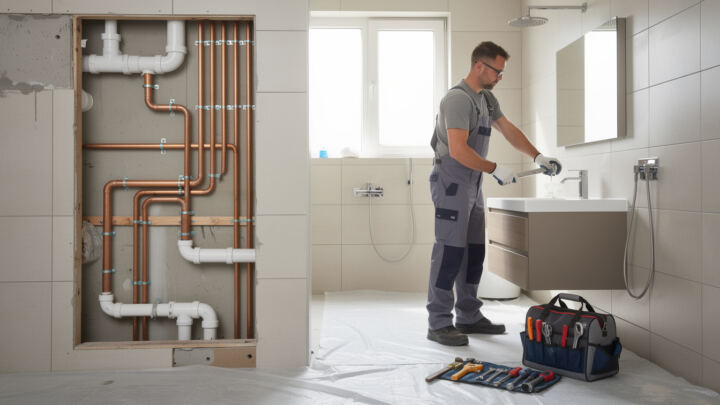
Once the layout is locked, the real durability work begins. This is where pipe installation choices and fixture upgrades can quietly future-proof the bathroom. If the home is older, this is also your best shot at replacing questionable materials, fixing decades of “handyman specials,” and setting yourself up for fewer leaks and clogs.
Sam’s house had a mix of aging copper and some questionable patched sections from a past repair. The renovation opened the walls, so it finally made sense to replace the risky runs rather than gamble on them. That decision wasn’t just about today’s remodel—it was about not having to rip out brand-new tile later.
Choosing pipe materials without overthinking it
Most homeowners end up deciding between copper and PEX for supply lines. Copper has a long track record and handles heat well. PEX is flexible, faster to install, and often reduces the number of fittings hidden in walls—good for leak prevention. The best choice depends on local code acceptance, water chemistry, and the installer’s expertise. The real “best practice” is consistency and quality installation, not chasing trends.
One underrated detail: shutoff valves. Sam upgraded to quarter-turn shutoffs at every fixture. It’s a small line item that feels heroic later when a faucet cartridge fails and you can isolate one fixture instead of shutting down the whole house.
Water efficiency that doesn’t feel like punishment
Modern bathrooms can reduce water use without turning showers into sad drizzles. In 2026, most mainstream brands offer high-performing low-flow options, and the comfort gap compared to older “early low-flow” products is basically gone. Water efficiency is now about smart engineering: aeration, pressure compensation, and better bowl design in toilets.
Sam selected a dual-flush toilet and a pressure-compensating showerhead. The daily experience stayed premium, but the household reduced water use—especially noticeable with teenagers taking long showers. It’s not just an eco flex; it’s a utility-bill reality.
| Upgrade Area | What You Change | Why It Matters | Quick Tip |
|---|---|---|---|
| 🚽 Toilet | Dual-flush or modern high-efficiency model | Boosts water efficiency without sacrificing performance | Check rough-in size before buying |
| 🚿 Shower | Pressure-compensating showerhead + correctly sized valve | Stable comfort, fewer temperature swings | Match valve to spray features (rain head, handheld) |
| 🚰 Faucet | Aerated faucet with durable cartridge | Lower usage, better longevity | Buy replacement parts availability, not just looks |
| 🧰 Supply Lines | New PEX/copper runs with accessible shutoffs | Better leak prevention and serviceability | Label shutoffs while walls are open |
If you’re spending on aesthetics, spend on the stuff behind the wall too. The nicest tile in the world won’t make you happy when a hidden fitting starts weeping.
For a visual walkthrough of common rough-in steps and fixture planning, this kind of video search is useful:
Drainage System and Ventilation: The Unsexy Stuff That Prevents Big Problems
Bathrooms are basically controlled water disasters. Because of that, the drainage system and ventilation strategy matter as much as the fixtures themselves. When drains are undersized, poorly sloped, or overloaded with too many turns, you get slow flow, recurring clogs, and backups at the worst times. When venting is wrong, traps can siphon dry, sewer gas can creep in, and drainage becomes noisy and unpredictable.
Sam’s original bathroom had that classic “glug-glug” sound in the tub when the toilet flushed. It wasn’t haunted—it was venting. During renovation, the plumber corrected the vent route so fixtures could drain smoothly without fighting pressure changes. The result felt like magic, but it was just physics being respected.
Drain performance: slope, sizing, and smarter routing
A best-practice drain layout keeps runs as direct as possible and uses proper slope so waste moves without leaving gunk behind. Too flat and solids settle. Too steep and water outruns the solids. In remodels, the challenge is working around joists and structural beams without creating an obstacle course of elbows. Every extra bend is a future clog magnet.
One practical move: if you’re redoing the shower, consider drain placement early. Linear drains can look slick, but they can also complicate framing and slope if the floor structure isn’t friendly. Center drains are often simpler and cheaper. “Best” depends on the room, not Instagram.
Ventilation: moisture control and the plumbing side of “air”
People hear ventilation and think only about the fan. Yes, you need a good exhaust fan to reduce humidity, protect paint, and slow down mold growth. But plumbing ventilation is a separate thing: vent pipes that balance air pressure in the drain lines. Both matter. One protects your home’s surfaces; the other protects your traps and keeps drainage consistent.
Sam upgraded the exhaust fan to a quieter model with a humidity sensor. That meant the fan actually ran long enough after showers to clear moisture, instead of being turned off too early. At the same time, the plumbing vents were checked and brought up to spec. The bathroom stopped smelling “musty” after hot showers—because it was finally drying properly and the traps stayed sealed.
If you want to see real examples of venting explanations and common mistakes, this search usually pulls solid demonstrations:
The big insight here is simple: when air and water move correctly, your bathroom feels calmer, cleaner, and easier to maintain.
Leak Prevention, Waterproofing, and Hidden Damage: What to Fix While Walls Are Open
Renovations expose the stuff you normally never see: damp subfloors, slow pinhole leaks, questionable drain connections, and old materials that have quietly been aging for years. This is your chance to handle leak prevention and waterproofing in a way that protects the money you’re putting into finishes. Because once the tile is in and the vanity is mounted, “I’ll deal with it later” becomes “I’ll deal with it after I rip everything out.”
Sam’s demo revealed a dark stain near the tub plumbing. It wasn’t an active flood, just a long-term seep from an old overflow gasket. It had softened part of the subfloor. Fixing it during the remodel was straightforward; ignoring it would have turned a minor repair into structural rot.
Leak checks that go beyond “looks fine”
Visible inspections are a start, but best practice is to test. That can include pressure testing supply lines after new pipe installation, checking shower pans (or flood-testing waterproofed showers where appropriate), and verifying that every trap and connection stays dry under real flow. A tiny drip can travel along framing and show up somewhere totally different, which is why a disciplined check matters.
Also: stop using harsh drain chemicals as your default maintenance tool. They can be rough on certain finishes and components, and they don’t fix underlying slope or vent issues. Mechanical cleaning and smart habits beat chemical warfare.
Waterproofing done like you actually want it to last
Waterproofing isn’t just “put tile on cement board.” Tile and grout are not waterproof. The system behind them—membranes, sealed seams, properly flashed transitions—does the real work. In showers, especially, a continuous waterproof layer and correctly sealed penetrations (valves, shower heads, niches) are non-negotiable if you want a long lifespan.
Sam chose a bonded waterproof membrane system and insisted on careful detailing around corners and the curb. The installer used the manufacturer’s tape and preformed corners instead of improvising. That’s the kind of boring correctness that prevents the dreaded “mystery leak” six months later.
Fixing hidden issues now is basically buying peace and quiet for the next ten years. That’s a trade worth making.
Plumbing Codes, Permits, and Long-Term Maintenance After the Remodel
There’s a reason plumbing codes exist: bathrooms mix drinking water, waste, electricity, and moisture in a small space. Codes keep systems safe, serviceable, and consistent, and they protect homeowners from the kind of shortcuts that look fine until they don’t. In many places, moving supply lines, changing drain sizes, or altering venting triggers permits and inspections. That can feel annoying, but it’s also a quality checkpoint you get to leverage.
Sam’s contractor pulled the permits and scheduled inspections at rough-in and final. That forced clean documentation and fewer “we’ll figure it out later” decisions. When everything passed, Sam didn’t just get a legal remodel—Sam got confidence that the system had been reviewed by someone who wasn’t emotionally attached to the timeline.
How to keep the remodel compliant without losing your mind
Best practice is to treat compliance like a planning tool, not a punishment. Confirm the fixture requirements (like toilet clearances and vent rules), ensure proper backflow protection where required, and use approved materials. If you’re hiring trades, verify licensing and ask who is responsible for the permit. If you’re DIY-ing parts, be honest about what you should leave to a pro—especially anything that could impact safety or insurance.
And yes, even small bathroom projects can benefit from a plumber’s eye. A quick consultation early can prevent expensive rework later, especially when you’re mixing old and new systems.
Maintenance habits that protect your investment
A renovated bathroom isn’t “set it and forget it.” A few simple routines keep everything running smoothly and extend the life of your fixture upgrades. Sam set calendar reminders for quick checks: look under the vanity for moisture, listen for running toilets, and keep an eye on water pressure changes that could signal a developing issue.
- 🕵️ Check for moisture under sinks and around toilet bases every month (fast leak prevention).
- 🧻 Don’t flush wipes or “flushable” products—your drainage system will remember.
- 🧼 Clean fixtures with non-abrasive products to protect finishes.
- 🔧 Replace worn washers and seals promptly to avoid slow drips turning into cabinet damage.
- 📅 Book periodic professional inspections to catch small issues before they become big ones.
When maintenance is simple and consistent, the bathroom stays as satisfying as it looked on day one—and that’s the whole point of renovating.
What are the most worthwhile plumbing upgrades during a bathroom remodel?
Focus on behind-the-wall reliability first: replacing aging supply lines, improving the drainage system, and correcting ventilation/venting. Then prioritize water efficiency with modern toilets, showerheads, and faucets so the savings stack up over time.
Why does fixture placement matter so much in bathroom plumbing renovations?
Placement affects build cost and performance. Keeping fixtures close to existing lines reduces pipe installation complexity, helps maintain proper slope for drainage, and lowers the chance of awkward venting solutions that cause slow drains or trap siphoning.
How do I reduce the risk of future leaks after a renovation?
Use proven leak prevention basics: quality shutoff valves, fewer hidden joints where possible, pressure testing after rough-in, and disciplined waterproofing in wet zones. Also avoid harsh chemicals and address small drips immediately.
Do I really need to think about plumbing codes for a small bathroom update?
Yes. Plumbing codes cover safety and function—like venting rules, approved materials, and clearances. Even minor changes can trigger permit requirements, and compliant work is easier to insure, sell, and maintain.
What’s the simplest maintenance routine to keep a renovated bathroom working well?
Monthly visual checks for dampness, gentle cleaning for fixtures, mindful flushing habits, and occasional professional servicing. Those habits protect your fixture upgrades, keep water efficiency steady, and prevent clogs or hidden damage from growing.