Most homeowners don’t think about their septic system until something goes wrong—usually at the worst possible moment. But septic system maintenance is one of those boring, unglamorous habits that pays you back fast: fewer emergencies, fewer nasty smells, and way less money burned on avoidable repairs. A well-cared-for setup can stretch to a septic system lifespan of 25–30 years (or more), while a neglected one can crash in just a few years and drag your yard, plumbing, and budget down with it. And since septic systems are basically small, private wastewater treatment plants in your backyard, your choices—what you flush, how you use water, whether you protect the drainfield—don’t just affect your home. They also affect groundwater, nearby wells, and the local environment. The good news: none of this is mysterious. If you learn what’s under your lawn, set a sane pumping and inspection routine, and stop feeding your tank the stuff it can’t digest, you’ll dramatically lower the odds of that dreaded weekend backup call. Let’s get into the practical, real-life way to keep things running smoothly.
- 🧰 Know your system: tank + drainfield, location, size, and any pumps/filters
- 🗓️ Pump on schedule: most homes every 3–5 years, more often with heavy use
- 🚿 Use water smarter: stop overloads that push solids into the drainfield
- 🚫 Watch what goes down the drain: wipes, grease, chemicals, and meds create long-term damage
- 🌱 Protect the drainfield: no cars, no aggressive roots, no roof runoff dumping there
- 🔎 Act fast on warning signs: slow drains, odors, soggy spots, “too-green” grass
Septic System Maintenance Basics: Understand Your Tank, Drainfield, and Wastewater Treatment
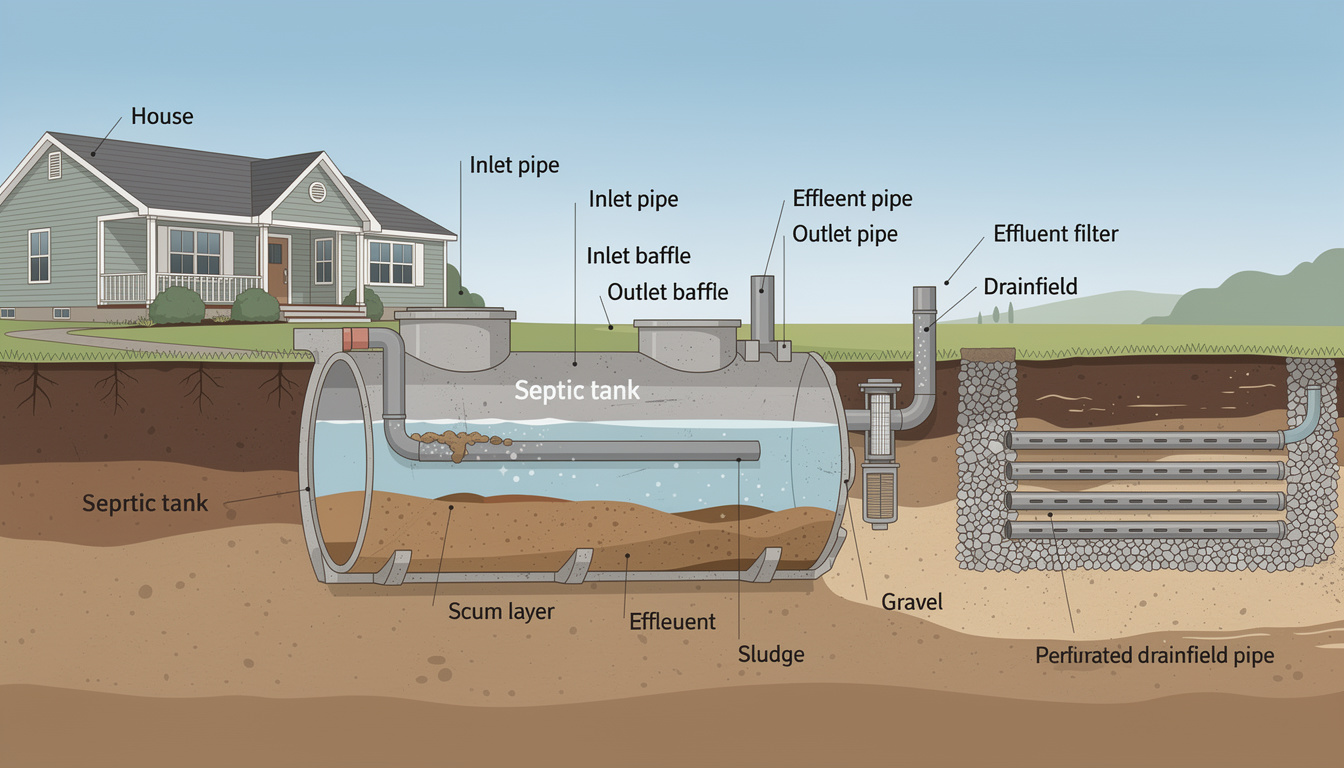
If you want to maintain your septic system properly, you’ve got to picture what’s happening underground. Most residential setups have two main parts: a buried, watertight septic tank and a drainfield (also called a leach field). Together, they handle on-site wastewater treatment—meaning everything from showers and sinks to laundry and toilets gets processed right on your property.
Inside the tank, heavier solids settle to the bottom as sludge, while fats and lighter materials float to the top as scum. In the middle, you’ve got the liquid layer that flows out to the drainfield. That drainfield isn’t a “dump zone.” It’s a soil-based filter system. The soil and microbes help polish the wastewater before it returns to the environment. When people treat the drainfield like a trash can, the soil can clog, and that’s when expensive problems start.
Know the location and specs (before you need them)
Here’s a scenario that happens all the time: a homeowner notices a wet patch in the yard, then starts digging “to check things.” That’s how pipes get cracked and lids get damaged. The smarter move is to know, on purpose, where the tank lid and drainfield are—and keep that info with your home records.
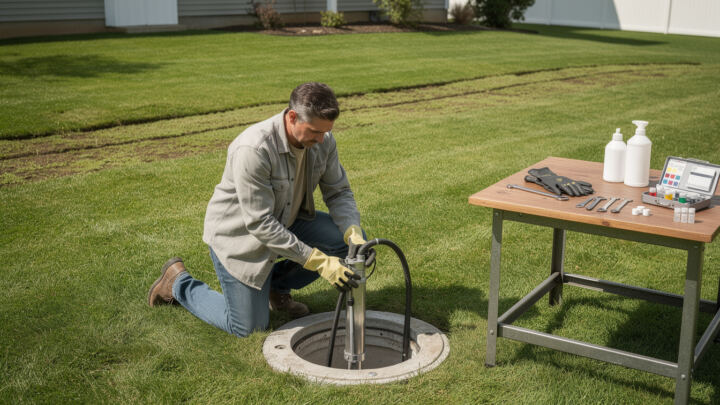
If you don’t have an as-built drawing from the installer or county files, a septic pro can locate components using tools like probes, dye tests, or cameras. It’s not just trivia. Knowing tank size, system type (conventional vs. pumped), and whether you have an effluent filter changes how you plan septic tank care.
Septic system safety: lids, gases, and why DIY can go sideways
Let’s be blunt: septic system safety matters. Septic tanks can contain dangerous gases, and an open or damaged lid is a real fall hazard—especially for kids and pets. Never climb into a tank, and don’t mess with compromised risers or covers. If you suspect damage, call a licensed service provider.
A homeowner we’ll call Jordan learned this the hard way: after a heavy rain, he noticed a soft spot near where he “thought” the tank was and tried to open a lid with a shovel. The lid edge crumbled, and the repair ended up costing more than a routine service visit would have. The insight: treat the system like infrastructure, not a weekend project.
Once you’ve mapped what you have, the next step is setting a routine that keeps solids where they belong—inside the tank, not in the field.
How to Pump Septic Tank the Right Way: Scheduling, Inspections, and What Pros Look For
There’s one maintenance task that beats everything else: pump septic tank on a regular schedule. Pumping removes accumulated sludge and scum so they don’t migrate out to the drainfield. Once solids escape the tank, they can clog the soil interface, and that’s when you get surfacing effluent, backups, or field failure.
For most households, pumping every 3–5 years is a solid baseline. But frequency depends on household size, tank volume, and how much solid material enters the system. A family of five with a smaller tank and a garbage disposal will fill up faster than a couple with conservative water habits.
Factors that change your pumping frequency
Think of pumping like changing oil. You can ignore it, but the bill shows up later. You may need more frequent pumping if you have:
- 👨👩👧👦 A larger household (more showers, more laundry, more toilet flushes)
- 🗑️ A garbage disposal (adds more solids and grease-like material)
- 🧂 A water softener (especially if it recharges on a timer rather than actual usage)
- 🏡 Frequent guests, short-term rentals, or multi-generational living
That last point matters in 2026 because more homes are being used flexibly—home offices, extended families, and guest stays all increase daily flow. Septic systems don’t care why water use is up; they just respond to volume.
What a real septic system inspection includes
Pumping should never be “suck it out and leave.” A good visit includes a septic system inspection of key parts: baffles (or tees), the tank condition, risers and lids, and any effluent filter. The goal is to catch small problems before they become big ones.
Here’s a practical table you can use to plan service and talk clearly with a contractor:
| Item | Typical Check Timing | Why It Matters |
|---|---|---|
| 🧪 Sludge/scum levels | At pumping / inspection visit | Helps set the next pump date and prevents solids from escaping 🚫 |
| 🧱 Baffles / inlet-outlet tees | Every service visit | Protects flow patterns and keeps floating scum from leaving the tank ✅ |
| 🧰 Effluent filter (if present) | Often yearly or at pumping | Clogs can cause slow drains and prevent septic backup failures when maintained 🔧 |
| ⚙️ Pump & floats (advanced systems) | Every 1–3 years | Mechanical failures can trigger alarms, flooding, or uneven dosing ⚠️ |
| 🌱 Drainfield condition | At visits + after heavy rain events | Surface water or soggy soil can hint at overload or clogging 🌧️ |
When pumping is paired with a real inspection, it becomes preventive care—not just cleanup. Next up: the daily habits that decide whether your tank stays calm or gets overwhelmed.
If you want visuals on pumping and what inspectors check, a quick video can help you know what to expect before a truck shows up in your driveway.
Septic Tank Care at Home: Water Use Habits That Prevent Septic Backup
Most septic disasters aren’t caused by one dramatic mistake. They’re caused by a thousand small overloads: long showers, multiple laundry loads in one afternoon, a running toilet that nobody fixes, and heavy weekend hosting. Your system is designed to treat a certain volume per day. Push beyond that, and the tank can’t separate solids properly, which raises the chance you’ll need emergency septic system cleaning and remediation.
Water conservation that actually works (without making life miserable)
Water conservation isn’t about suffering; it’s about smoothing out the flow. The tank needs time for solids to settle. When you slam it with gallons at once, you stir the layers and send particles toward the outlet.
- 🚽 Fix running toilets fast (they can waste huge volumes quietly)
- 🚰 Repair leaky faucets before they become “normal” background noise
- 🚿 Install high-efficiency showerheads and faucet aerators
- 🧺 Spread laundry loads across the week instead of doing a marathon day
- 🍽️ Run the dishwasher and washer only when full
- 🧂 Choose a water softener that recharges based on actual water usage (not a timer) to reduce unnecessary discharge
Jordan (from earlier) switched to spreading laundry across the week after a near-backup during a holiday weekend. The result wasn’t just fewer plumbing scares—it was also less wear on the drainfield because the soil wasn’t getting hammered with sudden saturation.
Flow management: a simple way to think about capacity
Ask yourself: “If my septic system were a small restaurant kitchen, would I dump a full day’s dishes into the sink in 10 minutes?” Of course not. But that’s what happens when you run three loads of laundry, run the dishwasher, and have multiple showers back-to-back.
If you’re planning a party or hosting family, pre-empt the strain. Space out showers. Don’t do laundry that day. It’s unsexy planning, but it’s the kind that prevent septic backup headaches.
Septic system troubleshooting: early clues that water habits are too heavy
Not all warning signs mean “system failure.” Sometimes they mean “you’re overloading it.” Watch for:
- 🐢 Drains getting slower across multiple fixtures
- 🫧 Gurgling in pipes after a flush
- 🚨 Occasional toilet “near overflow” moments that resolve later
Those can be the system begging for reduced flow or a filter cleaning, not necessarily a full replacement. The insight: daily habits don’t just save water—they buy your system time to do its job.
Now that flow is under control, the next big lever is what you send down the drain in the first place.
Want a clear, homeowner-friendly walkthrough of good daily habits? A video primer can make these do’s and don’ts stick.
Proper Waste Disposal Rules: What Not to Flush to Avoid Septic System Cleaning Emergencies
If you remember one thing, make it this: your septic tank is not a trash can. It’s a biological system designed to break down human waste and toilet paper, plus normal graywater from sinks and showers. When you send in materials that don’t break down—or chemicals that disrupt bacterial activity—you make the whole process weaker and increase the chance of clogs, odors, and costly septic system cleaning.
The “looks harmless” items that cause real damage
Some of the worst offenders are the ones marketed as convenient. “Flushable” wipes are a classic example: they often don’t disintegrate like toilet paper. They can tangle into rope-like masses and contribute to blockages in plumbing and the tank’s outlet system.
Grease is another silent killer. Pouring cooking oil down the drain may seem fine when it’s warm and liquid, but it cools, congeals, and sticks to pipes and tank components. Over time it can coat surfaces and reduce effective volume in the tank.
A clear do-not-send list (print this mentally)
- 🧻 “Flushable” wipes (they don’t break down like you want)
- 🛢️ Cooking grease or oil
- 🧻 Paper towels, diapers, feminine hygiene products
- ☕ Coffee grounds, eggshells, and fibrous food waste
- 🧪 Harsh household chemicals, paints, solvents
- 💊 Pharmaceuticals (handle through take-back programs instead)
If you have a garbage disposal, be extra cautious. It’s convenient, sure, but it increases the solids load in the tank. That often means you’ll need to pump septic tank more frequently, and you’ll want tighter discipline on what goes in.
How to build “septic-safe” routines without turning into the drain police
The easiest way is to set up the kitchen and bathrooms to make the right choice automatic. Keep a small covered trash can in each bathroom so people don’t feel tempted to flush random items. In the kitchen, pour grease into a jar or can, let it cool, and toss it. For medications, many pharmacies and community centers run disposal programs—by 2026, these programs are common in many areas because keeping drugs out of water systems has become a public priority.
The insight: smart disposal isn’t about rules; it’s about designing the house so the septic system isn’t fighting your routines.
Drainfield Protection and Septic System Lifespan: Landscaping, Traffic, and Rainwater Control
Your drainfield is where long-term success or failure gets decided. The tank is only the first step. The field relies on oxygenated soil and open pore spaces to finish filtering wastewater. Compact the soil, flood it with stormwater, or let roots invade, and you shorten your septic system lifespan dramatically.
Traffic and compaction: the “it was just once” problem
Driving or parking over the drainfield can crush pipes and compact soil so water can’t move through properly. Even if nothing breaks immediately, compaction reduces the soil’s ability to absorb and treat effluent. That’s how “it was fine last year” turns into “why is the yard squishy?” later.
If you’re doing a home project—delivering mulch, adding a patio, placing a shed—mark the drainfield first. Jordan once hired landscapers who nearly parked a skid-steer over his field. Catching it early saved him from a repair that would’ve cost more than the entire landscaping job.
Landscaping choices that keep the system healthy
Grass is your friend over the drainfield. It prevents erosion and helps manage moisture. Trees and shrubs with aggressive roots are a different story. Roots seek moisture, and drainfield lines are basically a reliable source. If roots invade, they can block flow or damage pipes.
- 🌿 Keep a grass cover over the drainfield
- 🌳 Avoid planting trees or root-hungry shrubs nearby
- 🧱 Don’t add thick layers of soil that smother oxygen exchange
Rainwater management: direct water away from the field
One of the most overlooked fixes is also one of the cheapest: route roof drains, sump pump discharge, and surface runoff away from the drainfield. Your septic system is designed for household wastewater, not for every storm that hits your roof.
If you see puddling after rain near the field, it can be a sign that the area is being overloaded with clean water, making it harder for the system to absorb treated effluent. The insight: managing rainwater is like giving your drainfield room to breathe.
When to call for septic system troubleshooting
Some signals mean you should stop guessing and get professional help. Contact a service provider if you notice:
- 🤢 Sewage odors indoors or outdoors
- 🧽 Wet, spongy ground around the tank or drainfield
- 🌱 Unusually lush green grass over the drainfield when the rest of the lawn is dry
- 🧪 Elevated nitrates or bacteria in well-water testing
These aren’t just comfort issues—they can point to environmental contamination risks. The insight: the earlier you respond, the more options you have that don’t involve major excavation.
How often should I pump my septic tank?
For many households, pumping every 3–5 years works well. If your home has a garbage disposal, a smaller tank, lots of occupants, or unusually high water use, you may need it more often. A technician can measure sludge/scum levels during a septic system inspection to set a more precise schedule.
What are the fastest ways to prevent septic backup?
Fix running toilets and leaks quickly, spread laundry loads across the week, avoid flushing wipes and grease, and keep stormwater (gutters/sump discharge) away from the drainfield. Also maintain or clean the effluent filter if your system has one—this is a common, fixable cause of slow drains.
Do septic additives replace pumping?
No. Additives don’t remove accumulated sludge and scum, so they can’t replace pumping. Regular pumping plus smart water use and proper waste disposal is the reliable way to protect your system and extend septic system lifespan.
What does a professional septic system inspection usually include?
A thorough visit typically checks the tank condition, inlet/outlet baffles or tees, risers and lids, effluent filter (if present), and signs of drainfield stress. For systems with pumps or mechanical components, inspections are often recommended every 1–3 years.
Is it safe to open my septic tank lid myself?
It’s risky. Septic system safety concerns include dangerous gases, unstable or damaged lids, and fall hazards. If you need access for service, it’s best handled by a licensed septic professional with proper tools and safety procedures.