En bref
- 🧪 Hard water carries more calcium and magnesium, which drives limescale and stubborn mineral deposits in plumbing.
- 🚿 Soft water has fewer hardness minerals (often after a water softener), so fixtures stay cleaner and flow stays steadier.
- 🔥 Hardness buildup can make water heaters and appliances work harder, sometimes pushing energy use up to ~30% in real homes.
- 🧼 If you’re fighting soap scum, dull glassware, and “why won’t this soap lather?”, you’re probably dealing with high water hardness.
- 🛠️ Smart water treatment choices include salt-based softeners, salt-free conditioners, and phosphate systems—each with trade-offs.
Most people don’t think twice about what’s coming out of the tap—until the showerhead starts spraying sideways, the kettle looks like it’s growing rock crystals, or the “new” water heater suddenly sounds like it’s cooking popcorn. That’s where the whole hard water vs. soft water thing stops being trivia and starts being about your plumbing budget. The minerals in your water—mainly calcium and magnesium—don’t just hang out politely. They react to heat, pressure changes, and time, leaving behind mineral deposits that narrow pipe interiors, coat heating elements, and turn simple cleaning into a never-ending battle against soap scum.
In a lot of U.S. regions, hardness is the norm, not the exception—estimates often put it around 85% of homes. Hard water typically forms as groundwater moves through limestone or chalk, picking up dissolved minerals like a souvenir. Soft water is basically the opposite experience: less hardness mineral content (or water that’s been treated to remove those minerals), which usually means fewer plumbing headaches and better day-to-day comfort. The trick is knowing what you have, what it’s doing to your system, and which water treatment approach fits your house and habits.
Hard Water vs. Soft Water in Plumbing: The Real Difference (Not the Marketing)
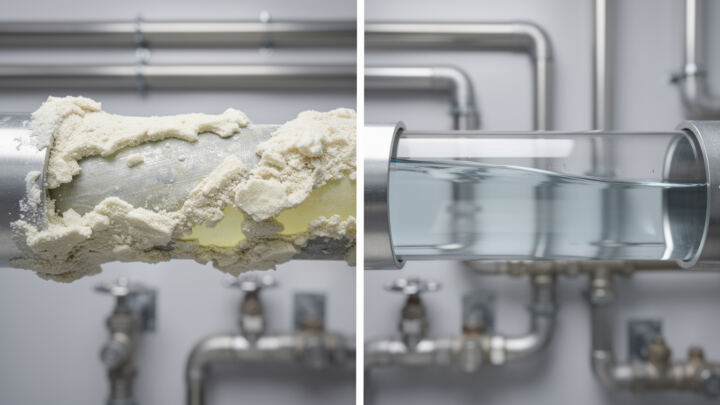
The core difference is simple: hard water contains higher levels of dissolved calcium and magnesium, while soft water contains less. But “less” and “more” matters a lot in plumbing because those minerals don’t stay invisible. They precipitate and cling to surfaces, especially when heated, creating limescale that behaves like plaque in an artery—slowly tightening the system until performance drops.
Water hardness is commonly measured in grains per gallon (gpg) or mg/L (ppm). A practical reference point many plumbers use: once you’re above roughly 7.5 gpg (about 180 mg/L), you’re in territory where scale becomes a frequent issue. Below that, you may still see spots and buildup, but it’s usually less aggressive and slower to cause restrictions.
Where hard water comes from (and why your neighborhood matters)
Hard water isn’t “dirty”—it’s geology. If your local water source is groundwater moving through mineral-rich rock, it dissolves calcium and magnesium along the way. That’s why two nearby towns can have very different water hardness depending on aquifers, treatment blending, and seasonal changes.
Here’s a quick mental picture. Imagine “Maya,” a homeowner who moved from a coastal city to a suburb built on limestone terrain. Same cleaning routine, same dishwasher tablets, same shampoo—yet suddenly she’s wiping white crust off faucets weekly. That’s not her being picky; that’s water chemistry showing up in real life.
What “soft” actually means (and the sodium/potassium swap)
Most of the time, soft water is created with a water softener that uses ion exchange. The system swaps calcium and magnesium ions for sodium (or sometimes potassium) ions. The goal isn’t to make the water “empty,” just to remove the minerals that form scale. The result is water that feels slicker, lathers easier, and is far less likely to form mineral deposits in your plumbing lines.
Here’s the key takeaway: hard water tends to build scale; soft water tends to reduce it—so the “difference” isn’t just chemical, it’s mechanical and financial once it hits your pipes.
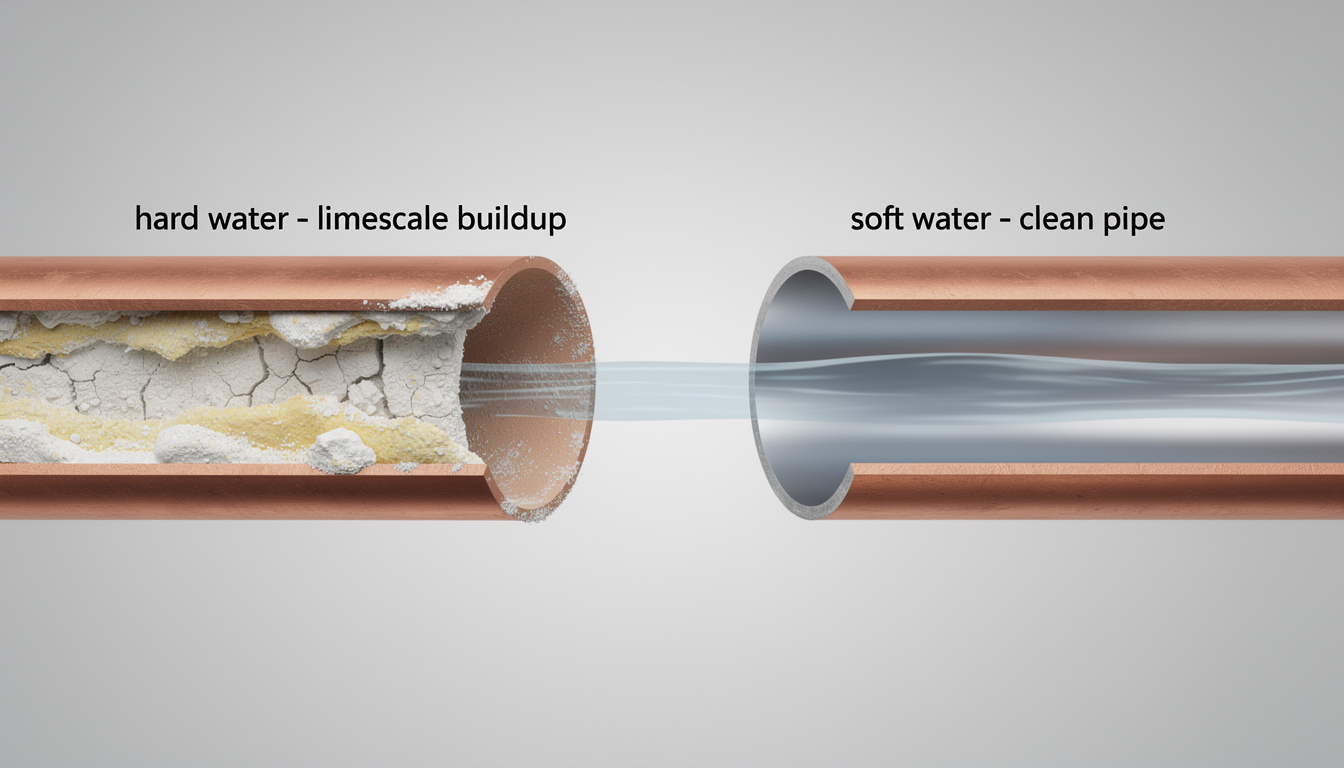
How Hard Water Damages Plumbing: Scale, Flow Loss, and Hidden Costs
Hard water damage is sneaky because it’s usually slow. You don’t wake up one day with a pipe fully sealed shut. Instead, you get a gradual narrowing of pipe diameter from limescale, a little more time waiting for hot water, a shower that feels weaker, and a water heater that starts acting like it’s older than it is.
Limescale inside pipes: the “invisible clog” effect
When calcium and magnesium drop out of solution, they stick to pipe walls, elbows, valves, and aerators. The more heat and turbulence, the more opportunities for scale to form. Over time, mineral deposits create rough interiors that catch more particles, accelerating buildup.
In older homes with narrower lines or galvanized sections, the impact can be dramatic. Picture a 30-year-old kitchen branch line that used to deliver a solid stream. With scale narrowing it bit by bit, you end up with a sad trickle—and you might blame the faucet when the real problem is inside the wall.
Water heaters: where hardness turns into a bill you can feel
Water heaters are scale magnets because heat drives minerals out of the water. Tank heaters can accumulate sediment at the bottom, while tankless heaters can get scale on heat exchangers. Either way, the unit has to work harder to achieve the same output.
In real-world terms, heavy scale can reduce efficiency enough to push energy costs up—often cited at up to around 30% in hard-water conditions. That’s not a small “maybe.” It can be the difference between a heater lasting 12 years versus failing early because it ran hot and stressed for too long.
Fixtures, valves, and the early-warning signs you can actually see
If your plumbing is suffering, the “symptoms” often show up at the edges: crusty showerheads, white rings on faucet bases, clogged aerators, and toilets that get stubborn mineral staining. And yes, soap scum is part of the story—hardness minerals react with soap, forming that grayish film that refuses to rinse clean.
Hard water doesn’t just create clogs; it can contribute to pipe corrosion in certain setups, especially where scale and chemistry create uneven conditions at the metal surface. The nasty part is the combo: scale reduces flow and insulates heat transfer, while corrosion attacks integrity. The insight here is simple: hard water problems rarely stay “cosmetic” for long.
To make the comparison concrete, here’s a practical table plumbers use when explaining what’s going on.
| Area in the home | Hard water impact ⚠️ | Soft water impact ✅ |
|---|---|---|
| Pipes | 🧱 Limescale narrows diameter, reduces flow, increases clog risk | 🚰 Less scale, steadier pressure, fewer service calls |
| Water heater | 🔥 Scale/sediment lowers efficiency; energy use can rise up to ~30% | ♨️ Better heat transfer, quieter operation, longer lifespan |
| Fixtures | 🚿 White crust, clogged aerators, frequent descaling | ✨ Cleaner surfaces, less scrubbing |
| Cleaning | 🧼 More soap scum, soap lathers poorly, more detergent needed | 🫧 Better lather, less detergent, easier rinsing |
Next up, the obvious question: how do you tell what’s coming into your house without guessing?
How to Tell If You Have Hard Water or Soft Water: Tests You Can Do Today
You don’t need to be a lab tech to figure this out. Between utility reports, quick DIY checks, and inexpensive tools, you can get a solid answer fast—and that answer helps you avoid wasting money on the wrong fix.
Start with your water supplier’s report (the underrated free option)
If you’re on municipal water, your supplier typically publishes a water quality report that lists water hardness in either gpg or mg/L (ppm). It won’t always reflect the exact hardness at your tap on a given day, but it’s a strong baseline.
If you’re on a private well, hardness can vary even more. Well water is where homeowners often get blindsided, because it can be crystal clear yet highly mineralized.
The soap “suds” test: quick, messy, surprisingly useful
Fill a clear bottle about one-third with water, add a few drops of plain liquid soap (not detergent), then shake. If you get lots of suds and the water looks relatively clear, your water leans softer. If you get weak suds and cloudy water, hardness is likely higher because minerals are reacting with soap to form that cloudy film.
Is it scientific perfection? No. Is it a great “should I investigate further?” check? Absolutely.
Test strips and digital meters: cheap accuracy vs. ongoing convenience
Test strips are easy: dip, wait, compare color. They’re great for homeowners who want a number without overthinking it. Digital TDS meters measure total dissolved solids, which is broader than hardness—but it still helps spot changes over time.
If you want the best of both worlds, do this: use strips to confirm hardness, then use a meter to monitor consistency after any water treatment changes.
A practical “signs list” you can check around the house
- 🚿 Chalky crust on showerheads or faucet tips (classic limescale)
- 🍽️ Spots on glasses even after drying
- 🧼 Persistent soap scum on tubs and tile
- 👕 Stiff laundry or dull colors after washing
- 💧 Gradually dropping water pressure in one area of the home
Once you know what you’re dealing with, the next step isn’t “buy the biggest machine.” It’s picking the right treatment strategy for your plumbing, your budget, and your tolerance for maintenance.
Water Treatment Options for Hard Water: Softeners, Conditioners, and Real-World Trade-Offs
There’s no one-size-fits-all fix for hard water. The “right” solution depends on your hardness level, plumbing materials, household size, and whether you want full hardness removal or just scale control.
Salt-based water softener: the classic for a reason
A salt-based water softener is the most direct method: it removes calcium and magnesium via ion exchange. If your goal is to protect plumbing, stop scale, and improve cleaning performance, this is usually the heavy hitter.
The trade-off is maintenance. You’ll need regular salt refills and occasional system cleaning. Ignore upkeep and you can get performance drop-offs—or worse, issues like bacterial growth in neglected brine tanks. The upside is predictable results: less scale, fewer clogged aerators, and happier appliances.
Salt-free conditioners: scale control without sodium addition
Salt-free systems don’t “soften” in the strict sense. They’re designed to alter how minerals behave so they’re less likely to stick as hard mineral deposits. People like them because there’s minimal maintenance and no added sodium.
The honest take: they can be great for reducing scale symptoms, but they may not deliver the same silky soap performance as true softening. If your primary complaint is plumbing scale (not cleaning frustrations), they can be a practical middle ground.
Phosphate injection: budget-friendly protection with a refill routine
Phosphate systems can help prevent scale from sticking by sequestering minerals. They’re often cheaper upfront and can be effective for targeted protection. The trade-off is chemical refills and making sure dosing stays consistent.
This approach can be especially appealing in rental properties or smaller homes where a full softener feels like overkill.
DIY and “partial” approaches: good for symptoms, not always the root cause
People try vinegar descaling, showerhead replacements, inline filters, and magnetic gadgets. Some of these help with surface cleanup, and vinegar can genuinely dissolve existing scale on fixtures. But most DIY options don’t stop hardness from doing its work inside the system.
Think of it like this: scrubbing is a reaction. Treatment is prevention. And prevention is what keeps your plumbing from aging early.
To see these options side-by-side, here’s a simple comparison you can actually use when shopping.
| System | What it does | Best for | Maintenance 🧰 |
|---|---|---|---|
| Salt-based water softener | Removes hardness minerals (calcium/magnesium) | Homes with heavy water hardness and recurring limescale | 🧂 Regular salt refills + periodic cleaning |
| Salt-free conditioner | Reduces scale forming tendency (does not fully remove minerals) | Homeowners wanting lower scale with low upkeep | ✅ Minimal |
| Phosphate injection | Helps keep minerals from sticking as deposits | Budget-friendly scale control for some systems | 🧪 Refill phosphate regularly |
| Targeted DIY descaling | Removes existing buildup at fixtures/appliances | Short-term relief, small problem areas | 🧽 Frequent attention |
Now, one more wrinkle plumbers deal with: soft water isn’t automatically perfect for every pipe in every house. That’s where material, age, and chemistry come into play.
Soft Water and Plumbing: Benefits, Edge Cases, and How to Keep It Balanced
Most homeowners who switch to soft water immediately notice the lifestyle wins: soap lathers faster, towels feel less crunchy, and the shower glass stops turning cloudy every other day. But the plumbing angle is the bigger long game: less scale means more stable flow and fewer failures that come from overheating, clogging, or restriction.
Why soft water is usually kinder to plumbing and appliances
Without calcium and magnesium actively plating out, pipes stay closer to their original diameter. Water heaters transfer heat more efficiently. Dishwashers and washing machines avoid the crusty coating that slows performance and wears parts out.
In practical terms, this is where people “find” money they didn’t know they were losing: fewer service calls, fewer surprise replacements, and lower detergent usage because you aren’t fighting hardness every time you wash something.
The soap and detergent effect (yes, it’s real)
Hardness minerals react with soap, making it less effective and creating soap scum. With soft water, soap works the way it was meant to, so you often need less. That’s not just nice; it reduces residue in pipes and drains over time too.
A good rule of thumb in many households: once water is softened, cut detergent and shampoo amounts and adjust from there. Otherwise you end up overusing products and thinking soft water feels “too slippery,” when it’s really just “too much soap.”
The plumber’s caveat: pipe corrosion and old plumbing materials
Here’s where nuance matters. Some plumbers complain that soft water can contribute to pipe corrosion under certain conditions—especially in older systems with vulnerable metals, pre-existing corrosion, or water chemistry that’s already aggressive. Water that’s very low in minerals can be more likely to leach metals if pH and alkalinity aren’t balanced.
That doesn’t mean “avoid soft water.” It means: if you have older copper, brass, or galvanized lines, get your water chemistry checked and avoid extremes. Many modern setups handle softened water just fine, and balanced treatment is the goal—not swinging chemistry like a wrecking ball.
A mini case story you can relate to
Back to Maya: after a year of battling scale, she installs a properly sized softener and starts doing basic maintenance. Within months, the showerhead stops clogging, the dishwasher runs quieter, and the white rings around fixtures fade. The real win shows up later: her plumber finds the water heater has far less scale than neighbors’ units of similar age, which means fewer repairs and less energy wasted.
The insight to keep: good water isn’t only about taste or feel—it’s about protecting the hidden infrastructure you pay for whether you see it or not.
What is the main difference between hard water and soft water in plumbing?
Hard water has higher levels of calcium and magnesium, which can form limescale and mineral deposits inside pipes and appliances. Soft water has fewer of those hardness minerals (often after water treatment with a water softener), so scale buildup is reduced and plumbing tends to run more efficiently.
How can I quickly tell if I have hard water at home?
Common signs include soap scum on tubs and tile, chalky limescale on faucets or showerheads, spotted glassware, stiff laundry, and weakening water pressure at certain fixtures. For confirmation, check your water supplier report, use hardness test strips, or do a simple soap-suds bottle test.
Can hard water really increase energy bills?
Yes. When mineral deposits coat heating elements or create sediment in water heaters, the unit must work harder to heat water. In heavy-hardness conditions, efficiency losses can be significant—often cited up to around 30%—especially when maintenance like flushing and descaling is skipped.
Is soft water ever bad for pipes?
In some older plumbing systems, soft water can contribute to pipe corrosion if overall water chemistry is unbalanced and the water becomes more aggressive toward metals. The fix is usually proper system setup, monitoring, and—when needed—adjusting pH/alkalinity rather than avoiding soft water entirely.
Which water treatment option is best: salt-based softener, salt-free conditioner, or phosphate injection?
Salt-based softeners provide the most complete hardness removal and are typically best for severe limescale problems. Salt-free conditioners can reduce scale tendency with minimal upkeep but don’t fully remove minerals. Phosphate injection is often a budget-friendly scale-control approach that requires regular refills. The best choice depends on your water hardness level, plumbing materials, and maintenance preferences.