Hot water is one of those background comforts you only notice when it’s gone. One day everything’s fine, and the next you’re standing in a lukewarm shower doing mental math about whether you can “tough it out” until the weekend. The tricky part is that a water heater rarely fails without warning; it usually spends months sending little signals—odd sounds, cloudy water, longer heat-up times, and a utility bill that creeps up like it pays rent.
What makes this even more annoying is that water heating isn’t magic. It’s a pretty understandable mix of a heating mechanism, a thermostat, and a handful of safety parts working together to keep a steady hot water supply. Once you know what’s happening inside the tank (or inside a tankless unit), you can spot repair indicators early, do smarter maintenance, and decide whether you’re looking at a quick fix—or a real replacement moment. The goal isn’t to become a plumber; it’s to avoid surprise cold showers and prevent the kind of leak that turns “appliance issue” into “flooring project.”
In brief
- 🚿 Most issues start with the basics: thermostat settings, heating elements/burners, and sediment buildup.
- ⏳ Typical lifespan: around 8–12 years for many tank models, and up to ~20 years for many tankless systems (with proper care).
- 🔊 Rumbling or banging often points to hardened sediment—fixable sometimes, tank-killing if ignored.
- 🟤 Rusty, cloudy, or sandy water can mean corrosion or sediment; compare hot vs cold to narrow the source.
- 💸 If hot water drops while bills rise, your unit may be losing energy efficiency fast.
- 💧 Any tank leak deserves immediate attention; it can go from small puddle to major damage quickly.
- 🧰 Repeated service calls are a financial clue: frequent repairs can cost more than a modern replacement.
How Water Heaters Work: The Heating Mechanism Behind Your Hot Water Supply
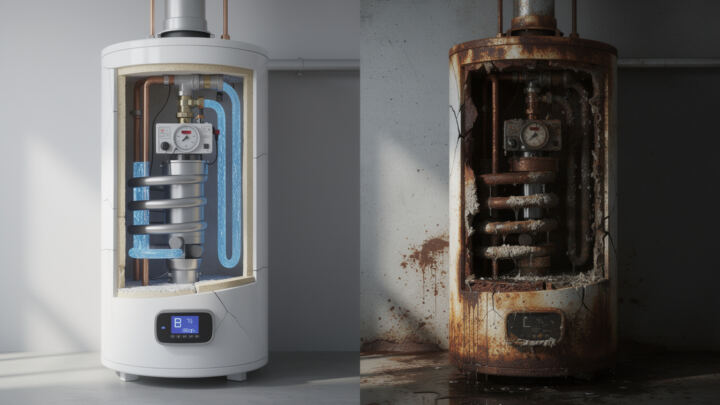
Let’s make the “mystery box” in your utility room feel a lot less mysterious. A standard storage water heater is basically an insulated tank that keeps a big batch of water hot so it’s ready whenever you open a faucet. Cold water enters through a dip tube, hot water exits from the top, and in between, the unit uses a heating mechanism to maintain a target temperature set by the thermostat.
In an electric model, heating usually comes from one or two electric elements—often an upper and a lower element—controlled by thermostats that take turns. In a gas model, a burner heats the bottom of the tank and a flue vents combustion gases out. Either way, the goal is the same: keep stored water near your setpoint so your shower doesn’t run cold halfway through shampoo.
The Thermostat: Small Part, Big Impact
The thermostat is the bouncer at the club: it decides when heat is allowed in and when it’s cut off. For many homes, a common recommended setting is roughly 120–140°F, balancing comfort, safety, and energy efficiency. If your temperature is set too low, you’ll complain about “no hot water.” Too high, and you’re paying extra while increasing scald risk.
Here’s a real-life scenario: Maya buys a house and feels like the hot water “doesn’t last.” Before she replaces anything, she checks the thermostat setting and finds it was dialed down to save energy by the previous owner. Adjusting it back to a reasonable range instantly improves the experience—no parts, no panic, no replacement. That’s the kind of easy win you get when you understand the basics.
Why Tankless Feels Different (Because It Is)
A tankless unit doesn’t store hot water; it heats it on demand as it flows through a heat exchanger. When you open a tap, sensors trigger burners or electric coils, and water heats as it passes through. This can improve energy efficiency because you’re not constantly reheating a stored tank, but it also means performance depends on flow rate. Run two showers and the dishwasher at the same time and you might feel the system’s limits if it’s undersized.
Tankless often lasts longer—many owners see around up to 20 years with good upkeep—because there’s no giant tank sitting there slowly corroding. But it’s also more sensitive to mineral scale in hard-water areas, so maintenance becomes more about descaling than flushing a tank.
What’s Happening Inside Over Time
Even if you never touch your heater, water chemistry is working on it 24/7. Minerals settle, metal expands and contracts with heat cycles, and protective parts like an anode rod (in many tank systems) eventually get consumed. That gradual wear is why repair indicators show up more often in the second half of a heater’s lifespan. The key insight: the unit isn’t “fine until it’s dead.” It’s aging the whole time—quietly.
Next up, it helps to know the specific signs that aging is crossing the line from “normal” to “replace this before it ruins your day.”
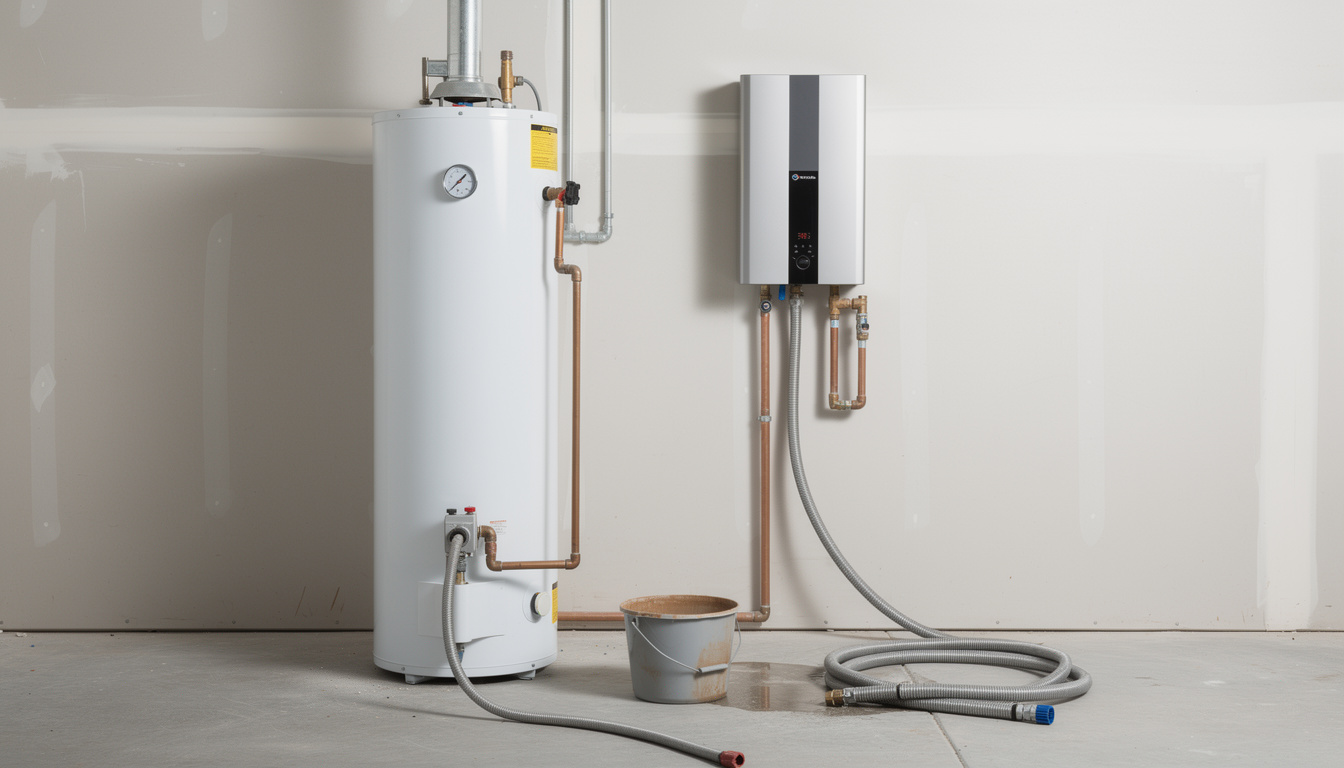
When to Replace a Water Heater: The Repair Indicators Homeowners Miss
Most people don’t replace a heater because they love shopping for appliances. They replace it because the unit starts sending signals that it’s on borrowed time. The catch is that many of those signals look “kinda normal” if you’re not paying attention. This is where watching for clear repair indicators helps you decide: is this a quick fix, or is it time for replacement?
Discolored, Cloudy, or Sandy Water
If your hot water suddenly looks rusty, cloudy, or gritty, don’t just shrug and blame the city. Corrosion inside an older tank can shed rust into the water stream, especially as protective components degrade. A quick way to narrow it down: run cold water for a few minutes. If the cold side is rusty too, the issue may be in your home’s plumbing rather than the heater. If only the hot side looks discolored, your heater becomes the prime suspect.
Cloudy or sandy water can also be sediment. Tanks collect minerals at the bottom over years—especially in hard-water regions—and those particles can get stirred up. A tank flush can sometimes clear it. But if you flush and the grit returns quickly, the system may be too far gone, and a replacement becomes the more sensible move.
Not Enough Hot Water (Plus a Higher Bill) 💸
The most obvious sign is simply less hot water: showers get shorter, temperature swings happen, or you run out fast. On its own, this might be a thermostat issue or a failed element (electric) or burner problem (gas). Many of those are repairable.
The red flag is when hot water performance drops while your energy costs rise. That combination often points to declining energy efficiency: the system is working harder to deliver less. Sediment acts like an insulating blanket between the heat source and the water, so your heater wastes energy just to maintain temperature. That’s when “repair” starts to feel like paying to keep a bad habit alive.
Strange Noises: From Mild to “Uh-Oh” 🔊
Some noise is normal, but loud rumbling, banging, or thumping isn’t just annoying—it’s information. Often it’s hardened sediment at the bottom of the tank. Water gets trapped under that layer, flashes into steam bubbles, and makes that knocking sound. Left alone, the sediment can overheat the tank bottom, damage the lining, and speed up corrosion.
Maya (yes, her again) heard a low rumble for months. She ignored it until the heater became slower and louder. A plumber flushed the tank and improved it, but noted the buildup was thick and had likely stressed the metal. The lesson: when noises start, early maintenance can buy time; late action often just delays the inevitable.
Leaks Around the Tank 💧
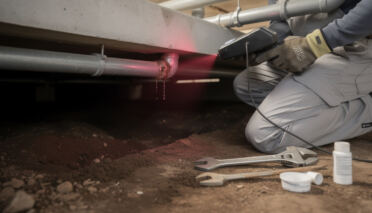
Any water pooling around the base of a tank-style heater should make you move fast. As tanks age, heating cycles cause metal to expand and contract, which can create fractures. Sometimes leaks look minor—just a damp ring at first—but a tank can fail suddenly and dump dozens of gallons where you least want it.
Not every drip is a tank failure; it could be a valve or fitting. But if the tank itself is leaking, that’s not a “repair it and forget it” situation. That’s a replacement situation, because the tank body isn’t realistically patchable in a durable way.
Multiple Repairs in Recent Years 🧰
A heater that needs constant attention is telling you something. If you’ve had several service calls—elements, thermostats, valves—especially within a year or two, the math starts to shift. Repairs might keep it running, but you’re paying repeatedly for an aging platform. Newer models can be more efficient, and that can soften the upfront cost over time.
Now that you know what to watch for, the next step is figuring out how age and model type affect the odds—and how to decode the unit’s manufacturing date when paperwork is missing.
Here’s a video search that walks through common warning signs and troubleshooting steps:
Water Heater Lifespan by Type: Tank vs Tankless and What Age Really Means
Age isn’t everything, but it’s a strong predictor—kind of like mileage on a car. A heater can look fine and still be near the end of its useful life. In many households, traditional tank units often land around an 8–12 year lifespan range, though some fail earlier and some last longer depending on water quality and care. Tankless systems frequently push longer, sometimes approaching around 20 years with consistent descaling and proper installation.
There’s also the fuel factor. Many homeowners find gas units can have a somewhat shorter average life than electric in certain conditions, partly due to combustion-related wear and ventilation demands. The bigger takeaway: if your system is in the second half of its expected lifespan, you should pay closer attention to repair indicators and consider proactive planning rather than waiting for a breakdown.
How to Check the Manufacturing Date (Even If You Bought the House “As-Is”)
It’s common to move into a place and have no idea when the heater was installed. Fortunately, many manufacturers encode the date into the serial number on the sticker near the upper portion of the unit. A common pattern uses a letter for the month (often A=January through L=December) followed by two digits for the year. So something like C19 can mean March 2019. Another format places the month letter first and the year next, depending on brand conventions.
If you’re unsure, take a clear photo of the data plate and look up your brand’s serial number decoder. Knowing the manufacturing date helps you plan: if you’re staring at a 12+ year-old tank heater, you’re not being dramatic by budgeting for a replacement. You’re being practical.
Quick Comparison Table (What You’re Trading Off) 📊
| Type ⚙️ | Typical Lifespan ⏳ | Common Maintenance 🧼 | Common Failure/Repair Indicators 🚨 |
|---|---|---|---|
| Tank (electric/gas) 🛢️ | Often 8–12 years | Flush sediment, check anode rod, test T&P valve | Rumbling from sediment, rusty hot water, tank leaks |
| Tankless 🔥 | Can reach ~20 years | Descale heat exchanger, clean inlet filter | Scale-related flow/temperature issues, error codes, ignition problems |
Planning Replacement Like a Normal Person (Not a Doomsday Prepper)
Replacement planning doesn’t mean swapping a perfectly fine unit “just because.” It means avoiding emergency installs. Emergency installs usually cost more, offer fewer model choices, and happen at the worst time—like before guests arrive or during a cold snap.
A practical approach: once your tank unit crosses roughly the 10-year mark, schedule a professional check. You may get another year or three out of it with smart maintenance, or you may learn it’s one leak away from disaster. Either way, you’re in control, which is the whole point.
Next, let’s talk about how to keep a heater healthier longer—and which routine tasks actually move the needle on reliability and energy efficiency.
Water Heater Maintenance That Actually Improves Energy Efficiency (Without Becoming a Full-Time Hobby)
People hear “maintenance” and picture hours of wrenching. In reality, a few targeted habits can noticeably extend a heater’s lifespan and keep energy efficiency from sliding downhill. The trick is understanding what causes the most damage: sediment, scale, overheating, and neglected safety components.
Tank Maintenance: Sediment Is the Quiet Villain
In a tank system, mineral sediment settles at the bottom and gradually hardens. That layer makes the heating mechanism work harder because heat doesn’t transfer as cleanly into the water. It can also create hotspots that stress the tank lining and accelerate corrosion.
Flushing helps. Some homeowners do a partial drain periodically, others do a full flush based on water hardness and usage. If you live somewhere with hard water, you’ll feel the benefit sooner. If you don’t, you may still find a flush quiets the heater and improves recovery time. The insight here is simple: sediment doesn’t just reduce comfort; it’s an efficiency tax you pay every month.
Tankless Maintenance: Descaling Is Non-Negotiable in Hard-Water Areas
A tankless heater’s heat exchanger has narrow passages where scale can build up. When that happens, you can see temperature fluctuations, reduced flow, and more strain on internal components. The “it’s not as hot as it used to be” complaint often traces back to scaling, not a dying unit.
Descaling intervals vary depending on hardness and usage. Some households can go longer; others should do it more frequently. Either way, descaling is to tankless what oil changes are to your car: skip it long enough and you’ll eventually pay for it.
Thermostat Settings and Safer Comfort
Your thermostat setting affects both comfort and operating cost. If your water is hotter than you need, you’re burning money and increasing scald risk. If it’s too cool, you’ll run out faster or find yourself bumping the temperature up and down, which isn’t great for stability.
A common sweet spot is around 120°F for many households, sometimes higher if needed for specific situations (bigger families, long pipe runs), but the right setting depends on your home. If you’re constantly chasing temperature, it can be a sign of a failing thermostat or element—classic repair indicators worth investigating.
A Practical Maintenance Checklist You’ll Actually Use ✅
- 🧯 Test the temperature and pressure relief (T&P) valve periodically (safety first).
- 🚿 Watch for new rumbling/banging sounds—sediment might be building up.
- 🟤 Compare hot vs cold water color if you see rust or cloudiness.
- 🧼 Flush a tank or descale a tankless unit based on your water hardness.
- 🌡️ Confirm the thermostat is set sensibly before assuming the unit is failing.
- 🔧 Keep an eye on small drips at fittings; fix early to avoid corrosion and bigger leaks.
When Maintenance Stops Making Sense
Maintenance is powerful, but it can’t reverse a failing tank wall or undo years of corrosion. If your unit is older and you’re stacking repairs—thermostat today, heating element next month, then a valve—your money is often better spent on a planned replacement. The goal is to spend on improvements, not on postponing a breakdown by a few weeks.
That leads to the big decision: repair or replace. Let’s get practical about how to choose without second-guessing yourself.
If you want a visual walkthrough of flushing, descaling, and basic troubleshooting, this search pulls up solid step-by-step videos:
Repair vs Replacement: A Real-World Decision Framework for Water Heater Problems
When a heater acts up, it’s tempting to ask, “Can it be repaired?” The honest answer is usually yes—at least once. The better question is: “Should I repair it, given the age, the risk, and the long-term cost?” A smart decision balances safety, reliability, and budget without pretending you have infinite patience.
Problems That Often Justify Repair
Some failures are straightforward and don’t automatically mean the unit is done. A faulty thermostat or a burned-out heating element in an electric tank can often be replaced quickly. In many cases, a plumber can restore function within hours if parts are available.
Similarly, certain leaks at fittings or valves may be fixable. If the tank itself isn’t compromised and the heater isn’t near the end of its lifespan, repair can be the right call. The point isn’t to throw away equipment at the first hiccup; it’s to avoid pouring money into a system that’s on its last legs.
Problems That Strongly Suggest Replacement
If the tank body is leaking, that’s usually game over for a tank unit. You’re dealing with structural failure, not a replaceable component. If the heater is producing persistently rusty hot water due to internal corrosion, you’re likely seeing the inside of the tank degrade in real time.
Also, repeated service calls are a loud financial signal. If you’ve repaired the unit multiple times in recent years—or worse, multiple times in a single year—you’re not “maintaining” it anymore. You’re managing a decline. That’s when a planned replacement can reduce stress, improve energy efficiency, and lower the odds of water damage.
Picking the Next Unit Without Regret
Choosing between tank and tankless depends on your home’s demand pattern. A family with back-to-back showers may love the steady comfort of a properly sized tankless system, but only if the flow rate matches usage. A tank can be simpler and cheaper upfront, and modern tank models can still deliver excellent performance.
Think about how you actually live. Do you run laundry, dishwasher, and showers at the same time? Do you have long pipe runs to an upstairs bathroom? Are energy costs a major concern? Those lifestyle details matter as much as brand names.
A Simple “Do This Now” Flow
- 🔎 Check the easy stuff first: thermostat setting, breakers, pilot/ignition status.
- 🧾 Determine age via serial number and estimate remaining lifespan.
- 🚨 Look for high-risk indicators: tank leaks, heavy corrosion, persistent rusty water.
- 🧮 Compare repair cost vs replacement value (including efficiency gains and risk reduction).
- 📅 If replacement is likely soon, plan it before an emergency forces your hand.
At the end of the day, the best decision is the one that prevents the “it flooded at 2 a.m.” story. If you’re on the fence, get a pro to evaluate it—especially when age and warning signs start stacking.
What thermostat setting is best for a water heater?
Many homes do well with a thermostat setting around 120°F for comfort and energy efficiency. Some households may need a bit higher for long pipe runs or higher demand, but if you’re constantly adjusting it, that’s a repair indicator (thermostat or heating element issues) worth checking.
Is rusty hot water always a sign I need replacement?
Not always. First compare hot vs cold water: if cold is rusty too, the issue may be in the home’s pipes. If only the hot side is discolored, the water heater is more likely corroding internally, and replacement becomes more likely—especially if the unit is older.
Why does my water heater make rumbling or banging noises?
Those sounds often come from sediment buildup hardening at the bottom of a tank. The heating mechanism creates bubbles under the sediment layer, causing knocking. Flushing can help early on; if ignored, it can reduce energy efficiency and shorten lifespan.
How do I estimate my water heater’s age if I don’t have paperwork?
Check the manufacturer label for the serial number. Many brands encode the month as a letter (often A–L) and the year as the next two digits (for example, C19 can indicate March 2019). Once you know the age, you can better judge whether repair or replacement makes sense.
When does it make more sense to repair instead of replace?
Repair is often reasonable for a younger unit with a clear, isolated fault (like a thermostat or heating element) and no corrosion or tank leakage. Replacement is usually smarter when the tank is leaking, the unit is near the end of its lifespan, or you’re paying for repeated repairs while performance and efficiency keep dropping.