En bref
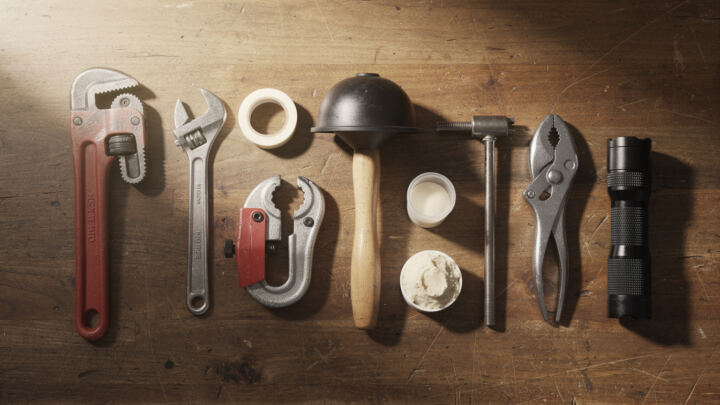
- 🪠 Keep two types of plunger on hand (sink vs toilet) so you’re not fighting the wrong battle.
- 🔧 A solid adjustable wrench + a proper pipe wrench covers most “it’s leaking under the sink” moments.
- 🧵 Plumber’s tape is cheap insurance for threaded joints—wrap it right and you prevent slow, sneaky drips.
- 🌀 A plumbing snake beats harsh chemicals for stubborn clogs and keeps your pipes happier long-term.
- ✂️ A pipe cutter (or tubing cutter for copper) makes clean cuts that don’t turn into future leaks.
- 🔦 Light matters: a headlamp helps you actually see the source of the problem (and keeps both hands free).
- 🚫 Some jobs still scream “call a pro,” especially anything involving sewer lines, hidden leaks, or water heaters.
There’s a very specific kind of chaos that happens when water goes where it shouldn’t. It’s rarely dramatic at first—more like a suspicious puddle, a toilet that’s suddenly “thinking,” or a faucet that won’t stop whispering drip… drip… drip at 2 a.m. The good news is that a lot of common household plumbing problems are totally manageable if you’ve got the right gear and a little patience. The better news? Building a practical toolkit doesn’t mean buying a plumber’s entire truck. It means picking a handful of tools that punch above their weight: a reliable wrench for fittings, a plunger that actually seals, a way to cut pipe cleanly, and a couple of sealing and cleaning essentials that stop small issues from becoming expensive ones.
In 2026, with home maintenance costs still not exactly getting cheaper, being able to handle basic fixes is basically a life skill. Think of these tools as your “first response kit.” You won’t use everything every month, but when something goes sideways, having the right tool within arm’s reach turns a stressful mess into a quick win. And if you like that satisfying feeling of solving a problem yourself? This is where it starts.
Essential plumbing tools every homeowner should have for fast, everyday fixes
If you only bought a few items for home plumbing, you’d want the ones that handle the most common situations: clogs, loose connections, and minor leaks. These are the annoying little problems that show up on a random Tuesday and ruin your schedule. The trick is having tools that are simple, versatile, and hard to misuse—because when you’re half-panicked and googling “why is my sink gurgling,” you don’t want complicated.
Plunger basics: the right seal is everything
A plunger is the classic for a reason, but using the wrong type is like trying to open a jar with oven mitts. For sinks and tubs, a cup-style plunger with a flat rim usually does the job. For toilets, you want the flange-style that has that extra rubber extension, so it seals properly in the curved drain opening.
Here’s a real-life example: my fictional neighbor Jamie (every block has a Jamie) tried to fix a toilet clog with a flat sink plunger. It just splashed water and achieved nothing. Swapped to a flange plunger, got a clean seal, and the clog cleared in under a minute. Same effort, different outcome—because the seal was finally right. That’s the whole game: seal first, then controlled, forceful strokes.
Adjustable wrench: the “one tool, many fittings” workhorse
An adjustable wrench earns its place because plumbing fixtures love different nut sizes. Supply lines, compression nuts, angle stops—these all show up in slightly different dimensions depending on the brand and the age of your home. Get one with a smooth thumbwheel and jaws that don’t wobble. If the wrench is sloppy, you’ll round off fittings, and that’s when a “quick tighten” becomes an afternoon project.
Practical tip: position the wrench so force is applied to the fixed jaw side whenever possible. It reduces the chance of the adjustable side slipping. And don’t gorilla-grip everything—snug is usually enough, especially on softer metals.
Plumber’s tape: tiny roll, big impact
Plumber’s tape (thread seal tape) is basically the cheapest leak-prevention you can keep in a drawer. It’s meant for threaded connections—like showerheads, some faucet connections, and certain appliance hookups. Wrap it in the same direction the fitting turns (clockwise when looking at the pipe end) so it doesn’t unravel when you tighten.
One of the most common homeowner mistakes is using it where it doesn’t belong. Compression fittings don’t need it on the compression side. Threads? Yes. Compression seat? No. The insight here: use tape to help threads seal, not to “fix” a damaged fitting.
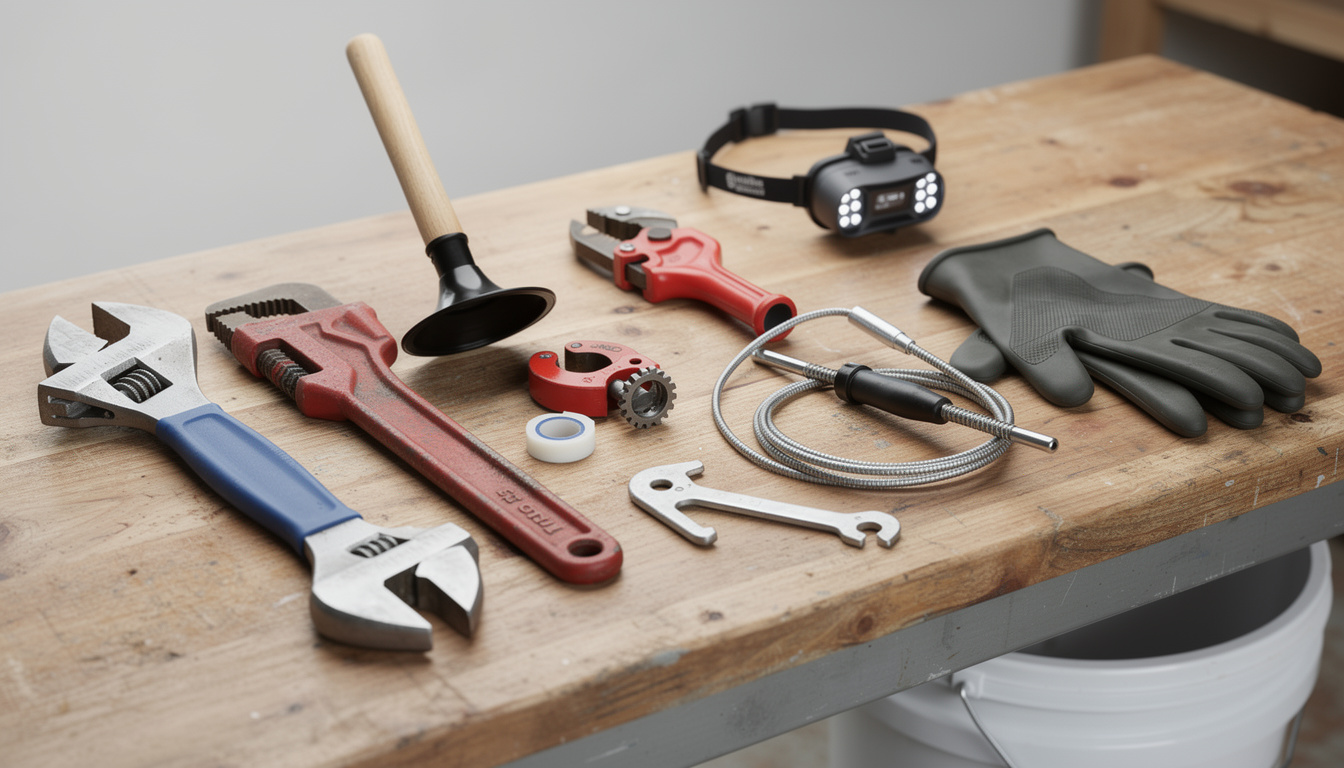
Wrench essentials: choosing a pipe wrench and other gripping tools without wrecking fixtures
When people say “I need a wrench,” they usually mean “I need to grip something metal that refuses to budge.” In plumbing, gripping is half the battle, but it’s also where homeowners cause the most accidental damage. The goal isn’t just brute force—it’s controlled force with the correct jaw shape.
Pipe wrench: big grip for stubborn threaded pipe
A pipe wrench is designed to bite into round pipe. Those serrated jaws are aggressive on purpose, which is why it’s great for galvanized steel or iron, and risky on shiny chrome finishes. If you’re dealing with older threaded pipe or a stuck fitting, the pipe wrench is your heavy hitter.
Use-case story: Jamie tried removing a corroded shower arm with a regular wrench and kept slipping off. A 14-inch pipe wrench grabbed it immediately—but left tooth marks. The fix? Wrap the pipe with a thick cloth (or a piece of rubber) if you care about the finish, and accept that sometimes hidden parts don’t need to stay pretty.
Also, the classic move is using two tools: one to hold steady, one to turn. That prevents twisting stress on the line behind the wall or under the sink. The insight: stability prevents surprise leaks later.
Adjustable wrench vs. pipe wrench: when to use which
An adjustable wrench is best for flat-sided nuts and hex fittings. A pipe wrench is best for round pipe and fittings where teeth can grip. If you’re working on supply line nuts under a sink, adjustable wins. If you’re working on threaded pipe that’s fused together by time and mineral buildup, pipe wrench wins.
And for the record: if you’re constantly slipping, it’s usually one of three things—wrong tool, wrong size, or wrong angle. Fix the setup before you add more force.
The “pipe threader” question: do homeowners really need one?
A pipe threader is the tool that cuts threads onto pipe. It’s awesome, but it’s also not something most homeowners use weekly. If you’re renovating an older home with threaded steel pipe sections, or you’re replacing short lengths and need custom thread lengths, a threader can be worth it—especially if you’re trying to match existing pipe runs without rebuilding everything.
For most modern DIY work, homeowners deal more with push-fit, soldered copper, or threaded adapters rather than threading raw pipe. Still, knowing what a pipe threader does helps you make a smart call: if the job requires custom threading and precision alignment, that’s often the moment to bring in a pro rather than “wing it.” The insight: threading is a precision step, not a guess-and-check step.
If gripping is about control, cutting is about accuracy—and that’s where we go next.
Pipe cutter and tubing cutter essentials: clean cuts that don’t turn into leaks
Cutting pipe sounds simple until you’ve done it badly once. A jagged cut, a crushed edge, or plastic shavings left in the line can cause leaks, poor connections, and annoying flow restrictions. This is why a proper pipe cutter or tubing cutter is such a big deal: it makes the cut square, clean, and predictable.
Pipe cutter: best friend for quick, neat pipe repairs
A pipe cutter typically wraps around the pipe with a cutting wheel. You tighten it slightly, rotate, tighten again, rotate again—until it slices through. It’s slower than a saw, but the finish is usually much better. If you’re replacing a section of pipe under a sink or adding a shutoff, clean cuts make fittings seat properly, which makes leaks way less likely.
One common mistake: tightening too much too fast. That can deform softer pipe. The better approach is gradual tightening. A neat cut plus proper deburring (removing the sharp edge) is the secret combo most DIYers skip. The insight: deburring is part of cutting, not an optional extra.
Tubing cutter: the copper specialist
A tubing cutter is basically the same concept but optimized for copper tubing. It makes a crisp, round cut that’s ideal if you’re soldering or using compression fittings. Copper work rewards precision: a slightly crooked cut can mess with sealing surfaces and make you chase tiny drips for days.
If you’ve got a 1990s-to-2000s home with lots of copper runs, this tool earns its keep fast. For a small repair—like replacing a corroded angle stop—clean copper ends make the job feel almost unfairly easy.
Hacksaw: still useful, but handle it smart
A hacksaw isn’t as elegant, but it’s handy for tight spots and for cutting odd materials like bolts or old brackets. If you use one on pipe, secure the pipe and cut slowly to avoid bouncing. Wear eye protection—metal or plastic bits love to fly straight toward your face at the worst moment.
The takeaway: a saw is flexible, but cutters make better plumbing cuts. Next up, we’ll talk about clogs that laugh at plungers—and the tool that shuts them up.
Before you start clearing drains, it helps to see what you’re doing and learn from people who’ve fought these clogs before.
Plumbing snake strategies: clearing stubborn clogs without wrecking your drains
When a clog is deeper than the trap or too compacted for a plunger, it’s time for a plumbing snake (also called a hand auger). It’s one of the most homeowner-friendly tools because it’s mechanical, reusable, and doesn’t rely on harsh chemicals that can be rough on older pipes and seals.
How a plumbing snake actually works (and why it’s safer than you think)
A hand snake is a coiled cable you feed into a drain. When you hit resistance, you rotate the handle to either break up the clog or grab it. The best part is you get feedback—like you can feel whether you’re chewing through hair, hitting a bend, or snagging something solid.
Jamie once pulled out what can only be described as a “hair sweater” from a bathroom sink line. Gross? Absolutely. Effective? Instantly. That’s the practical charm of a snake: it removes the material instead of just pushing it around.
Length and use-cases: what most homes need
For typical household use, a 25-foot hand auger covers most sink, tub, and shower lines. Toilets often need a dedicated closet auger shape to avoid scratching porcelain. If you’re constantly dealing with main line backups, that’s usually beyond a simple hand tool—more on that in the “call a pro” section of your brain.
Technique matters: feed the cable gradually, rotate gently, and don’t force it around tight turns. If you crank like you’re starting a lawnmower, you can kink the cable or damage fragile drain lines. The insight: slow and steady beats aggressive and stuck.
Helpful add-ons that make messy work less miserable
Drain work is where “optional” tools start feeling essential. Gloves keep your hands from turning into a biohazard scene. A bucket saves your cabinet floor. A headlamp prevents you from guessing where the leak is coming from.
Here’s a quick table of practical add-ons that punch above their weight.
| Item | Why it’s useful | Best moment to grab it |
|---|---|---|
| 🧤 Gloves | Protects from grime, sharp edges, and gross surprises | Any drain work, snake use, trap cleaning |
| 🪣 Bucket | Catches water so your cabinet doesn’t become a swamp | Before loosening traps, valves, or supply lines |
| 🔦 Headlamp | Hands-free light for under-sink and crawlspace work | Whenever you’re diagnosing a leak source |
| 🥽 Safety goggles | Keeps debris and splashes out of your eyes | Cutting pipe, snaking drains, using a hacksaw |
| 🩹 Duct tape | Temporary patch to slow a leak until proper repair | Emergency “stop the drip now” situations |
Once drains are handled, the next big homeowner challenge is working in cramped spaces—especially under sinks—where normal tools suddenly feel useless.
Basin wrench and tight-space tactics: under-sink repairs that don’t destroy your back
Under-sink plumbing is where confidence goes to get tested. The space is cramped, lighting is bad, and the hardware is always placed exactly where your hands don’t fit. This is why the basin wrench deserves a spot in a homeowner toolkit. It’s not glamorous, but it’s the difference between “I can do this” and “why is this nut in another dimension?”
Basin wrench: the faucet nut remover you’ll thank yourself for buying
A basin wrench has a long shaft and a swiveling jaw designed to grab the mounting nuts that hold faucets in place. These nuts are usually up behind the sink basin, where a standard wrench can’t get a decent angle. With a basin wrench, you can reach up, seat the jaw, and turn without contorting like you’re doing plumbing yoga.
Example: if you’re replacing a leaky faucet, the easiest part is usually the top. The hardest part is getting the old faucet loose underneath. A basin wrench turns that from a 90-minute swear-fest into a controlled process. The insight: specialized reach beats raw effort.
Compression sleeve puller: niche tool, huge time-saver
If you ever replace an old shutoff valve and find the compression sleeve stuck on the pipe, you’ll understand why this tool exists. A compression sleeve puller helps remove that sleeve without chewing up the pipe. If you try to pry it off with random tools, you can scratch the pipe and create sealing problems later.
You won’t use it daily, but when you need it, you really need it. This is one of those “cheap tool, expensive mistake without it” situations.
Practical checklist for a typical under-sink leak
When you spot water under the sink, don’t panic—follow a predictable order. Here’s a homeowner-friendly list you can keep in mind:
- 🔦 Turn on a light/headlamp and find the exact drip point (don’t guess).
- 🪣 Put a bucket under the area before touching anything.
- 🔧 Try a gentle snug with an adjustable wrench on supply nuts (no over-tightening).
- 🧵 If it’s a threaded connection you’re redoing, reassemble with plumber’s tape wrapped correctly.
- 🛑 If a valve won’t shut off fully, stop and plan—forcing it can break the stem.
That routine keeps little leaks from becoming cabinet damage. And speaking of stopping disasters early, the last piece is knowing when your tool kit should step aside for a licensed pro.
When DIY stops: the smart line between homeowner tools and professional plumbing help
Having tools is empowering, but the real homeowner flex is knowing when to pause. Some plumbing problems look small and actually aren’t—like a stain on the ceiling that turns out to be a slow leak soaking insulation, or a “minor” drain issue that’s really a main line blockage.
Jobs that are risky without training or specialized gear
Here are situations where calling a professional is usually the right move:
- 🚨 Water heater issues (especially gas): pressure, combustion, and code compliance aren’t DIY playgrounds.
- 🕳️ Sewer line backups: if multiple fixtures are affected, the problem is often beyond a hand snake.
- 🏚️ Hidden leaks behind walls or under slabs: you need proper detection and controlled access.
- 📜 Permitted work: major remodel plumbing, new lines, or anything your municipality requires inspections for.
This isn’t about fear—it’s about damage control. A small mistake on a pressurized line can turn into structural repair bills. The insight: the most expensive tool is the one you use at the wrong time.
How to “hand off” a problem like a pro (even if you’re not one)
If you do end up calling a plumber, you can still save time and money by being organized. Tell them what you observed (when it started, what fixtures are affected), what you tried (plunger, plumbing snake, tightening), and whether you shut off the water. Snap a photo of the setup under the sink. That information helps them arrive ready with the correct parts.
Also, keep your toolkit accessible. Plenty of pros will appreciate that you can hand them the right wrench or show the shutoff fast, especially during an active leak.
And if you’re planning upgrades, this is where those cutting and threading tools come back into the conversation. If a job requires a pipe threader or extensive rework, it’s often a sign you’re in “bigger project” territory rather than a quick repair.
At this point, you’ve got the practical tool lineup and the decision-making framework. The final step is answering the common questions that pop up right when you’re standing in the hardware aisle.
Do I really need both a plunger and a plumbing snake?
Yes, if you want to handle most clogs without calling for help. A plunger is fastest for soft, near-surface blockages (especially toilets), while a plumbing snake reaches deeper clogs like hair and gunk past the trap. They solve different problems, and together they cover the majority of household drain issues.
What’s the difference between a pipe cutter and a tubing cutter?
They’re similar tools with slightly different sweet spots. A pipe cutter is a general term and can refer to cutters for different materials and sizes. A tubing cutter is commonly used for copper tubing and makes very clean, square cuts that are ideal for soldering or compression fittings. If your home has copper lines, a tubing cutter is the cleaner, more precise option.
How many wraps of plumber’s tape should I use?
Usually 3 to 6 wraps is plenty for typical household threaded fittings. Wrap it tightly in the direction of the threads so it doesn’t bunch up when you tighten. If a connection still leaks, don’t just add more tape forever—check for cross-threading, cracks, or a sealing surface problem.
Why does my adjustable wrench keep slipping?
Most slipping comes from a loose jaw, the wrong size wrench, or applying force from the wrong angle. Adjust the jaws so they’re snug with minimal play, and orient the wrench so force pushes against the fixed jaw side when possible. If you’re working on round pipe, switch to a pipe wrench instead of fighting physics.
When is a pipe threader actually useful for a homeowner?
A pipe threader is useful when you’re working with threaded steel/iron pipe and need to cut custom threads on new pipe sections to match existing plumbing. That’s more common in older homes or specific projects like replacing short sections of threaded pipe. For many modern repairs using adapters or flexible supply lines, it’s not required—but it’s good to recognize when a job is heading into that territory.