In brief
- 🚨 Call fast when a leak won’t stop, you see stains spreading, or you suspect hidden water damage.
- 🧯 A burst pipe, toilet overflow, or repeated drain backup is an “act now” situation—shut off water and get help.
- 🥶 Frozen pipes can crack after thawing; safe thawing and inspection often needs pro tools and judgment.
- 🚿 No hot water and low water pressure can be simple… or a sign of bigger issues like failing valves, corrosion, or heater problems.
- 🧱 Persistent clog problems may indicate sewer trouble; pro-grade snaking, camera inspection, and targeted pipe repair can prevent repeats.
It always starts the same way: a tiny drip you swear you’ll get to “this weekend,” a slow sink that still kind of works, or a toilet that does that weird gurgle but only sometimes. Then life happens—work, school runs, deadlines—and suddenly the small annoyance turns into a real home problem. The tricky part is that plumbing doesn’t always fail loudly. A leak can quietly soak framing behind a wall, a clog can mask a deeper line collapse, and low water pressure can be the first whisper of a bigger system issue. Meanwhile, the internet is full of confident DIY advice that rarely shows the messy “after” photo.
This is where knowing when to call a professional plumber for help saves you money, time, and a whole lot of stress. A pro isn’t just “someone with a wrench.” They’ve got specialized tools, experience with weird edge cases, and the ability to spot domino effects before your house becomes a water-themed escape room. To make this practical, we’ll follow one homeowner—Maya—through a few realistic scenarios, so you can see the decision points clearly and act before the damage spreads.
Emergency plumbing signs: leak, burst pipe, and water damage that can’t wait
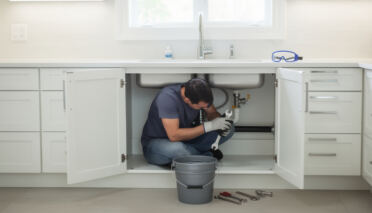
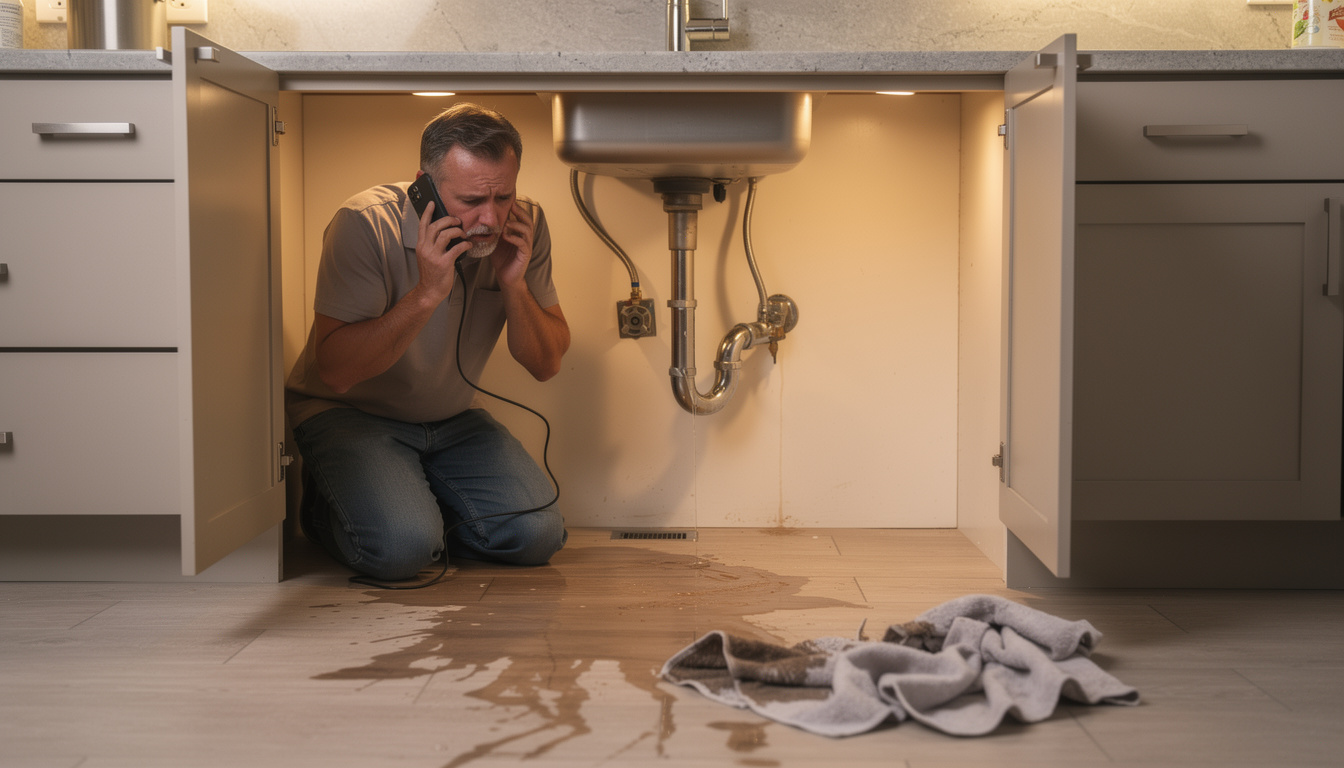
Maya’s first real wake-up call happened on a Monday morning. She stepped onto the kitchen floor and felt a cold squish. No puddle, just that unmistakable dampness that makes your stomach drop. She wiped the toe-kick under the sink and found a slow leak tracking along the cabinet base. The temptation is to tighten a fitting and move on, but the question is: how long has it been happening, and what has it touched?
Here’s the rule that keeps people out of trouble: if water is going where it shouldn’t, and you can’t confidently stop it in minutes, it’s time to call. Active leaks can become water damage fast—swollen cabinets, mold, warped flooring, and in worse cases, soaked insulation and compromised drywall. Even “clean” water becomes dirty once it runs through building materials.
What counts as an emergency (and what to do while you wait) 🚨
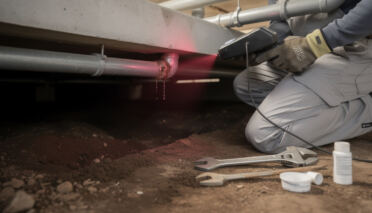
A burst pipe is the obvious one. If a pipe splits, water can pour out with shocking speed, and your priority is to stop the flow, not diagnose the cause. Shut off the main valve, open a few faucets to relieve pressure, and keep electricity in mind if water is near outlets or a panel.
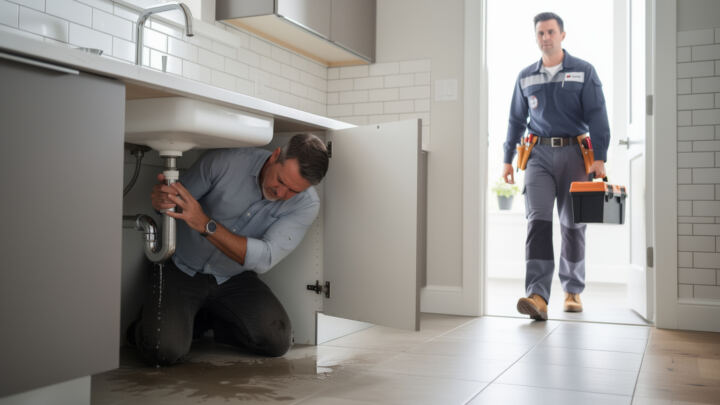
But a burst isn’t the only emergency. A sudden toilet overflow that keeps rising after you shut the valve at the wall, or a drain backup that brings wastewater into a shower or tub, is urgent because of contamination risk and because the underlying cause can be the main line.
Sometimes emergencies look subtle. If you notice a ceiling stain growing day by day, or paint bubbling, you’re likely dealing with hidden water damage. Plumbers can use moisture meters, thermal clues, and targeted access to find the source without turning your home into a demolition project.
Quick triage checklist before the plumber arrives ✅
- 🧷 Turn off the nearest shutoff valve (sink, toilet) or the main if needed.
- 🪣 Catch drips with a bucket and place towels to limit spread.
- 📸 Take photos for insurance if you suspect significant water damage.
- 🔌 Avoid using appliances or outlets near standing water.
- 📝 Note what you observed (when it started, which fixtures are affected).
The punchline from Maya’s story: the “tiny drip” had been running long enough to rot the particleboard base. A plumber fixed the line in under an hour, but the cabinet repair took weeks. The real insight is simple: water moves quietly until it doesn’t.
Next up, we’ll shift from obvious emergencies to the frustrating middle zone—slow drains, recurring backups, and the kind of clog that keeps coming back like a bad sequel.
Recurring clog and drain backup problems: when DIY fixes stop working
Maya tried to be the hero of her own house. She bought a plastic drain snake, watched a couple of videos, and “fixed” the bathroom sink. Two weeks later, it slowed again. Then the shower started pooling. Then one night she heard a glug-glug from the toilet when the washing machine drained. That’s the moment it stops being a cute DIY challenge and starts looking like a system problem.
A single clog in one fixture is often local—hair, soap scum, grease, or something that shouldn’t have been flushed. But repeated slowdowns and a drain backup affecting multiple fixtures usually means the blockage is deeper: a partially collapsed pipe, root intrusion, improper slope, or heavy buildup in older lines.
Why “it drains eventually” is not a win 🧠
When a line is partially blocked, water has to fight its way through. That increases pressure and turbulence inside the pipe, catching more debris and accelerating buildup. Chemical drain cleaners can make this worse; they may not reach the true blockage, and they can degrade certain materials over time. Also, they’re nasty for anyone who later has to open the line.
A pro approach is different. Plumbers can snake with the right head for the right pipe, use hydro-jetting when appropriate, and run a camera to see what’s actually happening. That camera is a game-changer, especially when symptoms are confusing.
Red flags that point to a main-line issue 🚩
- 🚿 Water rising in the shower when the toilet flushes (classic cross-fixture sign).
- 🚽 Repeated toilet overflow without an obvious cause in the bowl.
- 🫧 Gurgling sounds in drains, especially after using another fixture.
- 🌧️ Backups that happen after heavy rain (can hint at sewer saturation issues).
- 🧻 You clear one clog and another appears soon after.
A realistic case: the “mystery clog” that was actually roots
In Maya’s neighborhood, many homes were built in the 1970s. Her plumber ran a camera and found fine roots threading into a joint. Nothing dramatic, just enough to snag paper and create a recurring obstruction. The fix wasn’t just “clear it,” but choose a plan: mechanical removal now, then either periodic maintenance or a targeted pipe repair to replace the compromised section.
That’s the difference between DIY and professional help: DIY is great at symptoms; pros are better at causes. The takeaway here is that recurrence is a signal. If the same drain keeps failing, your house is asking for a deeper look.
Now let’s talk about pressure and heat—because low water pressure and no hot water can feel “minor,” yet they often tie into valves, corrosion, and equipment that’s not forgiving when it fails.
No hot water and low water pressure: when comfort issues signal bigger risks
Maya noticed it in the shower first: the hot water used to last through a full playlist, and now it went lukewarm halfway through one song. On the same week, the kitchen faucet felt weaker—still usable, but not “normal.” People often separate these issues: heater problem over here, faucet issue over there. But plumbing systems love to connect dots when you’re not looking.
When no hot water means “call today” 🔥
No hot water can come from a tripped breaker, a failed heating element, a bad thermocouple, or a malfunctioning gas control—some of which are straightforward, and some of which are not safe to guess at. If you smell gas, hear unusual popping, or see moisture around the heater base, that’s a “stop and call” situation.
There’s also the “hot water smells weird” scenario—like rotten eggs. That can point to bacteria reactions in the tank and may need a flush, anode rod work, or temperature adjustments done correctly. A plumber can assess the water heater condition and tell you whether repair makes sense or whether replacement is the smarter move.
Low water pressure: small symptom, big list of causes 💧
Low water pressure can be caused by clogged aerators, partially closed shutoff valves, failing pressure regulators, municipal supply issues, or pipe corrosion. If only one faucet is weak, clean the aerator and check the angle stop. But if the whole home is affected, or if pressure changes dramatically when a second fixture runs, get professional eyes on it.
One underappreciated cause: a hidden leak. A line that’s spraying into a wall cavity can reduce pressure at fixtures while quietly creating water damage. Another: old galvanized pipes narrowing from the inside, which can require staged replacement and careful planning.
Decision table: DIY checks vs. pro call 📋
| Symptom | Quick homeowner check | Call a plumber when… |
|---|---|---|
| 🚿 No hot water | Check breaker/pilot light; confirm heater setting | 🔥 Any gas smell, leaks at tank, error codes, or repeated failures |
| 💧 Low water pressure (one fixture) | Clean aerator; check shutoff valve is fully open | 🧱 Pressure drops again quickly or you see rusty particles |
| 🏠 Low water pressure (whole house) | Ask neighbors; check main shutoff is fully open | 🚨 Sudden change, banging pipes, or signs of a hidden leak |
| 🌡️ Hot water runs out fast | Note heater age; reduce simultaneous use | 🔧 Sediment issues, failing dip tube, or you want a safe diagnostic |
Maya’s outcome: the plumber found the heater was heavily scaled, plus the pressure regulator was failing intermittently. Two separate issues, one appointment, and a clear plan. The key insight here is that comfort complaints are often early-warning sensors, not just inconveniences.
Next we’ll go into winter-specific problems—because frozen pipes can look harmless until thawing turns them into the next burst pipe headline.
Frozen pipes and winter failures: when thawing becomes risky
Even if you don’t live somewhere extreme, a single cold snap can expose weaknesses. Maya learned this the hard way during a week of unusually low temperatures. The guest bathroom faucet produced a sad little trickle, then nothing. The cabinet under the sink felt colder than the room. Classic frozen pipes setup.
The danger is that freezing doesn’t just block flow; it can expand water inside the line, stressing joints and creating hairline cracks. The pipe may not visibly fail until it warms up and pressure returns—meaning you “fix” it by thawing, go to bed feeling proud, and wake up to a soaked floor.
When it’s safe to try thawing—and when to stop 🥶
If you can access the pipe, you might thaw gently with warm air (like a hair dryer) and keep the faucet open to relieve pressure as it melts. But you should call a plumber if:
- 🚫 You can’t locate the frozen section and water is off to part of the home.
- ⚠️ You suspect the line is inside a wall or ceiling (higher chance of hidden water damage).
- 🔥 You’re tempted to use an open flame (just don’t).
- 💥 You see bulging, frost patterns, or hear cracking sounds.
Pros have safer thawing tools and the experience to inspect the system afterward. That last part matters: a thawed line can still be compromised. A plumber will often test sections, check joints, and look for seepage that would otherwise remain unnoticed until it becomes a full leak.
Preventing the sequel: practical upgrades that help
Maya’s plumber didn’t just “get water running again.” He suggested small changes with big payoff: insulating vulnerable sections, sealing drafts around sill plates, and adding a better shutoff strategy. In some homes, rerouting a short run of pipe away from an exterior wall is the best long-term move.
This is also where people decide to schedule proactive pipe repair. If a line has frozen once, it’s telling you it’s in the wrong place, poorly insulated, or exposed to air leaks. Fixing that beats repeating the same panic every winter.
Anecdote worth remembering
Another homeowner on Maya’s street thawed a line successfully—then left for work. The pipe had cracked during the freeze, and once water pressure returned, it sprayed into the wall cavity for hours. The visible mess was bad, but the real cost was drying, mold prevention, and wall repair. The insight is blunt: thawing is not the finish line; inspection is.
From winter threats, we’ll pivot to the final decision layer: when your home’s plumbing needs not just a fix, but a skilled diagnosis and lasting pipe repair plan—especially after repeated symptoms or renovations.
Choosing professional pipe repair and diagnosis: avoiding repeat disasters
Plumbing problems can be like mystery novels with a bad narrator. You see one symptom, but the cause is somewhere else. That’s why “I’ll replace the faucet” doesn’t always solve low water pressure, and why plunging doesn’t always prevent the next toilet overflow. At a certain point, you’re not paying for labor—you’re paying for correct diagnosis.
Situations where professional diagnosis is the smartest move 🧰
If you’ve had more than one of the following in a year—recurring clog, repeated drain backup, unexplained spikes in the water bill, or damp spots that come and go—you’re in prime “call a plumber” territory. The reason is simple: intermittent issues tend to be structural or pressure-related, and they rarely resolve permanently with surface-level fixes.
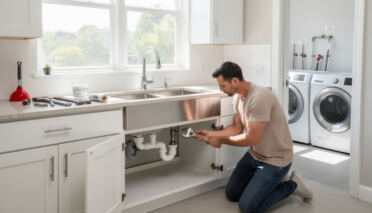
Maya reached this point after she remodeled a laundry area. Everything looked fine, but the new washer discharge seemed to trigger gurgling in nearby drains. Her plumber spotted a venting issue and corrected the configuration. Not glamorous, but it stopped the chain reaction.
What you’re actually getting when you hire a pro
Professional plumbers bring more than tools. They bring pattern recognition: they’ve seen how a partial obstruction behaves, how a failing regulator changes flow, how a hidden leak “prints” a stain, and how materials age differently. They can also ensure code-aligned work—especially important if you sell your home or file an insurance claim after water damage.
When pipe repair is needed, a pro can choose the right method: replace a section, reline where appropriate, or rebuild connections with proper supports. A rushed repair can create stress points that fail later, especially under temperature swings or water hammer conditions.
Questions to ask on the phone (so you get the right help)
- 📍 “Can you handle drain backup and main-line issues, or only fixture-level clogs?”
- 📷 “Do you offer camera inspection if the clog keeps returning?”
- 🧾 “Will you provide a written estimate and explain repair options?”
- 🛠️ “If this turns out to be a burst pipe risk, can you do same-day containment?”
- 🏠 “Have you worked on homes with older piping like mine?”
Maya’s final lesson was about momentum: once you’re already dealing with one issue, it’s the best time to get a full-picture check—shutoffs, pressure, obvious corrosion, and any signs of slow water damage. The insight that sticks is that good plumbing work doesn’t just stop today’s problem; it reduces tomorrow’s surprises.
If I see a small leak under the sink, should I always call a plumber?
Not always, but you should call if you can’t stop it quickly, if the cabinet base is swollen, if you see recurring dampness, or if the leak appears to be coming from inside the wall. Small leaks can cause major water damage over time, so when in doubt, get it checked.
What does it mean if multiple drains slow down at the same time?
That pattern often points to a deeper blockage or a main-line issue rather than a simple clog in one fixture. A professional plumber can snake the correct line, evaluate for drain backup risk, and use a camera inspection to confirm whether roots, buildup, or a damaged pipe is involved.
Is low water pressure a plumbing emergency?
Usually it’s not an immediate emergency, but a sudden house-wide drop can signal a hidden leak, a failing pressure regulator, or a supply problem. If the pressure change is abrupt, accompanied by noises, or paired with signs of water damage, it’s worth calling promptly.
What should I do first if a pipe bursts?
Shut off the main water valve right away, open faucets to relieve pressure, and keep electricity safety in mind around wet areas. Then call a plumber for emergency pipe repair. Containment quickly reduces the chance of widespread water damage.
Can I thaw frozen pipes myself?
You can sometimes thaw accessible pipes gently with warm air and by opening the faucet, but you should avoid open flames. Call a plumber if the frozen section is hidden, if you can’t restore flow, or if you suspect the pipe cracked during freezing—frozen pipes can turn into a burst pipe after thawing.