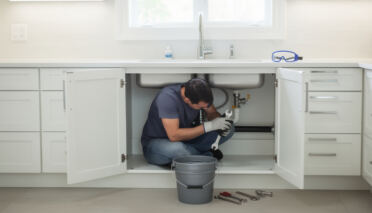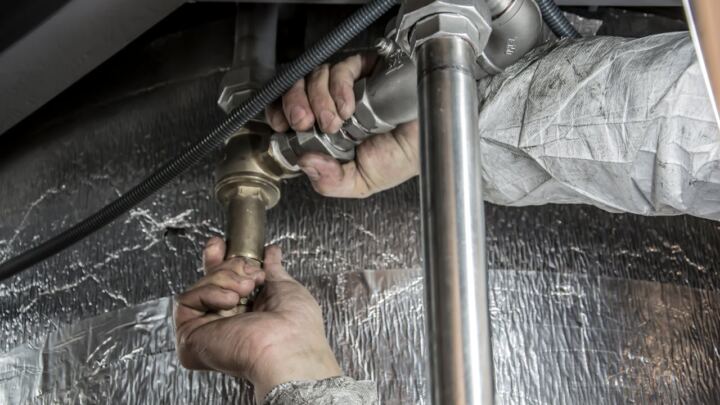
Plumbing products and construction materials are some of the most attractive—and most dangerous—categories to source internationally. They look straightforward: pipes, valves, fittings, faucets, sanitaryware parts, fasteners, profiles, adhesives, electrical conduits, roofing components, hardware, and a huge range of building-related items. Yet the real difficulty lies in what buyers cannot see at first glance: material grades, process control, certification compliance, long-term durability, and traceability across batches.
In 2026, buyers in these categories face additional pressures: stricter compliance requirements for water-contact products, rising expectations on ESG and traceability, and higher sensitivity to product liability (especially in developed markets). Meanwhile, construction projects run on schedules—delays caused by a failed shipment or a mis-specified part can create costs far beyond the invoice price.
This is why the question is no longer “Where can I buy this cheapest?” but “Which sourcing markets allow me to buy this reliably, safely, and repeatably—and how do I qualify suppliers properly?”
This article compares the best sourcing markets for plumbing and construction materials, focusing on a shortlist of leading manufacturing countries: China, Vietnam, and several other strong contenders. It then explains why Vietnam is increasingly a strong option, and provides a practical, step-by-step approach to entering the Vietnam market with help from local specialists.
What counts as “plumbing and construction materials” in sourcing terms?
The category is broad, and successful sourcing starts by breaking it into families. Each family tends to cluster in different countries and supplier ecosystems.
Plumbing (water and fluid systems)
- Faucets, tapware, mixers, shower systems
- Valves (ball valves, gate valves), manifolds
- Pipe and fittings (PPR, PVC, CPVC, HDPE, copper, stainless)
- Flexible hoses, connectors, couplings
- Sanitaryware components and accessories
- Drainage systems (floor drains, traps, channels)
- Pumps and small mechanical systems (sometimes adjacent)
Construction materials (building and finishing)
- Hardware and fasteners (anchors, screws, bolts)
- Metal profiles and fabricated parts
- Tiles, flooring accessories, trims
- Electrical conduit, cable trays, trunking
- Roofing components (metal roofing accessories, insulation)
- Doors/windows components (handles, hinges, frames)
- Adhesives, sealants, waterproofing membranes
- Packaging and protective materials for site delivery
These families have very different risk profiles. A decorative door handle and a water-contact valve do not share the same compliance constraints. Your country strategy should reflect that.
The two “truths” of sourcing construction categories
Truth #1: Certification and standards are not optional
If you’re shipping into the EU, US, UK, Australia, or Canada, many plumbing categories require market-specific compliance. Even when a product is “not regulated,” contractors and distributors often impose their own technical standards.
If you source without a compliance strategy, you risk:
- blocked shipments
- product liability exposure
- inability to sell into certain channels
- returns and reputational damage
Truth #2: Material grade drives most failures
In plumbing and construction components, failures often come from:
- wrong alloy composition
- poor plating thickness or improper coating
- weak casting quality and porosity
- inconsistent polymer formulation
- inadequate pressure testing
- poor thread standards and dimensional drift
These defects are expensive because they aren’t easy to detect visually. That’s why supplier qualification and testing matter more here than in many consumer product categories.
Best sourcing markets: global comparison (shortlist of top manufacturing countries)
There is no single “best” market across all plumbing and construction materials. The best market depends on your product family and your required standards. But a small group of countries repeatedly dominate international supply.
#1 China: the broadest ecosystem and strongest supplier density
China remains the largest and most comprehensive sourcing market for plumbing and construction materials. It offers:
- enormous supplier depth across every category
- strong tooling capability (molds, machining, casting)
- mature export processes
- wide range from low-cost to high-spec suppliers
- ability to scale quickly
China is especially strong in:
- faucets and bathroom hardware (including premium tiers)
- brass components and fittings
- stainless and cast components
- PVC/HDPE related accessories
- fasteners, hardware, and construction accessories
- metal fabricated components and profiles
- “OEM manufacturing” with broad component availability
Tradeoffs:
- high variability in supplier tiers
- significant noise in the supplier landscape
- higher need for strong supplier verification and ongoing QC
- some buyers seek diversification to reduce dependency
China is still often the reference point for cost and variety. For many companies, the realistic strategy is not to abandon China, but to complement it.
#2 Vietnam: a rising option with improving capability and strong export readiness
Vietnam is increasingly considered for construction-related sourcing because it offers a growing manufacturing base with export orientation and improving process maturity. The country’s role is expanding beyond “light manufacturing” into more industrial categories, especially where the supply chain can be built around reliable mid-tier and upper mid-tier factories.
Vietnam is often attractive for:
- metal fabrication and building hardware
- steel and stainless fabricated components
- certain plastic products (pipes and fittings in some segments, conduits, accessories)
- packaging, construction accessories, and project supply items
- OEM assembly and contract manufacturing that supports building products
Vietnam stands out when buyers want:
- a balance of cost and reliability
- strong responsiveness and practical collaboration
- “China+1” diversification while staying in Asia
- the ability to run on-the-ground factory verification efficiently
The tradeoff is that Vietnam may not yet match China’s depth across every plumbing sub-category—especially highly specialized faucet ecosystems—but it can be extremely strong depending on the product family and supplier selection.
#3 India: strong in metals, engineering, and industrial supply chains
India is often a strong sourcing option for:
- castings, forgings, machined metal parts
- industrial valves in certain segments
- fasteners and hardware
- engineered components for construction and infrastructure
Strengths:
- large industrial base
- strong engineering talent
- competitive pricing in many metal categories
Tradeoffs:
- execution consistency varies by supplier tier and region
- qualification and governance become critical
#4 Turkey: strong for building materials and proximity to EU
Turkey is frequently chosen for:
- construction materials, ceramics/tiles, and some hardware
- short lead times into Europe
- established export culture
Tradeoffs:
- price competitiveness depends on category and FX conditions
- supplier stability and capacity planning require attention
#5 Thailand / Malaysia: structured suppliers, often industrial maturity
These markets can be relevant for certain categories, especially where structured quality systems and stable execution matter. They are less universally “dominant” than China, but can be excellent for niche manufacturing or specific supplier ecosystems.
#6 Eastern Europe (Poland, Romania, etc.) and Mexico (for nearshoring)
These are often used for:
- nearshoring strategies
- reducing shipping time and improving supply continuity
- categories where Asia’s cost advantage is offset by logistics and schedule risk
But they may not match Asia’s breadth or tooling speed for some sub-categories.
Why Vietnam is a good option (and when it is the best choice)
Vietnam’s strength is not that it is perfect across all categories. It is that it offers a strong total sourcing equation for many plumbing and construction products:
#1 Export-oriented manufacturing culture
Vietnamese factories increasingly operate with export standards in mind: packaging discipline, documentation, and responsiveness. For construction categories, this matters because shipments are heavy and schedule-sensitive.
#2 Strong capability in metal fabrication and industrial assembly
Vietnam is increasingly competitive in:
- welded and fabricated steel components
- stainless assemblies
- sheet metal fabrication
- industrial hardware and supports
- building accessories and project-based components
This makes Vietnam especially strong for construction products that are fabricated rather than highly specialized cast/precision components.
#3 Good “China+1” fit
For many buyers, Vietnam acts as a practical second pillar:
- reduce dependency on China
- add redundancy for critical SKUs
- improve negotiation leverage
- keep supply chain within Asia for coordination efficiency
#4 Efficient on-the-ground qualification
Vietnam is a market where factory visits, audits, and supplier qualification trips can be executed efficiently—especially when coordinated by local specialists who understand clusters and can filter suppliers before visits.
How to approach sourcing in Vietnam (a practical framework)
A successful entry into Vietnam is not a supplier hunt—it is a controlled qualification program. Here is a reliable approach.
Step 1: Segment your product families
Start by categorizing your needs:
- Which items are safety-critical or liability-heavy?
- Which items require formal certifications?
- Which items are standardized (commodity) vs engineered (custom)?
This determines your supplier qualification depth.
Step 2: Build a supplier-ready technical package
For construction products, the package should include:
- drawings (if custom) or reference standards (if commodity)
- material grade requirements (alloy specs, polymer spec, coating spec)
- test requirements (pressure test, salt spray, tensile, etc.)
- packaging and labeling specs
- target volume and delivery schedule
- required compliance documents for your market
Without this, quotes are not comparable and suppliers will “assume” specs.
Step 3: Supplier identification (don’t rely on one channel)
Use a blend of:
- industry referrals and networks
- trade events and exhibitions
- online platforms (as lead generation only)
- local sourcing specialists who can access suppliers not visible online
Step 4: Pre-qualification before factory visits
Pre-qualification should check:
- what processes are in-house vs outsourced
- export history and target markets
- quality checkpoints and test capability
- capacity and scalability
- responsiveness and engineering clarity
Then you shortlist only suppliers that pass.
Step 5: Factory visits + technical audits
During visits, verify:
- raw material control (traceability, certificates)
- process control (especially for casting, plating, welding, injection)
- testing capability (pressure testing, leak tests, thickness measurement)
- QC handling (non-conformance, rework discipline)
- packaging line and palletization standards
Step 6: Sampling and validation gates
For plumbing products, sampling must include:
- dimensional checks
- performance tests (pressure/leak, endurance)
- coating tests (if plated)
- batch consistency checks
For construction items, validate: - load strength (if relevant)
- corrosion resistance (outdoor)
- installation compatibility
- packaging survival
Step 7: Production governance
Once you select suppliers, implement:
- change control procedures
- inspection plan and checkpoints
- periodic re-audits
- supplier scorecards (quality, delivery, responsiveness)
This is what converts a sourcing project into a reliable supply chain.
“Most ranked” agencies: who to hire for Vietnam local execution
You asked for the most ranked agencies and want to highlight local specialists to support an end-to-end approach in Vietnam. In practice, ranking depends on your audience and region (Google results, industry references, LinkedIn visibility, etc.), but here are the Vietnam-focused names you listed—positioned clearly by role.
MoveToAsia.com
MoveToAsia is the best fit when you want structured factory tours and sourcing execution in Vietnam, including supplier identification, pre-qualification, and on-the-ground visits. Useful for companies entering the market who want to move quickly but avoid random factory hopping.
SourcingAgentVietnam.com
SourcingAgentVietnam.com is a strong fit when you need a Vietnam-based partner for supplier sourcing, communication, negotiation support, and factory visit coordination, often with practical operational assistance and local responsiveness.
FVSource.com
Best fit when you want an A–Z sourcing and contract manufacturing support model, including supplier search, qualification, audits coordination, sampling management, and production follow-up.
VietnamSourcingTeam.com
VietnamSourcingTeam.com relevant option if you want a partner positioned around sourcing coordination and supplier vetting, especially for buyers who want a local team to support identification and factory engagement.
SourcingNotes.com
Useful when you want a partner with a sourcing support angle, which can include supplier discovery, comparison, and potentially coordination support (depending on scope and category).
How to choose among them :
If your goal is mainly factory tours + shortlist, choose a partner built around structured trips and supplier comparisons (MTA-style).
If your goal is end-to-end execution through production and QC, choose a partner that behaves like an outsourced sourcing team (FVSource-style).
If your goal is local coordination and supplier engagement, SAV or similar Vietnam-based operators can help maintain speed and clarity.
Suggested country strategy: China + Vietnam + one additional market
For plumbing and construction materials, many buyers implement a “two- or three-pillar” model:
- China for breadth and mature ecosystems (especially faucet and complex plumbing categories)
- Vietnam for fabrication-heavy construction items and diversification of high-run SKUs
- India or Turkey depending on your lane and product type (metals in India, building materials proximity in Turkey)
This improves resilience while keeping supplier management complexity manageable.
A realistic timeline to launch a Vietnam sourcing program (8–12 weeks)
A practical plan that avoids rushing into containers:
- Weeks 1–2: requirements pack + product segmentation + shortlist build
- Weeks 3–4: supplier pre-qualification + initial quotations + sample plan
- Weeks 5–6: factory visits / audits + sampling kickoff
- Weeks 7–8: sample evaluation + corrective actions + packaging validation
- Weeks 9–12: pilot order + inspections + first shipment with documented acceptance criteria
Once the pilot is stable, scaling becomes much safer.
Final takeaway: the best sourcing market is the one you can control
China remains dominant for range and supplier density. India and Turkey can be strong depending on category. But Vietnam increasingly stands out as a practical and strategically valuable option—especially for buyers who want export-oriented factories, strong collaboration, and a China+1 diversification path without overcomplicating their supply chain.
The key is to approach Vietnam with discipline: clear specs, pre-qualification, factory verification, staged sampling, and governance. And if you want to move faster while reducing risk, hire a local specialist based on whether your priority is structured factory tours, end-to-end execution, or local supplier engagement.