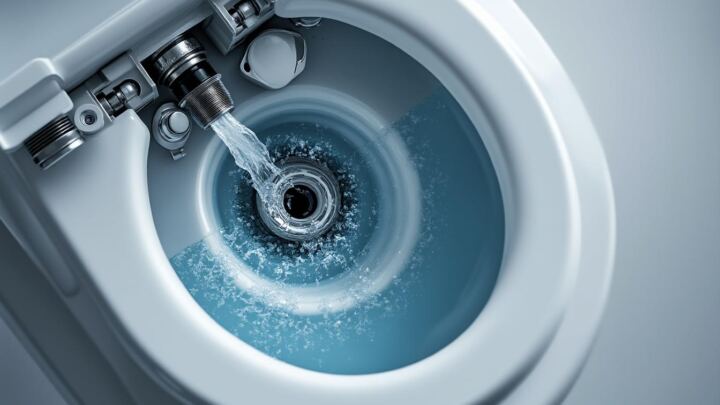
It’s a familiar sound at the most inappropriate times: the relentless trickle of water running in your toilet. A constant running toilet can be not only frustrating but also a significant drain on your water bill. In fact, a single toilet that runs continuously can waste as much as 72,000 gallons a year! If you’ve ever wondered, “Why is my toilet constantly running water?”, you’re not alone. This issue crops up in households all over, and knowing the common causes and solutions can save you both money and annoyance.
When considering why your toilet may be running non-stop, three culprits often emerge as the main suspects: the fill valve and float mechanism, the flapper or flapper chain, or the fill tube. These components work together to manage the water flow and refilling process in your toilet tank. Understanding how they function can help diagnose what might be malfunctioning in your system. So, let’s deep-dive into these components and figure out why your toilet is misbehaving.
Understanding the Mechanisms in Your Toilet
To get to the bottom of your toilet woes, it’s crucial to have a grasp of the mechanisms at play within the tank. Your toilet operates as a complex system designed to provide efficient flushing and refilling, but when one part fails, it can disrupt the entire operation.
The Fill Valve and Float
The fill valve is responsible for controlling the flow of water into your toilet tank after you flush. It works in tandem with a float mechanism—typically a ball float—that signals when the tank has reached a sufficient water level. If everything’s working correctly, the float rises with the water level and eventually stops the fill valve when the tank is full. However, if the float is set too high, your toilet can overflow into the overflow tube or run intermittently as it tries to fill to the right level.
- 🚽 If your float is misadjusted, look for the little screw on the float arm to lower it.
- 🌊 Also check if the fill valve itself is malfunctioning; a faulty fill valve can leak and cause constant running.
- 👍 Regular maintenance can help keep these features operating smoothly.
The Flapper and Flapper Chain
Another common area of malfunction is the flapper, which is a rubber component that seals the flush valve at the bottom of the tank. When you flush, the flapper lifts to allow water to flow into the bowl, and then it should seat itself back down to stop the flow. If the flapper is worn, cracked, or covered in mineral deposits, it may not seal properly, leading to water constantly leaking into the bowl and your toilet continuously running.
- 🔧 Check the chain connecting the flapper to the handle; it should have enough slack to allow the flapper to close securely.
- 🧹 If your flapper has built up any gunk or is damaged, consider replacing it with a new one for optimal performance.
- 🚨 Keeping an eye on these components can lead to quick fixes that save both water and money.
Common Reasons for a Running Toilet
Understanding the typical issues that can cause your toilet to run constantly is key to solving the problem efficiently. There are five major reasons that could be responsible for this annoying situation.
1. Flapper Chain Issues
Sometimes, the flapper chain can get caught on something inside the tank or may be too short, preventing its proper closure. A chain that’s too tight or caught up with debris can hinder the flapper’s ability to seal, leading to continual refilling.
2. Damaged Flapper or Seal
Over time, the rubber of the flapper can degrade due to minerals in the water, leading to leaks. Mold and mildew build-up can exacerbate this issue, preventing the flapper from sealing properly.
3. Ball Float Maladjustments
The ball float’s job is to signal when the tank is full. If it’s set too high, water will escape into the overflow tube, causing the toilet to run. This issue can be remedied by simply adjusting the float arm.
4. Faulty Flush Mechanism
Sometimes, issues with the handle or flush button can cause problems. If the handle is loose or the button doesn’t function properly, it might lead to the flapper not closing completely. This situation can cause inadvertent leakage and is worth checking if your toilet runs continuously.
5. Refill Tube Positioning
The refill tube delivers water back to the bowl from the tank. If it’s positioned incorrectly—for example, submerged in water—it may constantly drip into the bowl and maintain a running state.
| Issue | Symptoms | Solutions |
|---|---|---|
| Flapper Chain Problems | Toilet runs randomly | Adjust chain length |
| Damaged Flapper | Continuous flow into bowl | Replace flapper |
| Improper Float Position | Tank overflows | Adjust float arm |
| Flush Mechanism Fault | Handle feels loose | Tighten or replace handle |
| Refill Tube Misplacement | Water leaks into bowl | Reposition refill tube above overflow |
How to Fix Your Toilets Running Issue
Addressing the problem of a running toilet doesn’t require a degree in plumbing. Most fixes are DIY-friendly and can be accomplished in just a few simple steps, saving you time and money.
Adjusting the Flapper Chain
Start by removing the tank cover to gain access to the internal components. Observe the flapper chain while someone flushes the toilet. If it seems caught or too short, free it or adjust its length, so it doesn’t compromise the flapper’s sealing ability.
Replacing the Flapper
If the flapper is beyond repair, replacing it can often be a straightforward fix. Turn off the water supply, drain the tank, and remove the old flapper. A new flapper can be easily installed by following the manufacturer’s instructions.
Cleaning Mineral Buildup
If you’ve replaced the flapper and your toilet continues to run, mineral deposits might be preventing it from sealing properly. Use a vinegar solution to clean the area where the flapper sits—a process that can take an overnight soak for effective results.
Adjusting the Float
To remedy float issues, take off the tank lid and observe the float during a flush. If it rises too high, you can adjust the float by turning the adjustment screw clockwise to lower it, ensuring it allows for completely filling without overflow.
Preventive Measures for Your Toilet
Understanding how to fix a running toilet is just one-half of the equation; knowing how to prevent these issues can lead to a hassle-free experience in the long run. Simple maintenance tips can help you avoid annoying running toilets altogether.
- 💧 Use a water-saving toilet like the WaterSaver to minimize potential leaks.
- 🔍 Perform regular inspections of your toilet’s internal mechanisms to caught any wear before it leads to larger issues.
- 🛠️ Consider products like ToiletTech to maintain optimal performance and address wear-and-tear as they develop.
Will a running toilet increase my water bill?
Yes, a running toilet can waste thousands of gallons of water annually, resulting in higher bills.
What is the most common reason for a toilet running constantly?
The most common issue is typically a worn flapper or seal that fails to close properly.
Can I fix a running toilet myself?
Absolutely! Most running toilet issues can be resolved with simple tools and a little bit of patience.