Your plumbing system at home is like the unsung hero of your household. It carries the water you need for everything, from brushing your teeth to washing your clothes, and takes away the waste without you even realizing it. But when something goes wrong, that’s when you notice just how crucial it is. With more people becoming homeowners, understanding how this system works is becoming increasingly important, especially when you’re considering any renovations or simply trying to troubleshoot a leak. In 2025, as home technology gets smarter, so does the plumbing systems we depend on. Let’s dive into the intricacies of a typical home plumbing system, breaking down its components one by one.
Brief
- Plumbing systems have three critical parts: the water supply system, the drainage system, and fixtures/appliances.
- The water supply system delivers clean and pressurized water using various components like water meters, shut-off valves, and service lines.
- The DWV system effectively removes wastewater while maintaining air pressure to prevent issues.
- Plumbing fixtures include faucets, sinks, toilets, and water heaters, all of which are essential for daily activities.
- Regular maintenance, including knowing how to respond to signs of trouble, is vital for preserving your plumbing system.
The Structure of a Home Plumbing System
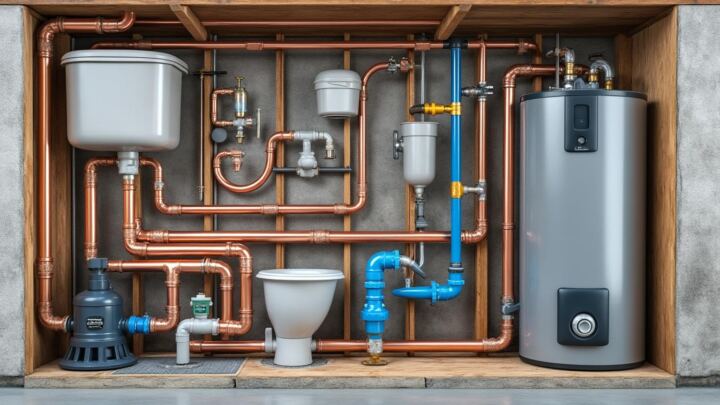
A home plumbing system is composed of three fundamental subsystems that work cohesively to ensure a smooth flow of water and waste throughout the house:
1. Water Supply System
The water supply system is responsible for bringing fresh, pressurized water into your home. This is where all your clean water originates—think faucets, showers, and kitchen sinks. Here’s a closer look at its key components:
- Water Service Line: This underground pipe links your home to the municipal water source or well, ensuring a steady flow of clean water.
- Shut-Off Valve: Strategically placed near the water line’s entry point, this valve shuts off water during emergencies or repairs.
- Water Meter: Usually located at the curb or just inside the property line, this meter tracks your household’s water usage, playing a significant role in your utility bill.
- Pressure Regulator: Not every home has it, but it controls water pressure to prevent damage to your plumbing fixtures.
- Distribution System: This includes cold and hot water pipes that transport water throughout your home.
Each of these components ensures that you consistently get high-quality water without leaks or interruptions. If you detect weak water flow, it could indicate an issue in this crucial subsystem.

2. Drain-Waste-Vent (DWV) System
Now let’s talk about the Drain-Waste-Vent (DWV) system, which does the opposite—its job is to remove wastewater and ensure proper ventilation in the plumbing pipes. Without this, you’d face some serious backflows and unpleasant odors.
- Drain Pipes: These carry water away from your sinks, showers, and toilets using gravity to efficiently move waste toward the sewage systems.
- Traps (P-Traps): Positioned beneath most fixtures, these curved pipes contain water that prevents sewer gases from infiltrating your living spaces.
- Vent Pipes: These extend through the roof, allowing air to infiltrate the drainage system, which helps maintain proper pressure and keep waste flowing.
- Sewer Line: The larger pipe that takes all the waste out to either the city sewer or a private septic system.
Recognizing the signs of a deteriorating DWV system is crucial. Issues like gurgling noises in drains or sluggish drainage too often hint at a bigger problem, such as clogs or damaged pipes.

Plumbing Fixtures and Appliances
Let’s shift gears and focus on what we interact with daily—the plumbing fixtures and appliances. These are the components that make your plumbing relatable; they are where water is both used and discarded.
Key Fixtures
Here’s a breakdown of essential plumbing fixtures:
- Faucets and Sinks: Central to kitchens, bathrooms, and laundry, they facilitate access to hot and cold water for a myriad of tasks.
- Toilets: Essential for waste removal, they use gravity and pressure for an efficient flush into the drainage system.
- Showers and Bathtubs: These fixtures provide personal hygiene solutions; they require carefully balanced water pressure to maintain user satisfaction.
- Dishwashers and Washing Machines: These appliances connect to both water supply lines and drainage, using valves and hoses to manage water intake and disposal.
- Water Heaters: A critical element for delivering hot water; regular maintenance is key to extending their life.
When one part of a plumbing system fails, the ripple effect can disrupt your daily routines. For instance, if your Rheem water heater starts acting up, it can leave you taking cold showers in no time!
| Fixture Type | Function | Common Brands |
|---|---|---|
| Faucets | Provides water access | Moen, Delta, Grohe |
| Toilets | Waste removal | Kohler, Toto, American Standard |
| Water Heaters | Hot water supply | AO Smith, Rheem |
Signs Your Plumbing System Needs Attention
A well-functioning plumbing system should be quiet and leave no room for mystery. If you start noticing odd behaviors within your system, it’s time to step in. Here are the telltale signs:
- Low water pressure in one or more fixtures 🚱
- Unusual noises like banging or hissing ⏳
- Slow-draining sinks or bathtubs 🚽
- Foul odors emanating from drains 🦠
- Unexpected spikes in your water bill 💸
Addressing these red flags sooner rather than later can save you from drastic measures, such as extensive repairs. Cracked walls or damp spots could reveal plumbing issues that need professional skills to fix.
Preventative Plumbing Tips for Homeowners
Taking a proactive approach to plumbing maintenance can keep your systems running smoothly and help avoid costly repairs. Here’s how:
- Know the location of your main shut-off valve to cut off the water supply during emergencies.
- Avoid pouring grease or food down kitchen drains to minimize clogs.
- Use drain screens in tubs and showers to collect hair and debris 🧼.
- Flush your water heater annually to avoid sediment buildup and maintain efficiency.
- Conduct regular inspections of exposed pipes for rust, drips, or corrosion.
- Schedule professional plumbing inspections every few years, especially in older homes 🏚️.
Following these preventative steps can prolong the life of your plumbing system and even save you money over time.
What is a water meter and why is it important?
A water meter measures the amount of water your home uses and is crucial for tracking your utility costs and detecting potential leaks.
Why is it vital to have a pressure regulator?
A pressure regulator prevents your pipes from being exposed to excessive water pressure, which can cause leaks and damage to your plumbing fixtures.
How often should I maintain my plumbing system?
It’s recommended to have your plumbing system professionally inspected every couple of years, but homeowners can perform regular maintenance checks annually.
What are the signs of a clogged drain?
Slow drainage, gurgling sounds, and unpleasant odors are all telltale signs that indicate a clogged drain.
How do I handle a plumbing emergency?
Identify the source of the problem, switch off the main shut-off valve, and contact a licensed plumber for immediate assistance.