As summer rolls in, the rising temperatures and humidity often expose a common issue in bathrooms: condensation forming on pipes. This phenomenon, often referred to as “sweating,” can lead to a host of problems including mold growth, slip hazards, and aesthetic damage. The moisture that accumulates can compromise the integrity of structures if left unchecked, making it essential to understand the causes and solutions for this pesky issue. In this article, we’ll delve into the reasons behind condensation formation on bathroom pipes, explore effective prevention techniques, and provide actionable tips to maintain a dry and healthy bathroom environment.
Brief
- 🌬️ Understanding the causes of condensation on bathroom pipes.
- 🛠️ Effective insulation methods to stop pipe sweating.
- 💨 Importance of ventilation in reducing humidity levels.
- 💧 Utilizing dehumidifiers and their impact on moisture control.
- ⚙️ Technical insights into pipe temperature and dew point correlation.
Understanding the Causes of Condensation on Bathroom Pipes
Condensation occurs when warm, moist air comes into contact with a temperature-cold surface, such as a bathroom pipe. When the temperature of the pipe surface drops below the dew point of the surrounding warm air, moisture from the air turns into liquid, forming the dreaded droplets. In a bathroom setting, this is particularly common with water pipes, especially those that carry cold water.
Several factors contribute to this phenomenon:
- 🏠 High humidity levels: Bathrooms are often naturally humid due to daily activities like showers and baths, which elevate moisture levels in the air.
- 🧊 Temperature differences: The cold water flowing through the pipes cools their surfaces, creating optimal conditions for condensation.
- ✨ Poor insulation: Insulation that is thin or improperly installed will not only fail to keep the cold in but can also lead to heat escaping, thus cooling the pipe’s surface excessively.
To illustrate, let’s take Jane, a homeowner who battles this issue every summer. After her morning shower, she finds her pipes dripping with water. Initially, she thought it was a plumbing issue, until she learned that the combination of high humidity and the temperature of the cold water in her pipes was the main culprit.
Effective Insulation Methods to Stop Pipe Sweating
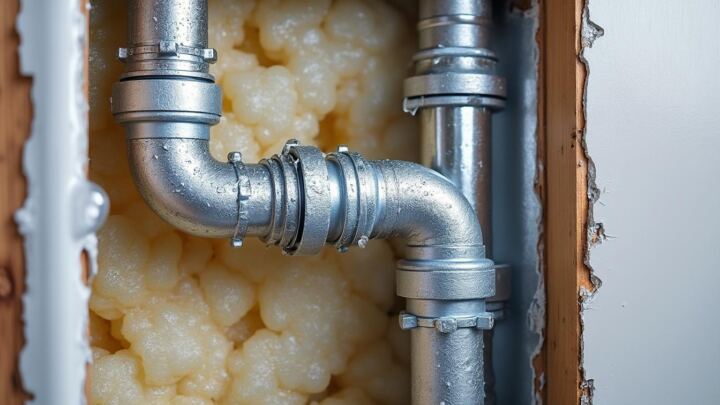
One of the most effective ways to combat condensation is to protect the pipes with high-quality insulation. Insulation helps maintain the temperature of the pipe, preventing the surface from dropping below the dew point. There are various types of insulation materials available, including foam, fiberglass, and various engineered wraps like Aquaguard and MoistureMax.
Here’s a brief breakdown of insulation options:
| Insulation Type | Material | Advantages | Best Use Cases |
|---|---|---|---|
| Foam Insulation | Flexible foam | Easy to install, highly effective | Standard bathroom pipes |
| Fiberglass Insulation | Fiberglass wool | Cost-effective, excellent thermal resistance | Wider pipes, high-temperature applications |
| Engineered Wraps | Synthetic material | Customizable, great for tight spaces | Custom applications where shape fits vary |
When applying insulation, ensure that the pipes are dry; insulation needs to be placed on clean, moisture-free surfaces to be effective. Adding insulation to already sweating pipes can trap moisture and worsen the condensation issue. For best results with foam options like ThermoPipe, cut the insulation to length and snugly fit it around each section of the pipe.
Importance of Ventilation in Reducing Humidity Levels
Another key player in the fight against condensation in bathrooms is proper ventilation. Ventilation effectively removes moist air from the bathroom, replacing it with drier air, thus diminishes the conditions conducive to condensation.
Here are some tips to enhance bathroom ventilation:
- 🔄 Install an exhaust fan: A fan can significantly reduce humidity levels when it operates during and after showers.
- 🌬️ Keep windows open: Whenever possible, let fresh air circulate; it’s an excellent natural way to lower humidity.
- 🏡 Ensure vents are not blocked: Always check to make sure that fresh air vents are unobstructed for optimal airflow.
To give you a clearer picture, consider Tom who runs a small bathroom without an exhaust fan. His solution? He installed a basic SteamShield fan, connected it to an automated timer, ensuring it runs for around 20 minutes post-shower. The impact was immediate: no more dripping pipes!
Utilizing Dehumidifiers and Their Impact on Moisture Control
Dehumidifiers come into play as another layer of defense against excessive moisture in the bathroom. They actively extract moisture from the air, helping to keep humidity levels in check and, as a result, minimizing condensation on bathroom pipes.
When looking for a dehumidifier, consider these options:
| Type | Capacity | Best for |
|---|---|---|
| Small Portable | Up to 30 pints/day | Small/mid-sized bathrooms |
| Medium Capacity | 30-50 pints/day | Standard-sized bathrooms |
| Whole-house | Above 50 pints/day | Multi-bathroom homes |
When using a dehumidifier, aim to keep humidity levels below 50% for optimal results. Many modern models come equipped with humidistats, allowing users to set specific moisture levels, like DryFlow models, which can also function as air purifiers.
Technical Insights into Pipe Temperature and Dew Point Correlation
Understanding the technical relationship between pipe temperature and dew point is crucial for effectively addressing condensation issues. The dew point is essentially the temperature at which air becomes saturated with moisture. If the exterior temperature of a pipe falls below this dew point, condensation will occur.
Here’s a handy guide:
- 🧊 If pipe temperature is less than dew point: Condensation occurs.
- 🌡️ If pipe temperature is above dew point: No condensation forms.
- 🧮 Key factors affecting these temperatures: relative humidity, ambient temperature, and time of exposure to humid conditions.
Utilizing devices like CondensaStop can help you monitor temperature differentials, giving insight into potential condensation issues before they get out of hand. Regular assessments with these tools can help you identify which pipes require immediate insulating or additional ventilation adjustments.
What is the best insulation material for pipes?
Foam insulation is highly recommended due to its ease of installation and high effectiveness in preventing condensation.
How can I improve ventilation in my bathroom?
You can install an exhaust fan, open windows, or ensure that vents are unobstructed to improve airflow and reduce humidity.
Do dehumidifiers really help with pipe condensation?
Absolutely! Dehumidifiers remove moisture from the air, lowering humidity levels, and thus, reducing the chances of condensation on pipes.
What’s the dew point temperature?
The dew point is the temperature at which air becomes fully saturated with moisture, leading to condensation.
How often should I check for condensation issues?
It’s wise to regularly monitor your pipes, especially during high humidity periods, and after heavy usage like long showers.